Society, Tech

Global Community Spirit

Football (Soccer ball)

Football (Soccer ball) (Photo credit: Wikipedia)

Our world was said to have become smaller when Jet travel arrived, and it has continued to shrink it seems thanks to modern communications.  This recent story of an epic journey, widely reported around the world shows a global equivalent of finding your neighbour’s football in your garden.  Literally.

David Baxter, an Alaskan radar technician found a signed football washed up on a beach and rather than just thinking “that’s a nice ball, I’ll keep it” he considered it may have been swept away during the Japanese tsunami.  His japanese wife, with the help of a reporter in Japan have managed to trace its owner and will soon be reuniting the ball with sixteen year old Misaki Murakami who is understandably delighted to be getting his prized possession back after losing everything in the devastating floods of last March.

(Guardian via Gizmodo UK)

Standard
Nature

Shadows in the Dusk

bats flying at dusk

bats flying at dusk (Photo credit: Wikipedia)

As I sit here facing the window, with its little slice of countryside, I occasionally notice a black blur flash past outside.  It, or rather they are a reminder that here on the fringes of this large town nature still has a niche.

This is our neighbourhood’s nightly display of bat aerobatics.

I turn out the lights for a while and stand against the glass, watching them tear past just inches beyond.  As I watch them wheeling and twirling, speeding about against the darkening sky between our oddly shaped collection of buildings I can’t help but be in awe at the precision of their flight, and how they navigate, find and catch their dinner.

Quickly the sky turns inky blue and the bats are fleeting shadows against unnatural light from other windows and lamps.  I wish them goodnight and come back to my desk.

Standard
Bag Fiend, Bags & Storage, Gadgets, Tech

Bag Fiend – Confessions of a Bag Addict

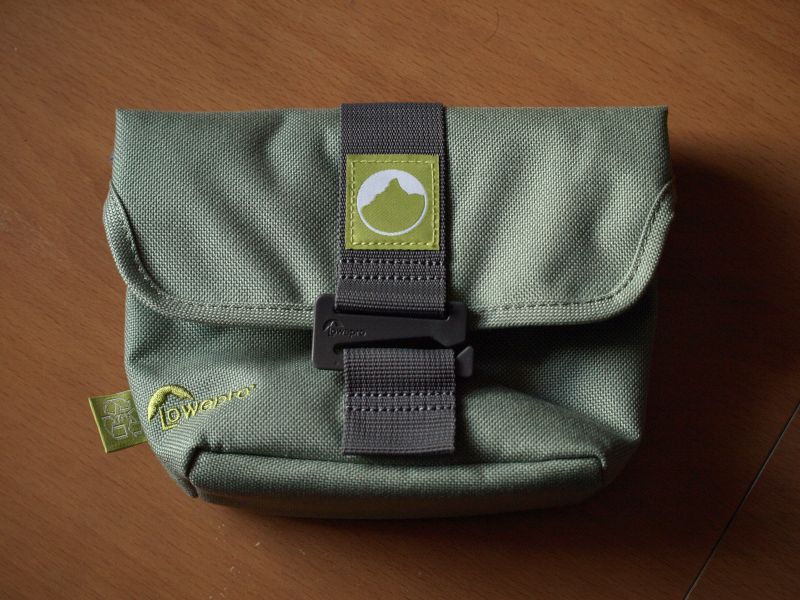
Lowepro Terraclime 50

Ok, here and now I admit that I have a thing about portable storage.  There, I’ve said it.

I have over the years needed bags for carrying my lunch to work, computers, cameras and clothes but also many smaller bags and pouches to keep things organised and safe when in other bags or drawers.  Often though I’ve had a couple of bags before I’ve found The One for a particular task.  Sometimes I’ll get a new bag simply because I’m bored with the colour or style of the old one, or it’s becoming a bit tatty.

I do insist on quality of materials and construction and what does get my attention are good features such as  good internal storage and maybe some innovative pocket or pouch like the little slide-out memory card holder on my Lowepro compact camera and SLR holster cases.  The bag also has to look good too, colourful if possible.

The thing is though that I am patient and I generally only buy a new bag when I can get a good deal on it.  Like today’s new bag.  A local camping shop is closing down unfortunately but they were selling off lots of Lowepro Terraclime camera pouches for a couple of quid each.  I have a use for one so I added it to my collection and an excellent bag it is too.  Good looking, colourful and made from quality, sturdy, recycled materials and featuring a retainer that slides into a loop to hold it closed along with being designed so that the top opening folds over to close it fully and keep the elements out it’s a really nicely made bag.  The interior has a soft lining and pockets for memory cards and the like.

Now to find somewhere to store it.

(Lowepro)

Standard
Psychology

I’ll Write It… Tomorrow!

A friend and colleague of mine is fond of saying “tomorrow never comes” whenever I say “I could do with that glass for tomorrow”.  I tend to just reply by saying “I could do with that glass for Thursday” or whatever day.

He’s right though and I’m writing this post as a prompt to myself, a call for less procrastination.  You see, I keep saying “I’ve not really got time to post anything today; that article needs more research; I can’t quite think how to put that…”  But it’s all just procrastination, and I get away with it because I can, there are no consequences except that my blog gets no views, oh and the little fact that I feel I’ve in some way let myself down, wasted time that I could have used productively in doing something else that I got no real benefit from.  It’s OK if I’m doing something worthwhile like watching a new TV show, seeing friends or family, decluttering or tidying, but mostly I’m not.

One technique to deal with this is to change routines so that you have no excuses, set a time to read a few news sites, make a few notes, link a few webpages, set a time to write something that is well in advance of when I’ll be feeling tired and would rather be watching something funny on Dave (which, for anyone reading this outside the UK, is a TV channel crammed with quality repeats of comedy shows and Top Gear, and is a tempting diversion).

So now comes the difficult part as changing ingrained routines (or lack of them) can be mentally exhausting but in the end the feeling of achievement, especially if it’s in doing something you enjoy, is all worth it.

I’ve put off going to sleep for too long now, by writing this, so goodnight.

Standard
Tech

A Syncing Feeling

Cloud Computing Image

(Photo credit: Wikipedia)

Some may be forgiven for thinking that The Cloud was something Apple invented due to the high-profile launch of iCloud – it’s much touted system for sharing content seamlessly between iDevices and Macs – but it was a ‘thing’ long before it was an ‘iThing’.

The ubiquity of internet connectivity has enabled cloud computing to blossom in recent years.  Now there are the online file storage and sharing services like  Box, Microsoft’s Skydrive and others; cloud disk drives like that provided by Dropbox (and the upcoming file system integration of Windows Skydrive); and automatic content syncing systems like iCloud.

The ultimate goal of cloud computing is beyond such storage and syncing of files and moves all of your apps and data onto remote servers operating in a similar way to the thin-client terminals that those of us old enough remember fondly.  Google’s ChromeOS running on ChromeBook laptops are the first foray into this new world however they assume a mostly connected situation and online OSes and apps won’t be replacing Windows, MacOS and desktop apps anytime soon though their features and functionality are improving all the time.

The most useful aspect of the cloud for me so far has been syncing of data.  To be able to add an item to my to-do list on either my laptop, netbook, tablet or, using the webapp, my work laptop and know that it’ll be there when I fire up one of the other devices is a joy.  My app of choice for this is Wunderlist but others have similar functionality.  (I also use the similarly syncable Evernote for more in-depth notes).  The same is true of having files I use on the laptop synced via Microsoft’s servers to my netbook whilst being simultaneously backed-up in the cloud as well.

The future may not be entirely based in the cloud but in huge server farms cooled by Arctic fjords our data will be shuffled between our devices and shared with our friends, seamlessly and effortlessly.

And I won’t have any excuses for forgetting to do something on my to-do list.

Standard
Blog on The Landscape, Tech

Blog on the Landscape – 21st Century Windmills

English: Modern wind energy plant in rural sce...

English: Modern wind energy plant in rural scenery. Français : Une éolienne moderne dans un paysage rural. (Photo credit: Wikipedia)

In front of me is a window with  a view of a slice of countryside beyond the river.  At the right side of that slice, at the edge of a low hill appeared, last week, a white mast and eventually the three, apparently delicate feather-like blades of a compact wind turbine.

It’s one of three that have been put up locally this year and all are individual turbines, not wind-farms, and all appear to have the purpose of supplying farms with power in a modern analogue of the many windmills that farms had centuries ago to grind their corn and often power machinery.

I’m certain that there will be people around here who will have written angry letters to the council complaining about them being blots on the landscape and I wonder whether similar arguments happened when farmers started building windmills (despite their admitedly lower altitude).

While I admit that the larger wind-farms are not attractive and there are certain landscapes in this country that would be ruined by even a single blade sticking up into the view smaller individual turbines like the one I can see now are not ugly in my opinion and their gracefully turning blades can add a certain modernist beauty to relatively featureless landscapes, a blending of the old and the new to remind us that we do live in the 21st century and times move on as they did when the revolutionary new wind powered milling wheels ground their first corn.

Standard
Beer

Drinking for Science

Various spirits.

Various spirits. (Photo credit: Wikipedia)

Not me personally but Gizmodo’s Brent Rose who has gone beyond the call of duty in order to research a number of myths about booze that everyone knows.

It seems that it’s true that drinking beer before spirits does make you more ill for reasons of how quickly alcohol enters your bloodstream and mixing spirits can make you drunker quicker – as demonstrated by his unedited conclusion near the end of the article.

(Gizmodo UK)

Standard
Psychology

Little Tantrums

Customer Redemption

Customer Redemption (Photo credit: Neil T)

I’ve not written much this week due to having had a busy week at work which included being attacked by a sheet of glass that shattered on me and pierced my glove, leaving a nice chevron shaped hole above my thumb.

Twas but a scratch.

The thing about this week that I feel like writing about here is some people’s attitude and behaviour towards others when things aren’t going quite their way.

We all have situations in our lives which are not ideal – something doesn’t go according to plan, something takes longer than expected, something breaks.  Most of us though have the ability to cope with these difficulties – major and minor – with grace and a level-headed attitude, but today it seems increasingly true that people are becoming less tolerant of problems in their lives and instead of dealing with them in a reasonable manner they immediately lash out and throw a tantrum at the first person they encounter.

So often this is a shop assistant, call centre employee, delivery driver, the list goes on.  But most of the time this person is not responsible for the problem and would probably like to help to solve it given the chance.

In my job this week I have had one customer immediately start ranting that a product was not perfect and before I could even offer a solution this customer began loudly telling me, in a very patronising manner, what I would be doing to to recitfy it.

The other began calling me various unflattering names because I couldn’t instantly provide an exact date for when a product would be available.

Both are symptomatic of a sense of entitlement in society, often associated with percieved status – whether it be financial or a sense of self-importance – combined with a lack of respect for others which leads people to believe that if they shout loud enough then they’ll get what they want, because they should have it, right now, not tomorrow, why should they wait, they’re important!

I find that I’ll go the extra mile for a customer who is polite and has reasonable requests, and that’s true of many people I know in customer service.  Perhaps these people did get what they wanted when they threw tantrums as children, but I think part of the problem is the recently more widespread idea that we can have what we want whenever we want it, and indeed we should expect it.  You get too used to that idea and it comes as a shock when someone says “no”.

Standard
Food

Good Food: The Sausage Roll Revolutionised

Source: http://nottingham.openguides.org/?ASDA...

ASDA (Photo credit: Wikipedia)

I did venture out in the wind and rain this morning to take the three-minute walk to Asda down the road to buy a few bits and pieces for the week.  While there however a powerful force that cannot be resisted dragged me like a riptide towards the bakery section because I knew that, being just after opening time, the shelves would contain the wonder that is the Mini Chilli Beef Roll.

A sausage roll but filled with chilli beef instead of pork they are fantastic, especially when fresh, crisp and still slightly warm.

Needless to say that by this time all six in the pack have vanished.

Standard
Politics

All Work, No Play

The new downtown of Songdo International City,...

(Photo credit: Wikipedia)

The BBC reports on a so-called Think Tank, The Centre for Economics and Business Research, who have come to the conclusion that the British public aren’t working hard enough to rebuild the economy and that all Bank Holidays should be abolished.  Myself, I’m enjoying a lazy long weekend, drinking tea, eating chocolate eggs and writing this blog post when I really should be at work – according to these people who are paid to come up with these ideas that our current government will no doubt think are fantastic.

We already have less holidays than other countries and as many people in retail, including me and my regular trade customers (builders, cabinetmakers, glaziers and so on) have said the economy needs people who can to spend the money they have in order to boost confidence (much of this spending happens on bank-holidays, when people have nothing else to do but go round the shops).  When businesses have money coming in the staff feel more secure and will, in turn buy things they might not have done when in fear for their jobs.  Little by little we recover, eventually with more demand comes pay rises and more job vacancies, this takes time but it is possible.

The media are not helping though, with constant doom-mongering about how things can only get worse.  Combine this with abolishing what for many are their only guaranteed days off then you have a recipe for a disillusioned and disheartened workforce that can see no silver lining and only have the feeling that the light at the end of the tunnel must have been switched off to save money.  It is well-known that people in such situations are often less productive so therefore this would be causing more harm than good.  (Edit: I know many people work on bank holidays but most should have an offset day to make up for it so they would still lose out.)

The think tank points to South Korea whose economy is recovering faster and whose people work on average 500 hours per year more than we do, which is 9 hours per week.  They haven’t specified whether this is two hours per day more than those who work the longest or shortest hours in this country.  They also don’t point out that much of European manufacturing is done in Asia.

Would taking away valuable, morale boosting extra days off where we get to recharge our batteries and forget work and spend time with family and friends or get away and have a change of scenery really make up for the extra couple of hours per day some South Koreans work?

(BBC News)

Standard