Marketing, Photography, Society, Tech

Reminiscing Isn’t What It Used To Be

Box of Memories

Image by Free-Photos from Pixabay

It’s easy to start reminiscing about the past, particularly when you see the world as it is and you know it used to be better.  The summers longer and always sunny, the TV was better and so on.

Back in the day [here we go again] you’d half-remember something, whether it was the name of an actor who used to be on such-and-such a show or you wonder whether a chocolate bar you used to like might still be available, somewhere, and then spend hours trying to remember the details, the names, the design, until eventually you started to think you’d imagined the whole thing.

I found the other day that again our connection to the world’s knowledge is there to help.  I have looked for a few of these things recently, for the life of me I can’t remember what most of them were but one was an exact quote from Linda Smith and another was a particular chocolate bar I liked in the eighties.  To find the quote I searched using a search term that included as much of what I could remember of the quote and the fact that it was from Linda Smith, Google instantly provided me with dozens of pages quoting the exact, er, quote.  It wasn’t that old a quotation but with my memory it felt like it.

The chocolate bar was less successful, in a way.  I could remember the name but no matter how I worded it there was no sign of it, as a side effect though the Google image search did bring up many memories of other long-lost chocolate products, often from newspaper articles entitled “21 Chocolate Bars You Wish They’d Bring Back”.  Half and hour lost looking at photos of old chocolate wrappers.  I have done the same after looking for a history of a building I used to live opposite and finding a whole archive of historic photos of the town in general – just one of the internet’s many rabbit holes to fall down.

It does seem that as time goes forwards, as people upload pictures of old packaging, digitise books, photos and even old Argos catalogues the internet’s repository of knowledge is stretching further back in time.  So today reminiscing isn’t just enjoyable it can be more accurate than ever.

Standard
Gadgets, Meta, Tech

Paper Versus Pixels

Notebook

Image by Free-Photos from Pixabay

It has often been noted that ideas bubble up in the mind at inconvenient times: in the shower, on the toilet, when you’re just dropping off to sleep – it’s usually when your brain has few distractions, but it’s also when you’re often nowhere near anything electronic to make a note of them. I use Evernote to organise ideas and drafts for this blog and as I’m too stingy to pay the monthly subscription I can only use it on my desktop and laptop PCs, at home. Therefore when I think of something for a post I have to write it on a post-it note and I then end up with a small but colourful collage of three-inch squares of paper stuck to the desk.

The same is true of to-do lists and things to remember and shopping lists.

Before smartphones existed I had a Windows Mobile equipped PDA (Personal Digital Assistant, or Personal Organiser) which still failed to organise my life, through no fault of it’s own. More recently I’ve tried again, using apps on the phone and tablet but find that I tend to forget that I’ve put it on there whereas a piece of paper sits there, waiting to be dealt with, visibly. I have found the reminders useful though. I am tired of the clutter however so I’m going back to what I used to do before trying to go digital and using a single notebook that I can keep open on the desk to jot anything down on whether the computer is on or not and if I do use a random piece of paper – if I’m not at home when inspiration hits me round the chops for example – I can transfer it to the book when I get home and bin the scrap instead.

For some reason I’ve also found that if I have a list of titles, or brief ideas, for posts in a notebook I can flick through them and gain inspiration better than doing the same in Evernote.

I’ve had A4 and A5 spiral bound books before but now I’ve treat myself to a nice A5 six-ring binder as when I’ve typed up the notes I can remove the pages and bin them. I know I could do that with a spiral book but as I’ve said before I appreciate nice stationery and the posh binder looks neater on the desk, or on the tv unit in the living room.

I know that today I could even simply say “Hey Google add milk to shopping list” or “take a note…” so there’s not even any typing involved but somehow I just prefer actually writing the thought down, and anyway the virtual stenographer in a box would simply file the note away where I would forget about it again. Similarly, when it comes to reminders being able to just ask Google to set one up is handy. As for shopping lists I tend to use a basket and hold the list with the same hand as the handles so using my phone would be more of a problem anyway. When, one day you can make the Google assistant keep asking you, as you’re doing shopping “have you got the milk?” “Yes Google.” “What about the pasta sauce…” then it might be useful, or maybe not.

Beyond my inability to remember that Google Keep, or Microsoft Todo exist the paper notebook has the same advantages as a paper novel – it needs no batteries, it doesn’t have to boot up or sync with a server and as such it’s instantly accessible, as long as you’ve also got a working pen handy. Maybe this is why thirty-odd years since they became the yuppies’ trendy accessory-du-jour the Filofax is still with us.

Standard
Business, Tech, Transport

Keeping Track

Parcel

Image by Harry Strauss from Pixabay

I wrote a number of posts a few years back about parcel deliveries in this country, but I’m pleased to see that now things have improved immensely.

One area that is impressive is how parcels can now be tracked more precisely than ever. I recently bought some sunglasses that fit over my normal glasses and the only ones that suited were located in the United States. I ordered them and the cost in total including shipping was just under £12, for that this item would travel part way across the US, then the Atlantic and finally up the UK to me. Monitoring the tracking the item moved around the postal network until it popped up in Illinois, finally arriving at Chicago before being loaded onto a plane for an overnight flight to London where it met our postal system.

Even more precise is the system used by Amazon for example that allows, via their phone app, notifications of how near the driver is away from you on a map, so you know that they’re five stops away, on a nearby street so you know not to go out or go in the bath, or to dash back to your house when you’ve just nipped out to the corner shop – maybe the app should have a button that says “just tell the driver to hang on two minutes…”

All this of course is made possible by GPS location tracking and handheld scanners that can communicate with the company so they know in real time where the vans are, and on what van your parcel is sitting. One strange aspect to this is another courier whose drivers are not allowed to deliver a parcel too early, though I’m sure there’s a good reason for this, something to do with them giving customers time slots for delivery. In business knowing when a parcel is going to arrive to within a specific one-hour time slot can help schedule work.

I do find myself occasionally saying, when I get a message from the same tracking system to inform me that the parcel’s been delivered, “I know, I received it, it’s in my hand.”  Still useful to know if you’re not home though.

All this tracking and technology has been helpful in these days of social distancing and contactless delivery where the courier doesn’t take a signature but uses the handset’s camera to show it where they left it on the doorstep instead, usually with your feet in the background – “we know you received the parcel, are those or are those not your socks?”

I’m rarely in a hurry for items, I remember the days of “please allow 28 days for delivery” so next day is a luxury, but it’s still interesting to see the data, to see where it’s been and I suppose it’s still exciting when it’s something nice or frivolous rather than functional to see when it’s close to being delivered.

Standard
Cats, Nature, Outdoors, Tech

The Technocats

Ginger Cat

Image by Daga_Roszkowska from Pixabay

For a long time cats have chosen a suitable Human to live with and we’ve either had to let them in or out of our houses on demand, left a window open or otherwise made a small hole in our back doors and fitted cat flaps.

These were fine of course until our cat was followed by other cats into the house, or other cats, being naturally curious and hungry decided to see if there was anything to eat behind this strange little door.  As such the lockable door was invented but still required Human intervention – usually at night.  The option to have the door set to out-only or in-only was unusual as I’m sure the cat would wonder why it had been suddenly trapped indoors, or locked out.

Next came the wonderfully humourous magnetic cat flap.  Our cat had this and we were only one family in many who witnessed their moggy returning home with some random metallic object dangling from its collar and a bemused look on its face.  Short of amassing a small collection of random screws they never brought back anything valuable though.  The other side effect that took some getting used to was when the cat walked too close to a radiator and dragged the magnet clattering along it’s length, usually at two in the morning, downstairs.

Recently though the rise of microchipping of cats for identifying lost pets by vets has created the smart cat flap, the feline equivalent of a hotel key-card, only allowing authorised cats through.  The problem, from the cat’s point of view used to be the magnet not releasing the door quickly enough when in a hurry, resulting in a frantic clattering of the door until the cat’s releasing of the flap coincided with the releasing of the latch.  I imagine the same situation with the chip flaps would be like having to repeatedly swipe a chip and pin card at the supermarket, forward and back in front of the door.

So technology moves on, making things better, but it’s still not as funny as a cat strolling into the room with a spoon attached to its collar and an expression on it’s face along the lines of “what?”

Standard
Music, Tech

Buried Treasure

Record Player

Image by Pexels from Pixabay

Back before music downloads were included in the singles Top 40, before downloads at all, we’d buy a song we liked as a single rather than wait for the full album, tempted by the bonus b-side and the CD era even better as they tended to have up to four tracks on a disk rather than the two of a vinyl single. This of course meant lots of B-sides, which after track 2 should have been C and D-sides but anyway since downloading took off you often tend to just get the one song, probably because people just choose to play the single on a streaming service.

There were, and are, though many artists whose leftovers from an album production are that good that they could make up a standalone album by itself, hence the occasional B-sides compilation cropping up.  Elbow’s “Dead in The Boot” is a very good example, as is REM’s “Dead Letter Office”.

There are though artists that have never released the b-sides and rarities collected together, or they’re difficult to get hold of, and I’ve recently found that Amazon comes in handy. In the early 2000s there was a group called Lemon Jelly who produced wonderful electronic and sampled music, often with folk, jazz and other musical influences. Their three albums never seemed enough so I wondered, last year, if any of their singles or EPs were on Amazon. I was overjoyed to find that many were and even better they were even available as MP3s. I was able to buy, over fifteen years after the last album, at least another LPs worth of what to me was new music, all of it as great as the albums I’d already got.

So yet again it’s amazing what you can find waiting to be rediscovered.

Standard
Photography, Tech

The Best Camera is…

Camera

Image by Joshua_Willson from Pixabay

…the one you have with you.

I was walking to the supermarket one Sunday morning. I glanced down a narrow lane between two shops, which leads roughly from the castle to the market place and thought for a second that I was either hallucinating or having a Doctor Who moment for walking down the lane was a company of armed Roundhead soldiers. Newark on Trent, of course, was very important during the English Civil War and we have the National Civil War Centre and regular events reenacting battles and so on.

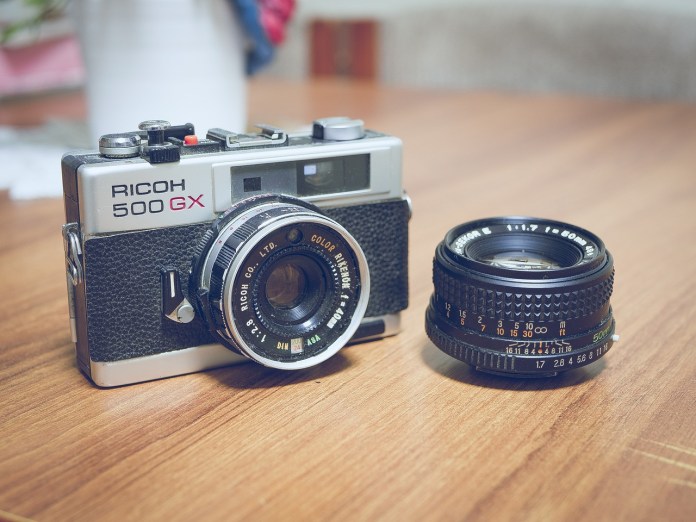
It was a lovely sunny morning and it would have made a great photo if I’d had my Olympus DSLR camera and long lens with me to get a nice out of focus background, but as I was going shopping I didn’t even have a compact camera in my pocket, and as for the camera in my mobile phone at the time – not even worth considering.

Today as well as my DSLR I have a few compact cameras – my larger zoom one, a slim one that will fit in a bag pocket, and a really pocketable but relatively basic one – and a bridge camera for taking with me in different situations when I know there might be good shots but I don’t want to take the full SLR kit, like when I go out on the mountain bike. I tend to take my old, battered Lumix zoom compact mostly though as it’s a good, dependable all-rounder.

Then there is my smartphone which has a really good camera on it for when I have nothing else with me, though I’ve not really tried anything like the missed Roundhead photo with it.

The phone makers say that the phone cameras can now do anything a DSLR can, that “everyone’s a photographer now” but I’m just familiar with my big camera and know how to quickly get the photo I want from it instinctively using buttons and dials without having to mess around with on-screen controls.

I miss less opportunities now as I can at least get something but there are though still occasional times when I feel that a shot really needs the DSLR and long or fast lens, and those are still frustrating.

Standard
Marketing, Meta, Tech

The Modern J. R. Hartley

In the eighties the Yellow Pages had a number of TV ads in the UK showing people finally finding some elusive item by using their book to find suitable shops and ringing them. One such ad featured the now famous but fictional author J. R. Hartley searching for a copy of the book he’d written called Fly Fishing. We were never told what had happened to leave him without a copy of his own book just that eventually he found one and was happy.

Today of course Yellow Pages is still with us but the same story could be used by at least three companies. In 2020 Mr Hartley, or his daughter from the ad, would sit down in the lounge with a computer and perhaps search for local bookshops on Yellow Pages itself, or Google, then visit their websites and browse their online catalogues of old books, then perhaps ring them instead.

Alternatively he might log on to Ebay or Amazon type his name or the books and see what appears. From personal experience he’d probably have to save a search on Ebay to get the book but would no doubt get one eventually, having trawled through numerous other books on fly fishing, or containing either of the words. He could, of course, get the Kindle edition but would probably feel that it’s not quite the same, not got that old book smell and tactile sensation. J. R. Hartley would want the real thing, his book.

Strangely though, as sometimes happens, fiction became fact and although J. R. Hartley remained fictional his book didn’t, emerging in the nineties, as people started trying to get hold of a copy – to see what it was all about, into real world bookstores and eventually onto Amazon itself, where I bought a second-hand copy, and where it also now exists as a Kindle edition so it has sort of gone full circle from an imaginary book to a book that exists virtually.

Standard
Business, Gadgets, Tech

The Ghosts of Software Past

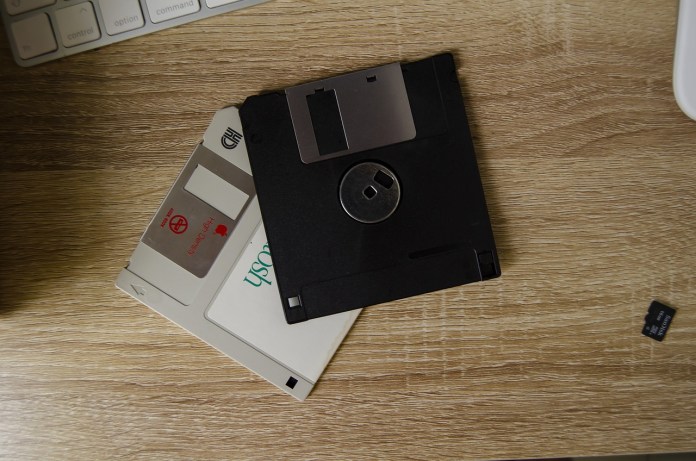
I remember when all software came on magnetic floppy disks, sometimes on one, but later on many and even installing Windows 3.11 required a large number of disk changes, you couldn’t just set it going and leave it like today. I still have a copy of that version of Windows and of Borland C++ which came with a huge box of reference books and a similarly huge number of disks – both the smaller 3.5″ ones and the older 5.25″ ones – you really felt like you were getting your money’s worth. You’d put the first disk in and wait for what seemed like an eternity until the installer would flash a message up saying “Please insert disk 2” and you’d search through the stack if you’d somehow shuffled them and hope that it wasn’t missing – either not supplied, or lost if you were reinstalling. Then the waiting would continue and repeat until disk 10.  Fun times.

Since then we’ve been through CDs and DVDs and now thanks to high speed broadband you can even download a whole operating system in just a few small hours, or so it seemed to me when I did it a couple of months back with Windows 10. At each stage it was possible to shortcut the earlier process by copying the floppy disks onto a single CD, and then later copying whole CDs onto a large USB stick or portable hard drive though Windows can still use a DVD to install.

Because of all the disks, and the boxes in which to distribute them manufacturers in the past couldn’t keep selling old versions of software due to the manufacturing costs and the space required to warehouse them though some companies such as Serif would sell old versions cheaply alongside new ones for a while. Today though with downloadable software they can keep supplying old versions for much longer which is useful when you have old hardware that needs old software. Sometimes you’ll have an old computer that won’t run a 64 bit version of windows for example but new software won’t work on 32 bit windows, the newer version is incompatible with all or part your computer, or, as I found out, you buy an old negative scanner and the software disk that came with it was unreadable and the current version won’t work, luckily though the manufacturer still sells the old one via their website – preventing the new hardware becoming an expensive paperweight, or in the scanner’s case doorstop.  Many freeware, shareware or low cost independent software authors have an archive of old versions on their websites.

In other cases old, usually free, software or device drivers that have been rendered obsolete or the manufacturer has just decided not to continue developing them anymore can still be obtained via individuals uploading and archive copy to a download service. Again this is helpful as some older utilities have been replaced by newer, slower, clunkier “improved” replacements and you don’t have the option of the old program you liked – where the old version is either automatically upgraded or doesn’t come with a new operating system or application. This may also be true for paid for applications so long as you have the correct licence to install them.

Then there are the people who have managed to get really old software to run on modern PCs, like a Windows 3 emulator for that nineties computing experience. I had a Super Nintendo emulator to play games on my PC once but it just wasn’t the same so I bought a second hand real one instead.

Standard
Gadgets, Marketing, Tech

Biting The Hand That Feeds It

Adverts

Image by Falkenpost from Pixabay

I’ve been trying to catch up on some news articles I’d saved for reading later but it’s been difficult, not because of the news itself, it’s not that deep and meaningful, the problem is advertising. Just about every news website apart from the BBCs is virtually unreadable today, some more than others. The reason is animated adverts. On my tablet, or an adblocker-free browser it’s impossible to read most of these sites because the page starts to load, you see the article, you start reading it and then either it won’t scroll further down as the whole browser has locked solid or when you scroll down and keep reading it suddenly jumps back to the top again – often because some huge animated ad that’s taken an age to load has suddenly flounced onto the front of stage like the proverbial eight-hundred pound Gorilla. It’s even worse when there are multiple adverts and their continuous loops stop you reading down the page as it’s become unresponsive or slow or worse still when they obscure what you’re reading altogether.

When using a desktop browser with an adblocker to make the site actually usable many sites have a popup crying “you’re using an adblocker, how are we supposed to buy our groceries at Waitrose tonight?” So you turn off the adblocker and find that the site is back to being virtually unreadable.

Adverts in magazines aren’t animated, for obvious reasons – it’d be damned expensive to put a screen in every issue, and bulky – but they still achieve their ambitions, they rely on old fashioned techniques to gain attention, the sort of thing I used to design in the days before you needed to know about javascript syntax, curly braces and whether to use an unsigned integer variable; things like colour, typography, layout, imagery. It seems that the people who design websites started using animation just to show off that they could, and convinced marketers that they needed to use animation to gain attention from their target demographics, and the marketers believed them, and paid more for the animation. There is though now no going back because the idea has become so ingrained. They have combined the TV advert model with modern Hollywood firework displays, applied it to the written word media and ended up with a nuisance.

The thing is that although people do notice the ads and notice the message they’re also annoyed by the side-effects – if websites had static ads which would load at the same speed as the rest of the content and would instantly be there, front and centre then people wouldn’t need to use adblockers, we don’t object to the ads, they pay for the website, they pay for this website – though as I don’t develop the site itself I have no choice about the type of ads, on my Flickr page I pay to have no adverts. The objection is against the intrusion and frustration they cause. As with desktop software the developers test these websites and ads on powerful computers connected directly to a server rather than on a normal laptop or tablet connected to a 4 meg broadband connection so I doubt that they have much appreciation of what they fancifully call the UX (user experience) is like in the real world.

I wonder whether companies actually look at the website metrics – the visitor count, length of visit and so on – and perhaps notice that many visits are too short to possibly read anything. They no doubt do but the views that just put up with it outnumber those who don’t and at the end of the day a click is a click and another payment from the advertisers, even if the clicker doesn’t stick around long.

I though still think it’s about time the wannabe Hollywood filmmaker developers and marketers stopped showing off how clever they are and set out to please the users who ultimately pay their wages by tolerating the adverts that annoy them so much. If a brand gets its message across without the negative connotation of being a nuisance surely that’s better, no?

Standard
Cars, Society, Tech, Transport

Unplugged: How To Power a Car in 2025

action asphalt automobile automotive

Photo by Taras Makarenko on Pexels.com

Would you buy this used car: it’s in good condition, it’s reasonably priced, good so far, it only takes two hours to refill with fuel, eh, what? Oh, and you’ll need to buy a new fuel tank which costs more than the car, and if you use it regularly and keep it then you’ll need another one in a few years time and it’ll not be any cheaper than the last one because you can’t use a second hand one, they either work or don’t. Tempted? No, me neither but that’s the issue with plug-in electric cars. No matter how much the makers claim that soon they’ll be able to be charged more quickly it’ll still take much longer than refilling with a liquid fuel such as petrol, diesel or… hydrogen. And the batteries usable life is still poor like the one in your phone, Lithium Ion batteries can only be recharged so many times – as witnessed by the fact I’ve just had to buy a new battery for my laptop.

An advert at the moment says that because more people are buying electric cars it means that “The Electric Car is now just The Car”, and the government is looking to invest millions in charging points, someone even recently suggested that in the future petrol stations could become recharging stations instead. Ok, let’s have a look at that for a moment: there’s an electric car advertised at the moment that states the “rapid charging” takes 75 minutes to reach 80% charge. How many cars visit an average petrol station in that time? The last time I filled up my car at least four of the six pumps were occupied for the two minutes or so it took to fill up and pay, imagine the queues on motorways leading to the recharging stations.

Still though electric car sales have gone through the roof, driven by hype and fashion. Many countries are proposing banning sales of petrol and diesel cars by 2040, or 2035 in the UK now, saying “woo, look how eco-friendly we are” but again think about the practicalities of this – what about people who have no garage to park their car in, people who live in apartment blocks with communal parking, or parking on the street – are sales of very long extension leads going to soar, are we looking at a future of pavements covered in cabling or are landlords and councils expected to dig up the road and install charging points? Who will pay for the electricity? Already some places that put in charging points for customers to charge for free are pulling them out again because someone will park there and leave the car all day.

Battery electric cars are always being described as clean but this is only in terms of direct emissions, indirectly the electricity has to come from some form of generation and unless its solar, hydroelectric or geothermal it won’t be as clean as the ads imply.   Add to that the environmental costs of making the batteries.  Vauxhall have an advert for a new electric car that shows a gravestone with “Petroleum, back in the ground where it belongs” on it. The gas and coal used to generate the electricity to charge the car, taken out of the same ground. This country isn’t really suitable for most renewable forms of energy, even if we surrounded our coastlines with wind turbines and even using solar power to directly charge a car isn’t really feasible – neither will solar powered aircraft, the best ones at the moment can only generate enough power to carry one person.

Hydrogen gas is the only option in my opinion.

Hydrogen fuel cell cars can be refuelled quickly, they only produce water as a by-product and don’t require batteries which have a huge environmental impact and short lifespan. Petrol and diesel persisted because of convenience of refuelling and energy density – you get a heck of a lot of energy (and hence mileage) from a small volume, compressed Hydrogen has this same advantage.
Because producing Hydrogen requires either a chemical process or electricity to separate it from the oxygen in water that’s the argument that many people use – that you’re using fossil fuels to do the job, the counter argument being “where do you think the electricity to charge your ‘green’ electric car comes from eh?”
In hot, dry countries there are solar power plants which focus the sun’s rays to create steam to drive turbines and generate electricity, if dedicated plants were built which used the energy they produce to create hydrogen (and oxygen) then that could then be transported to nations like ours to use in fuel cells. This would reduce the environmental cost to only the transportation – which is the case at the moment for petrol. But you don’t even need the electricity, Hydrogen can be produced using chemistry from other substances where it is bonded with elements other than Oxygen.
In nature plants take in carbon dioxide, water, sunlight and nutrients and use them to grow, releasing oxygen in the process, hydrogen fuel-cell cars can be part of the natural water cycle too – split seawater into its components, use the hydrogen – recombining it with oxygen to release usable energy and produce water that returns to rivers and seas to then evaporate or be split into hydrogen and oxygen again.

When Honda’s FCX Clarity fuel cell car came out it was heralded as the car of the future yet many years later there’s still nowhere to fill up a fuel cell car so that creates the paradox – nobody will buy a car with nowhere to fill it up but no-one will build the infrastructure because they say “where are the cars to use it?”
Essentially the barrier to Hydrogen use is the infrastructure – it would cost millions to put in place equipment at filling stations for hydrogen they say. Oh, lets not bother then, let’s spend millions on charging stations instead. Huh?

The fuel cell car is cleaner to make as it has no lithium-ion batteries which also means the ongoing costs of replacing worn out ones are eliminated. Maintenance is simplified as the only moving parts are the motors, or even just one motor and some driveshafts depending on the drivetrain. It’s more practical as you can refill it quickly, park it anywhere and still get decent range from it. It has the same benefits of power and torque as any other electric car. Depending on how the hydrogen is made it can be near to zero emissions both directly and indirectly.
The irony is that both the electric motor powered car and the Hydrogen fuel cell both pre-date the internal combustion engine – if only they’d been brought together sooner.


Standard