Business, DIY, Home, Marketing, Society

Slow News Days

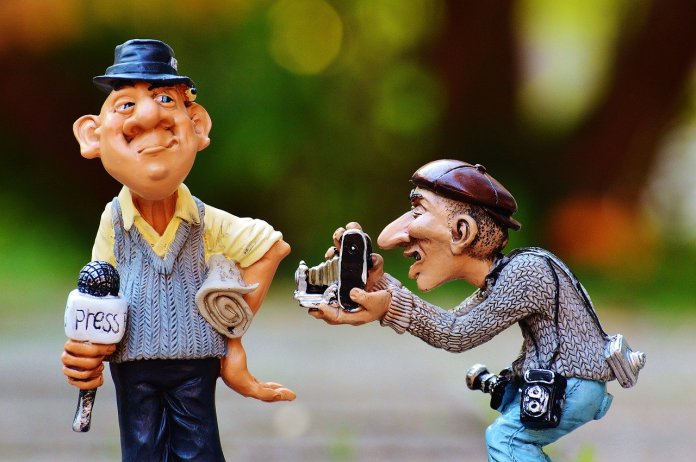
Press

Image by Alexas_Fotos from Pixabay

I haven’t got much to say today so I’ll quickly mention newspapers that seem to be similarly afflicted.

Linda Smith once said on a B-series episode of QI “My favourite ever headline was “Worksop Man Dies Of Natural Causes.”

The internet era equivalent of the Worksop man are the people from across the country who have done some DIY on a budget. The Google News feed on my phone provides me with, at least once a week, a story from a local newspaper site wherein someone has given their kitchen, bathroom or garden a spruce up for less than it should surely cost by doing something novel and amazing – buying things from a cheaper shop. Gasp.

They’re generally along these lines: “Savvy shopper Tracy transformed her home using items from [insert bargain store name here]“, and the article tells us “she got a new look kitchen for just £200.” Sometimes you’ll “never believe how she did it.”

Why is this news? Why is it unbelievable? Why haven’t I got an article written about me? Just last night I had fish, chips and mushy peas for less than the chip shop cost by buying items from Asda and B&M Bargains. Chips shop quality mushy peas too. And I’ve given my living room a makeover using stuff from B&M and Ebay no less.

When there’s a two-hundred foot UFO hovering over the town hall, that’ll be news.

[Glances out the window, just in case.]

Standard
Business, Marketing, Society

A Tale of Two Ciders

Cider

Image by StockSnap from Pixabay

It’s a Friday night in summer, half-past-eight and I’m listening to Jazz, watching the sunset and drinking a glass of Cider. It is one of my great pleasures.

Cider used to be simple, it was an alcoholic drink made from Apples, but as with so many things now it has to have more variety to appeal to wider markets so now there are Raspberry Cider, Strawberry Cider and so on. They’re not Cider. In a shop once the man stood near me said into his phone “They’ve got a Pear Cider kit mush, just wondered if you want one,” “it’s not Cider, it’s Perry” I muttered under my breath. There used to be Sweet Cider and Dry Cider, and the likes of Scrumpy, but you still got progressively pissed, or merry at least, just at a different rate. And it all tasted of Apple.  Apparently even in France Cider has to be made entirely of Apples.

Our American friends have muddied the scrumpy even more with Apple Cider and Hard Cider – the first being pure Apple Juice (it isn’t Cider, yet) and the latter is, let me think, CIDER.

As a result of the different flavours my favourite brand of English Cider now has Apple Cider on the label, though it might surprise any Americans who were expecting a soft drink.

To take this to its ultimate conclusion will the famous novel featuring the drink in the title, in future, be renamed “Hard Cider with Rosie”?

Standard
Society, Transport

But Cyclists Don’t Pay Road Tax…

Bicycle

Image by Free-Photos from Pixabay

I enjoy driving yet I am currently on bike number five but car number four, I did, however start on bikes when I was at school – a Raleigh Striker, then an orange Grifter, then an Emmelle Alpine in white and green which I had with me until I moved to the centre of Newark, left it chained up outside and some nice person decided they’d prefer to relieve me of it and sell it for scrap for a few quid, after all why would I miss it, it’ll be insured, I could replace it, etc, the usual thieves excuses. I was gutted, angry. I replaced it for practical reasons with a folding mountain bike that I had to carry up three flights of stairs to store outside my apartment. When I moved again to where I had a nice secondary section of garden where my dad built me a bike shed to store it securely I took the opportunity for a change, to replace the folder which was too small and caused my back problems just from riding it with a suitable replacement for the Alpine.

I now have a really nice mountain bike having traded in my old one and being the right size is a pleasure to ride, I recently even realised that my new Orange bike is perhaps a subconscious homage to my earlier bike.  I’ve recaptured the enjoyment of cycling I had years ago.

Mostly.

Here are a couple of myths some people seem to believe: Cyclists don’t pay road tax, and cyclists are obliged to stop and get out of the way of cars when the car is on the cyclist’s side of the road because the car always has right of way.

I pay road tax on the car I can’t use during the week even if I wanted to because the fuel isn’t cheap and there’s nowhere to park at work, mainly because of people parking in the work car park who shouldn’t be there but assume that because it’s next to their houses without off-street parking they’re entitled to use it.

The other myth is something I encounter every day – on a street where along one side is residents’ parking that leaves the rest as a two-way single carriageway road. According to the highway code I have right of way when I’m passing the line of parked cars, especially when I’m on the correct side of the road for my direction of travel yet whenever a car comes the other way on what would be the wrong side of the road from their perspective they just come barrelling towards me and expect me to get out of the way, one idiot in a BMW was actually grinning and drove deliberately at me.

Which brings me to the other point – people seemingly finding it amusing to drive too close to cyclists and cutting us up at junctions – this happened where a car passed me and immediately swerved at speed across in front of me into a junction on my left I was approaching, just as I was thinking that was close the Transit van which was following the car did the same, I had to brake sharply, thanking Halfords that the bike had great disc brakes, I’d only had the bike four days. The thing is that it seems fashionable to hate cyclists and this fashion has become like a game to some drivers, like it’s expected to do your part in driving cyclists off the road by intimidation. As I mentioned earlier such drivers find it funny and so many drivers just seem to think that cyclists don’t belong on roads, hence the Road Tax reference.

I admit that many cyclists annoy me, the weekend tour-de-Nottinghamshire peleton wannabes riding in a three or four-wide pack on high-speed roads rather than single-file as instructed in the Highway Code for example, or the lads I saw once who ignored any traffic signals and shot across a busy four-way junction in front of two lanes of moving traffic, almost causing a pile-up. Then there are the ones who, perhaps on principle, won’t use cycle lanes where provided.

As a car driver and cyclist I see both sides and try to be considerate in both situations, for example while taking my government sanctioned daily coronavirus lockdown exercise I was aware of firstly a lorry behind me on a narrow road in the town and another time a car behind me on a country road. Both times I quickly found a safe place to pull off the road briefly and let them go past and both drivers waved thank you too.

There are some cyclists who ride stupidly, there are some motorbikers who do the same, there are some drivers who drive stupidly too. It’s not fair to tar everyone with the same brush.

Standard
Society

Dirty!

Soil & Trowel

Image by walkersalmanac from Pixabay

I was thinking yesterday that at the weekend I’m going to clean the bird muck off the top of my wheelie-bin as although the bin men and women no doubt see all kind of muck it’s not nice to have to deal with.

This reminded me of the state of uncleanliness that some people are happy to present their possessions in when leaving them with someone else – for repairs, alterations, inspections and so on.

I have worked in two places where I can give examples.  There was once an infamous motor-home taken to a dealership for its annual service.  This was an expensive van, top of the range and when the technician opened the habitation door he felt the need to let even us in the warranty office see it.  The carpets looked like they were 90% dog hair, the air was 90% dog breath, or at least, er, aroma.  The corners and edges of cabinets had been gnawed, hopefully by the dogs and we could only imagine what potentially coated the rest of the surfaces.

Then there’s a regular occurrence whereby someone will bring in a piece of greenhouse glass into the shop to be cut down to replace a broken piece, rather than buy a new, shiny piece.  We don’t mind doing this but it’s inconvenient when the piece they bring in has been sat behind the greenhouse for two decades and has built up a significant, shall we say, patina.  Usually it’s springtime so the moss and soil on the glass will be damp and we have to clean it off before we can use our glass cutters on the glass itself – if not we’d end up with clogged cutters and soggy cutting table.

Personally I couldn’t do that, even if I take items to a charity shop I clean them whether it is a t-shirt or a photo frame, I tidy the car before taking it for an MOT.  As for my bin, well maybe even the cat that likes to sit on it in the sunshine might appreciate it being cleaner too.

Standard
Architecture, Outdoors, Psychology, Society

The World Wrapped in Cotton Wool

Warning Signs

Image by Peter H from Pixabay

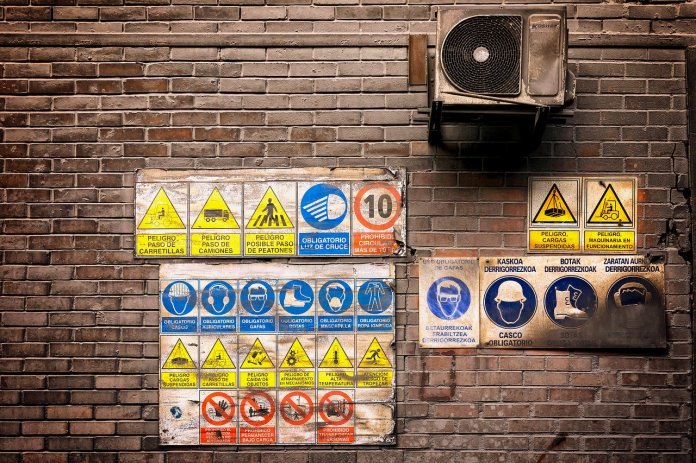
In recent years, it seems to me, our urban architecture has turned into a sea of yellow and red warning signs and yellow and black striped tape.

Today there seems to be a constant corporate fear of being sued that has caused so much of this kind of protectiveness. For example the Royal Mail depot near me has big warning signs at the site entrance warning of a “Trip Hazard” which may be the ends of the lowered pavement where public pedestrians are corralled between railings towards where they collect parcels. Where this public path intrudes onto the roadway a big yellow line and accompanying signage tells the humans to not stray outside the lines lest they be flattened by Postman Pat’s little red van. There are further trip hazard signs and yellow and black tape at the actual entrance to the collection office as despite there being a ramp to one side the straight ahead approach involves negotiating, unbelievably, a normal height step. OMG, get me some climbing gear. Despite all this there are still the big signs saying “Beware of Vehicles”.  When I was young we were taught the Green Cross Code to follow when near roads.

Another example of the idea of “you didn’t do enough to stop me injuring myself” are scaffolding poles – “now padded for your safety and comfort” and also wrapped in yellow and black tape. I wonder whether it was a ploy to support the manufacturers of tubular yellow foam products, maybe they weren’t selling enough as pipe lagging but at some point in the last fifteen years it was decided that every bit of publicly accessible scaffolding needed legwarmers. On pavements the world over there are lampposts, street signs, litter bins, bollards, walls and even doorsteps or whole sections of buildings jutting out into the path of pedestrians yet none of those things are padded for your protection, or edged with wasp-coloured tape. You can’t say that it’s because as a temporary structure people might not be aware that they’re there as even a lamppost is an unknown obstruction to anyone who doesn’t know the area well – and even to someone who is local but not paying attention. I’m amazed that the lampposts and railings aren’t similarly adorned. Yet.

I can see the point of helpful signage, warning of a hidden step, or low beam, or something round a corner that’s not obvious, just as I can see the point of the interlock on my washing machine that stops you opening the door until the water’s gone – it saves you having to mop up the floor, and aircraft doors can’t be opened in flight for obvious reasons – but some things can only exist because companies think they need to protect people from themselves because they can’t be trusted to negotiate the world without explicit instructions. Trains for example used to have windows that could be opened while moving, as could the doors but not any more because someone might try to depart the vehicle at speed, or perhaps just part of them.

So we end up with shops selling luke-warm coffee or cups plastered with warning that the contents may be hot. Microwave meals similarly warning that on removing the item from the microwave the contents “may be hot” – well I would hope so otherwise it’s time to buy a new microwave.

Perhaps the companies have a point, that more people today don’t have or just don’t use common sense, or maybe that people are more willing to sue if they’ve not been explicitly told not to do something.  Either way at this rate there is a risk of missing the hazards because you’re too busy looking at the signs.

Standard
Psychology, Society, Transport

All Sound and Fury, Signifying Nothing

I’ve noticed recently that the noisiest motorbikes and cars sound, as their riders or drivers accelerate them, like a baby crying for attention – -wahhhh, wahhhhh, wahhhhh, with each noise increasing as they go along, not a coincidence I think…

As I write this it’s a sunny weekend in May so inevitably all day while trying to enjoy the sunshine we’ve heard pratts revving their cars or bikes outside their houses, tuning them – so they seem to think – and idiots tearing out of town into the countryside at well over the speed limit and excessively noisily. At this time it’s all the more annoying as they’re supposed to be staying at home and pushing your right foot onto a pedal doesn’t count as daily exercise.

I don’t hate all motorbikes or sports cars, or all of those who ride and drive them, there is someone on this street who has a modern bike and you barely hear his arriving or leaving on it, he occasionally rides either a true classic bike or a modern replica and it’s the same with them, his friends are the same, the engines emit a not-unpleasant burble and they don’t set off at full revs. Yet the two younger riders round here have Japanese “sports bikes” with all the plastic cowlings and deliberately loud exhausts and they have to sit there making a racket before even going anywhere and arrive similarly loudly so everyone notices them and so everyone thinks they’re the next Valentino Rossi.

They would no doubt say that rather than sounding like they’ve got a dodgy exhaust their car sounds “mint”, “like a Frarri”, “badass” or “sick” – which it does, as in “broken”.  They think everyone will be impressed by the driver’s “mad skillz”, but most people who have to listen to it won’t be impressed, they’ll describe the driver with a word that beings with ass…

One reason they all rev their engines at home is so everyone can see that they have a powerful car or bike and how amazing they are that they can handle it. Whereas some of them even just seem to have the loud cars and bikes for the soul purpose of annoying people, wearing the fact that they’re so bad that they’re despised as a badge of honour, because the bad are glorified, for example the “bad lads” are supposedly the real men in society, so say Hollywood and the much of the media. One car near where I live had a decal glued to the tailgate that said “Hated Locally” on it. Whether the driver implied that he was hated because he’s so much faster and better than other drivers or because he was loud and annoying is irrelevant as the latter will have been true anyway.

Standard
Cars, Society, Tech, Transport

Unplugged: How To Power a Car in 2025

action asphalt automobile automotive

Photo by Taras Makarenko on Pexels.com

Would you buy this used car: it’s in good condition, it’s reasonably priced, good so far, it only takes two hours to refill with fuel, eh, what? Oh, and you’ll need to buy a new fuel tank which costs more than the car, and if you use it regularly and keep it then you’ll need another one in a few years time and it’ll not be any cheaper than the last one because you can’t use a second hand one, they either work or don’t. Tempted? No, me neither but that’s the issue with plug-in electric cars. No matter how much the makers claim that soon they’ll be able to be charged more quickly it’ll still take much longer than refilling with a liquid fuel such as petrol, diesel or… hydrogen. And the batteries usable life is still poor like the one in your phone, Lithium Ion batteries can only be recharged so many times – as witnessed by the fact I’ve just had to buy a new battery for my laptop.

An advert at the moment says that because more people are buying electric cars it means that “The Electric Car is now just The Car”, and the government is looking to invest millions in charging points, someone even recently suggested that in the future petrol stations could become recharging stations instead. Ok, let’s have a look at that for a moment: there’s an electric car advertised at the moment that states the “rapid charging” takes 75 minutes to reach 80% charge. How many cars visit an average petrol station in that time? The last time I filled up my car at least four of the six pumps were occupied for the two minutes or so it took to fill up and pay, imagine the queues on motorways leading to the recharging stations.

Still though electric car sales have gone through the roof, driven by hype and fashion. Many countries are proposing banning sales of petrol and diesel cars by 2040, or 2035 in the UK now, saying “woo, look how eco-friendly we are” but again think about the practicalities of this – what about people who have no garage to park their car in, people who live in apartment blocks with communal parking, or parking on the street – are sales of very long extension leads going to soar, are we looking at a future of pavements covered in cabling or are landlords and councils expected to dig up the road and install charging points? Who will pay for the electricity? Already some places that put in charging points for customers to charge for free are pulling them out again because someone will park there and leave the car all day.

Battery electric cars are always being described as clean but this is only in terms of direct emissions, indirectly the electricity has to come from some form of generation and unless its solar, hydroelectric or geothermal it won’t be as clean as the ads imply.   Add to that the environmental costs of making the batteries.  Vauxhall have an advert for a new electric car that shows a gravestone with “Petroleum, back in the ground where it belongs” on it. The gas and coal used to generate the electricity to charge the car, taken out of the same ground. This country isn’t really suitable for most renewable forms of energy, even if we surrounded our coastlines with wind turbines and even using solar power to directly charge a car isn’t really feasible – neither will solar powered aircraft, the best ones at the moment can only generate enough power to carry one person.

Hydrogen gas is the only option in my opinion.

Hydrogen fuel cell cars can be refuelled quickly, they only produce water as a by-product and don’t require batteries which have a huge environmental impact and short lifespan. Petrol and diesel persisted because of convenience of refuelling and energy density – you get a heck of a lot of energy (and hence mileage) from a small volume, compressed Hydrogen has this same advantage.
Because producing Hydrogen requires either a chemical process or electricity to separate it from the oxygen in water that’s the argument that many people use – that you’re using fossil fuels to do the job, the counter argument being “where do you think the electricity to charge your ‘green’ electric car comes from eh?”
In hot, dry countries there are solar power plants which focus the sun’s rays to create steam to drive turbines and generate electricity, if dedicated plants were built which used the energy they produce to create hydrogen (and oxygen) then that could then be transported to nations like ours to use in fuel cells. This would reduce the environmental cost to only the transportation – which is the case at the moment for petrol. But you don’t even need the electricity, Hydrogen can be produced using chemistry from other substances where it is bonded with elements other than Oxygen.
In nature plants take in carbon dioxide, water, sunlight and nutrients and use them to grow, releasing oxygen in the process, hydrogen fuel-cell cars can be part of the natural water cycle too – split seawater into its components, use the hydrogen – recombining it with oxygen to release usable energy and produce water that returns to rivers and seas to then evaporate or be split into hydrogen and oxygen again.

When Honda’s FCX Clarity fuel cell car came out it was heralded as the car of the future yet many years later there’s still nowhere to fill up a fuel cell car so that creates the paradox – nobody will buy a car with nowhere to fill it up but no-one will build the infrastructure because they say “where are the cars to use it?”
Essentially the barrier to Hydrogen use is the infrastructure – it would cost millions to put in place equipment at filling stations for hydrogen they say. Oh, lets not bother then, let’s spend millions on charging stations instead. Huh?

The fuel cell car is cleaner to make as it has no lithium-ion batteries which also means the ongoing costs of replacing worn out ones are eliminated. Maintenance is simplified as the only moving parts are the motors, or even just one motor and some driveshafts depending on the drivetrain. It’s more practical as you can refill it quickly, park it anywhere and still get decent range from it. It has the same benefits of power and torque as any other electric car. Depending on how the hydrogen is made it can be near to zero emissions both directly and indirectly.
The irony is that both the electric motor powered car and the Hydrogen fuel cell both pre-date the internal combustion engine – if only they’d been brought together sooner.

Standard
Health, Meta, Politics, Society

The Lighter Side of a Global Pandemic

Right from the early stages of this Covid-19 Pandemic there has been a number of film and TV show selections of the schedules that have been, shall we say, interesting. I’m not sure if these were deliberate, I know schedules are worked out in advance but, as we’ve seen with the plethora of lockdown-specific TV shows, can be changed.

The ones that I noticed have included:
  Channel 5 showing “28 Days Later” regularly
  Channel 4 showing “The Return of The Black Death”
  Channel 5 showing “The Great Plague: Digging Up Britain’s Past”
  ITV2 showing “Contagion”
  Horror Channel showing “The Andromeda Strain” – the obligatory “it’s aliens” story.
  Another channel showed a documentary “Pandemic: 1918” about the Spanish Flu outbreak.
  Horror Channel showed “Daylight’s End” “In the aftermath of an outbreak that turned humans into rabid creatures” – much like the scenes in supermarkets shortly before the lockdown.
Either it’s a sick sense of humour or an attempt to say “things could be worse”… Elsewhere DMAX have been showing first Paranormal Lockdown UK and then Paranormal Lockdown US. Which I’m sure is a coincidence but if anything can be called a paranormal lockdown this can.

I have noticed that shopping has ceased to resemble Supermarket Sweep and now feels like the start of a Tour de France time trial or a World Rally stage – being let go into the aisles at intervals – at least they don’t time you, or if they did what would you win? A bottle of hand sanitiser?
  There was a man in a shop who was offered his receipt by the cashier and his reaction was to insist that she put it on the counter before he then picked it up, saying “you can’t be too careful” despite the fact that she’d already touched it, she’d put it down on a surface which could have even more contamination on it than her hand and if he’d taken it from her he’d know which end she’d touched and as such he could have just stuffed it in his wallet uncontaminated. In the same shop they’d had to put signs on the shelves where the handwash had been, and had been replaced with loads of bar soap, saying, effectively “this is soap, it works the same as handwash, it’s just solid.”
  In a light-hearted post the photographic film manufacturer Ilford suggested stockpiling rolls of film not toilet roll.

In Psychology there is an effect whereby if you touch and object you want to own it, supermarkets have now reinforced this with their instruction to not touch anything you’re not going to buy therefore if you pick something up to see what it is you feel you really should buy it – or is that just me. Ok, just me then.

The Grand National was replaced by a virtual version and bookmakers profits were donated to NHS charities. For years we’ve been saying that some motorsport has become more like a video game, in 2020 Formula One and Formula E literally did, and finally the fans who were convinced they could drive better than the professionals got a chance to try to prove it.

TV and radio have become strange as many programmes presenters have taken to the equivalent of “phoning it in”, sat in their living rooms, occasionally interrupted by kids or pets while some new shows have been made specifically for lockdown such as Jamie Oliver’s cooking tips and Kirsty Allsop doing a programme on crafts you can do while at home.
  One of the channel idents for the UK’s Dave said “Who’d have thought that staying at home and watching TV would count as saving the world?”

In a slightly mistimed new Lynx Africa advert, a young man at college picks up a can of Lynx Africa in 1996 and immediately he gets transported to 2020 where he emerges on the lawn outside in front of a young woman who sprays the Lynx on his t-shirt then drags him away. The reality of course would be he would either emerge into an empty college lawn or if she was there she’d have told him to get back and observe the social distancing – and either way he’d wonder what they hell was going on.

At mealtimes we’ve all been transformed into amateur Heston Blumenthals experimenting with what we’ve got left in the fridge and freezer until we go and queue up at the supermarkets again. All this aided by the aforementioned Jamie Oliver. After the toilet roll stage of the panic buying came the beer and wine stage while in South Africa they are looking to impose a ban on drinking hand sanitiser. Talking of supermarkets a newspaper in hull shared the amazing news, nearly a month into the lockdown, and even longer since the panic buying began, that you could get most of your groceries at shops which aren’t supermarkets, gasp. I, today ventured into a supermarket after work for the first time in seven weeks, there wasn’t a queue, it was half-past-five of course.

And we’ve gained a new phrase and concept of course – social distancing, two words that we’ll take a while to forget and a habit that we’ll probably still subconsciously maintain after this is over, I’ve even noticed that I’ve seen people on TV adverts and thought “they’re not two metres apart”…

Facebook and Twitter have been a mine of Coronavirus humour since day one, as expected.  Especially as we were told to not stay home anymore but “stay aware” – of what, nobody’s really sure as yet.

Of course there’ll always be songs to keep you going and I’ll leave this post with an appropriate one Radio 2s Liza Tarbuck played on the 11th of April by Ethel Merman, Jack Klugman & Sandra Church “Together Wherever We Go”:
“We may not go far… We’ll always get through this together”

Standard
Health, Psychology, Society, Work

A Crisis Brings Out The Best in People

Flowers

Flowers

I originally wrote a piece about how it felt like our nation had lost our legendary stoicism and blitz spirit and become selfish and cynical in the face of a global pandemic, hence the title being ironically wrong, but thankfully the good has now far outweighed the bad so, the revised version.

We started March with a looming, glowering storm approaching called COVID-19 and numerous selfish individuals made grocery shopping look like an episode of Supermarket Sweep thinking that of course, and I quote, “there wouldn’t be any food in two weeks time”. Though food didn’t seem to be on most of their minds as across the world people hoarded toilet rolls – why they’d need them without food is anyone’s guess. in the U.S. of course people hoarded guns and ammo, presumably in case someone came to take away their bog rolls.

As we know, despite supermarkets telling us that they’d got warehouses full of everything we’d need while being locked away for six months, the hoarding soon extended to milk, pasta, bread and nappies. When the pubs closed down so the hoarders stockpiled beer too, then gin, rum and lastly cider. I drink cider so I’m ok with enough for my occasional can in the fridge. I’m alright Jack (Daniels).

After six weeks we got the queuing back but this time at reopened DIY stores and household waste centres as people were desperate to clear out the stuff they’d been, er, clearing out for six weeks.

I spoke to a woman on the till at the height of the panic buying, she looked exhausted and had had a bad day, it was worse than the pre-Christmas rush and she said she’d had enough of working in retail, it was the final straw. Then the hoarders left an NHS nurse in tears because after working all day to help people she couldn’t get food for her tea. Further it descended into the same people shouting at shop staff because they couldn’t get what they wanted and after limits were imposed on how much you could buy people tried going back with multiple trolleys – one man locally went back to the same till with a second trolley full and was refused, as was a man with a trolley full of toilet roll. It is a sad reflection on these parts of our society that the CEO of Asda had to go on TV adverts asking people not to abuse his staff.

But of course it wasn’t just shop staff, at first a number of Asians in Britain were verbally or physically attacked with comments such as “take your coronavirus home” being spat at them by the idiots, then the shop staff trying to make sure everyone has food, some staff of non-essential businesses had been abused for cancelling work and closing, and then after shops prioritised NHS staff in stores other shoppers had been heard to abuse them too just for being prioritised, commenting “so what” and so on. These people would be the first crying for NHS help should they fall ill, and would be demanding priority treatment.

We had people stealing milk bottles from doorsteps. A pub in Scotland delivering free meals to NHS staff received a torrent of online abuse for doing it. And the people who think this is just a free holiday and restrictions don’t apply to them, because they’re special or too “badass” to catch, carry and transmit the virus so they continue to gather together. And as for the people caught licking a phonebox in our town, well in addition to being made to clean it it would be ironic if they caught the virus from the phonebox wouldn’t it.

The latest thing is people believing conspiracy theories that 5G mobile is to blame for coronavirus and destroying the phone masts that ultimately our emergency services also rely on. It doesn’t help that these theories are being peddled by ill-informed celebrities on social media, because of course they’d be an expert on the subject so they must be right, right? As for the other conspiracy theories, well, it’d take the rest of the lockdown period to read them all.

But then the good in our country started to show. I’ve noticed most people being polite and considerate, saying thankyou, saying “morning” when you pass them while getting your government authorised exercise and smiling. Hundreds of thousands of people have volunteered to help the NHS, delivering prescriptions, taking patients to appointments, calling vulnerable people on the phone just to chat. Local groups have launched to help people, do shopping for them, walk dogs. Individuals and supermarkets have helped foodbanks. Pubs have become corner shops, restaurants became takeaways. Private healthcare companies are helping support the NHS, St John’s Ambulance volunteers are operating their ambulances alongside the NHS’ own service, and even Formula 1 teams have offered to build ventilators for hospitals. Airbus have deployed test aircraft to transport supplies. Passenger aircraft have been turned into cargo planes for medical supplies. A McDonald’s has become a drive-through testing station. The response has been amazing.

Like in wartime when car manufacturers made tanks and aircraft fashion clothes factories have started making medical gowns for the hospitals. Individual companies and even schools have donated PPE to hospitals.

The Queen has given speeches to rally the country in unison, invoking the wartime spirit, saying “And those who come after us will say that the Britons of this generation were as strong as any. That the attributes of self-discipline, of quiet good-humoured resolve and of fellow-feeling still characterise this country.” As a nation we are showing that we do indeed still have that spirit in abundance.

Every Thursday night we clap for carers, round here it has expanded to honk for hospitals, fireworks for frontliners too. We see rainbows painted by kids in house windows and attached to fences, even out in the countryside where I ride my bike. My parents saw, the other night, two dinosaurs walking along their street to give people a smile. Whole streets are singing outside their front doors.

People have raised huge sums for the NHS and charities via social media, including a Notts man who raised over £150,000 by camping in the garden, and Captain Tom, the 99 year old Army veteren who voluntarily raised over £30million by completing 100 laps of his garden, then gets a song to number one, the oldest person ever to achieve that. We’ve had improvised comedy nights, adverts encouraging working together.
Organisations supporting the vulnerable and desperately in need of help in this situation have continued to support everyone they can.  Communities have been helping each other to get through the crisis.

Internet services providers have beefed up their services and prioritised users to provide for remote working. Facebook has just announced that they’ll be flagging whether you’ve looked at any misleading information about coronavirus on their platform. The technology companies are enabling communications that enable the world to carry on better than we could otherwise have done, and allowed many who would otherwise be isolated to not be.

Shortly before we were Furloughed I spoke to a delivery driver who was moved because of people thanking him for carrying on and doing a wonderful job in enabling the country to carry on, which extends to posties and lorry drivers, shop staff, bin men and other key workers who we all should be grateful to and thank sincerely.
So yes we have seen we still have a strong community spirit, and judging by the Coronavirus jokes on Facebook, our sense of humour.

I think this characterises us, when times are tough we suddenly stand up and make things brighter, whether it’s a war, or a economic downturn or a pandemic we do what we can to make our country bright – in the landscape of flowerbeds or painted rainbows and our spirits through smiling and joking about it, dancing and singing in the street – whatever we need to do to try to keep each other going.

As Winston Churchill once said “makes you proud to be British.”
Standard
Health, Society

Thank You

Thank you

Image by Alexas_Fotos from Pixabay

I would just like to take this opportunity to say a huge thank you to all our country’s key workers, in the NHS, emergency services and elsewhere helping us through the Covid-19 crisis.  Thank you for keeping us healthy, saving lives, providing us with essentials in shops from milk to toilet paper, taking away our rubbish, keeping the lights on and drains unblocked, keeping us in touch and entertained, bringing supplies into the country and bringing parcels to our homes and businesses.

Standard