Marketing, Meta, Tech

The Modern J. R. Hartley

In the eighties the Yellow Pages had a number of TV ads in the UK showing people finally finding some elusive item by using their book to find suitable shops and ringing them. One such ad featured the now famous but fictional author J. R. Hartley searching for a copy of the book he’d written called Fly Fishing. We were never told what had happened to leave him without a copy of his own book just that eventually he found one and was happy.

Today of course Yellow Pages is still with us but the same story could be used by at least three companies. In 2020 Mr Hartley, or his daughter from the ad, would sit down in the lounge with a computer and perhaps search for local bookshops on Yellow Pages itself, or Google, then visit their websites and browse their online catalogues of old books, then perhaps ring them instead.

Alternatively he might log on to Ebay or Amazon type his name or the books and see what appears. From personal experience he’d probably have to save a search on Ebay to get the book but would no doubt get one eventually, having trawled through numerous other books on fly fishing, or containing either of the words. He could, of course, get the Kindle edition but would probably feel that it’s not quite the same, not got that old book smell and tactile sensation. J. R. Hartley would want the real thing, his book.

Strangely though, as sometimes happens, fiction became fact and although J. R. Hartley remained fictional his book didn’t, emerging in the nineties, as people started trying to get hold of a copy – to see what it was all about, into real world bookstores and eventually onto Amazon itself, where I bought a second-hand copy, and where it also now exists as a Kindle edition so it has sort of gone full circle from an imaginary book to a book that exists virtually.

Standard
Business, Gadgets, Tech

The Ghosts of Software Past

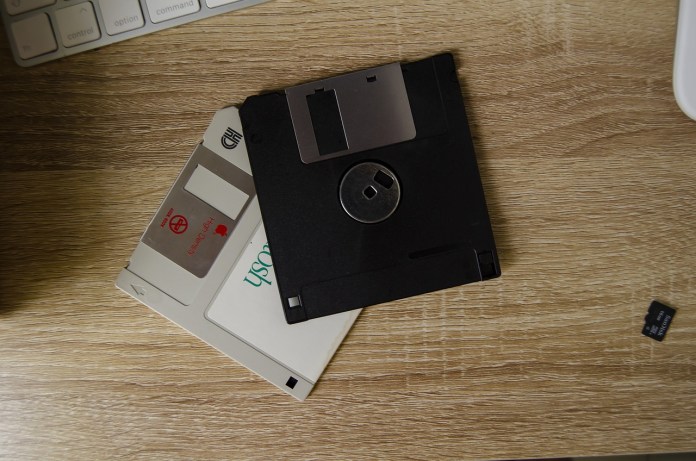
I remember when all software came on magnetic floppy disks, sometimes on one, but later on many and even installing Windows 3.11 required a large number of disk changes, you couldn’t just set it going and leave it like today. I still have a copy of that version of Windows and of Borland C++ which came with a huge box of reference books and a similarly huge number of disks – both the smaller 3.5″ ones and the older 5.25″ ones – you really felt like you were getting your money’s worth. You’d put the first disk in and wait for what seemed like an eternity until the installer would flash a message up saying “Please insert disk 2” and you’d search through the stack if you’d somehow shuffled them and hope that it wasn’t missing – either not supplied, or lost if you were reinstalling. Then the waiting would continue and repeat until disk 10.  Fun times.

Since then we’ve been through CDs and DVDs and now thanks to high speed broadband you can even download a whole operating system in just a few small hours, or so it seemed to me when I did it a couple of months back with Windows 10. At each stage it was possible to shortcut the earlier process by copying the floppy disks onto a single CD, and then later copying whole CDs onto a large USB stick or portable hard drive though Windows can still use a DVD to install.

Because of all the disks, and the boxes in which to distribute them manufacturers in the past couldn’t keep selling old versions of software due to the manufacturing costs and the space required to warehouse them though some companies such as Serif would sell old versions cheaply alongside new ones for a while. Today though with downloadable software they can keep supplying old versions for much longer which is useful when you have old hardware that needs old software. Sometimes you’ll have an old computer that won’t run a 64 bit version of windows for example but new software won’t work on 32 bit windows, the newer version is incompatible with all or part your computer, or, as I found out, you buy an old negative scanner and the software disk that came with it was unreadable and the current version won’t work, luckily though the manufacturer still sells the old one via their website – preventing the new hardware becoming an expensive paperweight, or in the scanner’s case doorstop.  Many freeware, shareware or low cost independent software authors have an archive of old versions on their websites.

In other cases old, usually free, software or device drivers that have been rendered obsolete or the manufacturer has just decided not to continue developing them anymore can still be obtained via individuals uploading and archive copy to a download service. Again this is helpful as some older utilities have been replaced by newer, slower, clunkier “improved” replacements and you don’t have the option of the old program you liked – where the old version is either automatically upgraded or doesn’t come with a new operating system or application. This may also be true for paid for applications so long as you have the correct licence to install them.

Then there are the people who have managed to get really old software to run on modern PCs, like a Windows 3 emulator for that nineties computing experience. I had a Super Nintendo emulator to play games on my PC once but it just wasn’t the same so I bought a second hand real one instead.

Standard
Business, Cars, Fashion

When is a Mini not a Mini?

Mini Cooper

Image by Alexas_Fotos from Pixabay

When it’s a Maxi and the Maxi was not a nice car.

I am not a person suited to the original Austin Mini, I have travelled in one, in the passenger seat and my knees were up round my ears. The car that is still referred to as the “New” Mini is a bit more my, er, size. I can’t stand the thing though, it’s not a Mini and I’m not the only person who has said this over the years.

Born of the trend for cool and “authentic” retro cars it is a product of fashion as opposed to the original which influenced fashion; a small, low cost, simple car, accessible to everyone (unless you’re as tall as me) yet something so essentially cool (in it’s original, sixties sense of not trying too hard to just be) that it was popular with celebrities too. Like the Fiat 500 it was small, cheeky and fun to drive, so I’m told. The new car is bigger, more expensive – a product aimed at, rather than adopted by, the fashionistas, the hipsters, hence the price tag. The size increase of course was due to car makers obsession with the idea that “people want more space” for stuff, more cup-holders, more cubbyholes, more drawers and more speakers, as such it is a pastiche as is the “New” Beetle. The coupe version looks ridiculous but the biggest travesty is the Mini Countryman which is comparatively huge, probably bigger than a Morris Minor Traveller, on the outside at least, less Countryman more Country Estate.  Even the headlights, angled backwards make it look like a mini that’s been in a very stiff gale.

Fiat fared better with the 500, it at least looks like it’s as small as the original though it still can’t really be called a “people’s car” any more and certainly can’t be fixed with parts from a local corner shop. My own car is half-way to a retro design, Citroen took the general shape of a 2CV for their retro effort but left out the pod headlights and the suspension suitable for ploughed fields – though that might have been useful, with the state of our potholed roads today…

There have been other such cars over the years but many of them, in my opinion, show that some things just can’t be improved on and the past is often best left where it belongs.

Standard
Fashion, Language, Psychology

I Can Keyboard, Apparently

book-3294946_1280

Image by astize from Pixabay

There has been a fashion in language recently that annoys me, unsurprisingly. I don’t know whether it has emerged from the short-form, limited text length of Tweets or laziness or people just having too much to say and too little time. The issue is people leaving out large and often important parts of sentences while at the same time using a noun as a verb.

For example in TV and radio adverts: “I can best friend” “I can family” “I can daughter” “We can football” (Virgin Media) which don’t even describe what you’d be doing, how do you “family”? A while back an advert encouraged people to “Adult like a boss” or something similar, the emphasis being that “Adult” is something you do rather than something you are, maybe the ads aren’t written by adults.

Uswitch used to turn it up to eleven with “U niche hobby, U model aeroplane, U guitar solo, U feet up” – though shortly before I finished this they changed theirs to real English with lines like “You start a new hobby” and “you learn the guitar”. Maybe it’s not just me.

Then there is a fashion for car stickers that say “Because Fiesta” or Ibiza or Trabant. Because what, exactly? At least they say “because” rather than “cos”.

Some names do become verbs, like to Hoover and to Google but “Are you ready to Butlins?“, you might as well say “are you ready to Cromer?” or “Scarborough” for that matter and as for “I don’t gym, I Hustle” – when did it become too much effort to say “go to the (gym)”. Similarly “Time to Travel Republic”.  These all smack of both laziness and the idea that it’s cool to eschew proper language, of marketers trying to conform to the zeitgeist. The Butlins one is accompanied by the slogan “winning at holidays”, a kind of statement which seems to be part of the fashion for aggressive or at least competitive language in which you’ve got to beat everyone else at whatever you’re doing which also could explain the short, snappy lines.

Anyway I’m off for a sit down now. I can Sofa. Because Tea.

Standard
Psychology, Society, Transport

All Sound and Fury, Signifying Nothing

I’ve noticed recently that the noisiest motorbikes and cars sound, as their riders or drivers accelerate them, like a baby crying for attention – -wahhhh, wahhhhh, wahhhhh, with each noise increasing as they go along, not a coincidence I think…

As I write this it’s a sunny weekend in May so inevitably all day while trying to enjoy the sunshine we’ve heard pratts revving their cars or bikes outside their houses, tuning them – so they seem to think – and idiots tearing out of town into the countryside at well over the speed limit and excessively noisily. At this time it’s all the more annoying as they’re supposed to be staying at home and pushing your right foot onto a pedal doesn’t count as daily exercise.

I don’t hate all motorbikes or sports cars, or all of those who ride and drive them, there is someone on this street who has a modern bike and you barely hear his arriving or leaving on it, he occasionally rides either a true classic bike or a modern replica and it’s the same with them, his friends are the same, the engines emit a not-unpleasant burble and they don’t set off at full revs. Yet the two younger riders round here have Japanese “sports bikes” with all the plastic cowlings and deliberately loud exhausts and they have to sit there making a racket before even going anywhere and arrive similarly loudly so everyone notices them and so everyone thinks they’re the next Valentino Rossi.

They would no doubt say that rather than sounding like they’ve got a dodgy exhaust their car sounds “mint”, “like a Frarri”, “badass” or “sick” – which it does, as in “broken”.  They think everyone will be impressed by the driver’s “mad skillz”, but most people who have to listen to it won’t be impressed, they’ll describe the driver with a word that beings with ass…

One reason they all rev their engines at home is so everyone can see that they have a powerful car or bike and how amazing they are that they can handle it. Whereas some of them even just seem to have the loud cars and bikes for the soul purpose of annoying people, wearing the fact that they’re so bad that they’re despised as a badge of honour, because the bad are glorified, for example the “bad lads” are supposedly the real men in society, so say Hollywood and the much of the media. One car near where I live had a decal glued to the tailgate that said “Hated Locally” on it. Whether the driver implied that he was hated because he’s so much faster and better than other drivers or because he was loud and annoying is irrelevant as the latter will have been true anyway.

Standard
Gadgets, Marketing, Tech

Biting The Hand That Feeds It

Adverts

Image by Falkenpost from Pixabay

I’ve been trying to catch up on some news articles I’d saved for reading later but it’s been difficult, not because of the news itself, it’s not that deep and meaningful, the problem is advertising. Just about every news website apart from the BBCs is virtually unreadable today, some more than others. The reason is animated adverts. On my tablet, or an adblocker-free browser it’s impossible to read most of these sites because the page starts to load, you see the article, you start reading it and then either it won’t scroll further down as the whole browser has locked solid or when you scroll down and keep reading it suddenly jumps back to the top again – often because some huge animated ad that’s taken an age to load has suddenly flounced onto the front of stage like the proverbial eight-hundred pound Gorilla. It’s even worse when there are multiple adverts and their continuous loops stop you reading down the page as it’s become unresponsive or slow or worse still when they obscure what you’re reading altogether.

When using a desktop browser with an adblocker to make the site actually usable many sites have a popup crying “you’re using an adblocker, how are we supposed to buy our groceries at Waitrose tonight?” So you turn off the adblocker and find that the site is back to being virtually unreadable.

Adverts in magazines aren’t animated, for obvious reasons – it’d be damned expensive to put a screen in every issue, and bulky – but they still achieve their ambitions, they rely on old fashioned techniques to gain attention, the sort of thing I used to design in the days before you needed to know about javascript syntax, curly braces and whether to use an unsigned integer variable; things like colour, typography, layout, imagery. It seems that the people who design websites started using animation just to show off that they could, and convinced marketers that they needed to use animation to gain attention from their target demographics, and the marketers believed them, and paid more for the animation. There is though now no going back because the idea has become so ingrained. They have combined the TV advert model with modern Hollywood firework displays, applied it to the written word media and ended up with a nuisance.

The thing is that although people do notice the ads and notice the message they’re also annoyed by the side-effects – if websites had static ads which would load at the same speed as the rest of the content and would instantly be there, front and centre then people wouldn’t need to use adblockers, we don’t object to the ads, they pay for the website, they pay for this website – though as I don’t develop the site itself I have no choice about the type of ads, on my Flickr page I pay to have no adverts. The objection is against the intrusion and frustration they cause. As with desktop software the developers test these websites and ads on powerful computers connected directly to a server rather than on a normal laptop or tablet connected to a 4 meg broadband connection so I doubt that they have much appreciation of what they fancifully call the UX (user experience) is like in the real world.

I wonder whether companies actually look at the website metrics – the visitor count, length of visit and so on – and perhaps notice that many visits are too short to possibly read anything. They no doubt do but the views that just put up with it outnumber those who don’t and at the end of the day a click is a click and another payment from the advertisers, even if the clicker doesn’t stick around long.

I though still think it’s about time the wannabe Hollywood filmmaker developers and marketers stopped showing off how clever they are and set out to please the users who ultimately pay their wages by tolerating the adverts that annoy them so much. If a brand gets its message across without the negative connotation of being a nuisance surely that’s better, no?

Standard
Cars, Society, Tech, Transport

Unplugged: How To Power a Car in 2025

action asphalt automobile automotive

Photo by Taras Makarenko on Pexels.com

Would you buy this used car: it’s in good condition, it’s reasonably priced, good so far, it only takes two hours to refill with fuel, eh, what? Oh, and you’ll need to buy a new fuel tank which costs more than the car, and if you use it regularly and keep it then you’ll need another one in a few years time and it’ll not be any cheaper than the last one because you can’t use a second hand one, they either work or don’t. Tempted? No, me neither but that’s the issue with plug-in electric cars. No matter how much the makers claim that soon they’ll be able to be charged more quickly it’ll still take much longer than refilling with a liquid fuel such as petrol, diesel or… hydrogen. And the batteries usable life is still poor like the one in your phone, Lithium Ion batteries can only be recharged so many times – as witnessed by the fact I’ve just had to buy a new battery for my laptop.

An advert at the moment says that because more people are buying electric cars it means that “The Electric Car is now just The Car”, and the government is looking to invest millions in charging points, someone even recently suggested that in the future petrol stations could become recharging stations instead. Ok, let’s have a look at that for a moment: there’s an electric car advertised at the moment that states the “rapid charging” takes 75 minutes to reach 80% charge. How many cars visit an average petrol station in that time? The last time I filled up my car at least four of the six pumps were occupied for the two minutes or so it took to fill up and pay, imagine the queues on motorways leading to the recharging stations.

Still though electric car sales have gone through the roof, driven by hype and fashion. Many countries are proposing banning sales of petrol and diesel cars by 2040, or 2035 in the UK now, saying “woo, look how eco-friendly we are” but again think about the practicalities of this – what about people who have no garage to park their car in, people who live in apartment blocks with communal parking, or parking on the street – are sales of very long extension leads going to soar, are we looking at a future of pavements covered in cabling or are landlords and councils expected to dig up the road and install charging points? Who will pay for the electricity? Already some places that put in charging points for customers to charge for free are pulling them out again because someone will park there and leave the car all day.

Battery electric cars are always being described as clean but this is only in terms of direct emissions, indirectly the electricity has to come from some form of generation and unless its solar, hydroelectric or geothermal it won’t be as clean as the ads imply.   Add to that the environmental costs of making the batteries.  Vauxhall have an advert for a new electric car that shows a gravestone with “Petroleum, back in the ground where it belongs” on it. The gas and coal used to generate the electricity to charge the car, taken out of the same ground. This country isn’t really suitable for most renewable forms of energy, even if we surrounded our coastlines with wind turbines and even using solar power to directly charge a car isn’t really feasible – neither will solar powered aircraft, the best ones at the moment can only generate enough power to carry one person.

Hydrogen gas is the only option in my opinion.

Hydrogen fuel cell cars can be refuelled quickly, they only produce water as a by-product and don’t require batteries which have a huge environmental impact and short lifespan. Petrol and diesel persisted because of convenience of refuelling and energy density – you get a heck of a lot of energy (and hence mileage) from a small volume, compressed Hydrogen has this same advantage.
Because producing Hydrogen requires either a chemical process or electricity to separate it from the oxygen in water that’s the argument that many people use – that you’re using fossil fuels to do the job, the counter argument being “where do you think the electricity to charge your ‘green’ electric car comes from eh?”
In hot, dry countries there are solar power plants which focus the sun’s rays to create steam to drive turbines and generate electricity, if dedicated plants were built which used the energy they produce to create hydrogen (and oxygen) then that could then be transported to nations like ours to use in fuel cells. This would reduce the environmental cost to only the transportation – which is the case at the moment for petrol. But you don’t even need the electricity, Hydrogen can be produced using chemistry from other substances where it is bonded with elements other than Oxygen.
In nature plants take in carbon dioxide, water, sunlight and nutrients and use them to grow, releasing oxygen in the process, hydrogen fuel-cell cars can be part of the natural water cycle too – split seawater into its components, use the hydrogen – recombining it with oxygen to release usable energy and produce water that returns to rivers and seas to then evaporate or be split into hydrogen and oxygen again.

When Honda’s FCX Clarity fuel cell car came out it was heralded as the car of the future yet many years later there’s still nowhere to fill up a fuel cell car so that creates the paradox – nobody will buy a car with nowhere to fill it up but no-one will build the infrastructure because they say “where are the cars to use it?”
Essentially the barrier to Hydrogen use is the infrastructure – it would cost millions to put in place equipment at filling stations for hydrogen they say. Oh, lets not bother then, let’s spend millions on charging stations instead. Huh?

The fuel cell car is cleaner to make as it has no lithium-ion batteries which also means the ongoing costs of replacing worn out ones are eliminated. Maintenance is simplified as the only moving parts are the motors, or even just one motor and some driveshafts depending on the drivetrain. It’s more practical as you can refill it quickly, park it anywhere and still get decent range from it. It has the same benefits of power and torque as any other electric car. Depending on how the hydrogen is made it can be near to zero emissions both directly and indirectly.
The irony is that both the electric motor powered car and the Hydrogen fuel cell both pre-date the internal combustion engine – if only they’d been brought together sooner.

Standard
Music, Productivity, Science, Tech, Work

The Technology of Staying Apart

high angle view of woman sitting at desk

Photo by Ivan Samkov on Pexels.com

Traditional industries such as the one I am in don’t allow working from home, we sell glass, I haven’t got the room for the cutting table. Cloud based working though has allowed many businesses to continue through the current pandemic, many of whom have been critical. The internet of course has been fantastically useful at home for entertainment, education and information. It has been amazing how a number of technologies which once seemed niche have suddenly come of age.

Remote working has evolved quickly in the last few years thanks to Cloud Computing – information and even applications that you access on a computer being stored on servers somewhere else in the world, connected via the internet rather than being in the same building or on the computer itself – from the old days of clunky low-bandwidth video calling and rudimentary remote control to full team working and sharing of screens and data enabling full real-time collaboration where all participants can manipulate data in a shared space while discussing it as though in the same room. The most important area where this technology is critical is the efforts to develop a vaccine where data can be shared instantly.
  The advent of internet phones and internet based systems used by large companies has allowed call centres to be distributed, you might ring British Gas or Severn Trent Water – as I did about a blocked drain – and it seems like you’re talking to a chap in a big room full of people but maybe the background noise doesn’t seem the same, maybe that’s because he’s in his kitchen at home, in his slippers. Because the booking system for the engineers relies on internet-connected servers rather than the old wired connections within a building the computer used can be anywhere. Internet phones are the same, plug one into any internet connection and the traditional landline phone number associated with it can be used to ring it, anywhere on the planet.
  It was also a momentous day when Prime Minister’s Questions was carried out for the first time ever with barely any MPs present in the house of commons – most of them attending via video link. This could be a hint at how to do things in the future, cut travel costs and make sure that all the MPs can be there wherever they are. In fact already there are rumours (some are calling them conspiracy theories already) that universities are looking at this situation as a model for future methods of delivering lectures and that this could usher in a new business structure where companies have their workers at home all the time and wouldn’t need large offices just facilities for the servers and spaces for face-to-face meetings. The number of people commuting could be reduced too reducing road traffic and pollution as everyday work, meetings and even conferences and presentations can be done online as more people have now had to learn how to do it, the tv joke of someone sat in a suit and tie up top with pyjamas below the desk could, in the future, become normal. The nightmare flipside is being asked to take your phone and laptop on holiday with you – just in case we need you to take a few calls – ha, don’t think so.

Beyond work video calling, such as by Zoom, Skype or Facebook’s standalone devices keep family and friends in contact alongside normal phones. Online shopping allows people to get essentials while in isolation. Even volunteering, whether on a local scale or the NHS’ system has enabled volunteers to be notified on their mobile apps if someone needs medication delivering, taking to an appointment or just needs a chat with someone. Technology has truly enabled everyone to pull together and feel closer together while staying apart.
  Radio stations have set up micro studios in presenters houses, TV presenters have similarly done shows from home, adverts for TV and radio have been made remotely, many using footage from smartphones including shows specially for the lockdown including cookery and craft shows. Stock footage and image libraries have clearly been plundered for many of these lockdown-specific adverts.
  Have I Got News For You, which I just happened to see on the BBC the other night has the usual studio setup with the presenter in the middle and the two teams of panellists either side but with the guests on superimposed monitor screens instead of being present which looked surreal as they still cut to each guest as if they were there rather than showing their image full-screen.
  BBC4 have made a short series of programmes “Museums in Quarantine” featuring art experts exploring closed museums either via their online presence or via special permission to visit on their own providing a different viewpoint and something interesting to watch.
  Then there was the remotely recorded, distributed benefit concert Together At Home, which seemed to gether more comments on the artists’ homes, or home studios, than anything regarding their performances.
  Formula One and Formula E have held simulator based virtual races, using the already realistic training sims the drivers use before each race to practice for the first practice on the real thing. And even the Grand National was held virtually, all thanks to the still increasing power of computers that pack the graphical power of what used to fill a room into a desktop box – or rather a server rack full of them.

Magazines such as Fortean Times have been able to distribute their operation to their staff’s homes, having prepared years ago to be able to do so so apart from the printing and distribution the magazine can still be produced – and were even prepared for if it had to become online only for a while as they provided temporary free access to the digital edition for us subscribers. Again this is thanks to being able to create the various bits on PCs at home and then bringing them together via the Cloud, or email, into a print magazine via Desktop Publishing which is then sent digitally to the printers where the ethereal finally becomes the physical and drops on our doormat without any hint of disruption.

Home schooling has become the norm and there are numerous online resources for all ages, many of which have either always been free or have been while our lockdowns have been in place, with even the BBC providing what they’ve called Bitesize Daily – short educational programmes, as well as other online courses being provided free for people staying home to have something educational to do.  Online gaming has continued to bring people together, even if they are marauding across a virtual battlefield.  If there’s been nothing to watch on TV then there’s been the seemingly infinite resource of learning, entertainment and cat videos, YouTube to fall back on. 

There had been initial problems with systems for remote working struggling with the extra demand, such as with Microsoft Teams, but the providers have been able to quickly adapt to cope. Zoom has proved controversial too due to government security concerns concerning the encryption keys sometimes going through Chinese servers.

On the inevitable dark side of things criminals have been trying to use the pandemic to con people but again technology has also helped against the online threats, Google’s Gmail for example has blocked 18 million malware and phishing attacks per day through use of machine learning to teach the system what to look out for. A massive number of emails and messages have been pretending to be from the WHO so much so that efforts have been made to specifically filter such messages to confirm authenticity.

Other technology that even I have dismissed in the past has suddenly become very useful and even I’ve used it. Contactless payment is particularly useful when food shopping, I criticised this when it came out for its potential for theft from your cards but even I have used it throughout. Online banking – which I still won’t use personally – is undeniably useful in reducing the number of people needing to use physical banks, where you have to use the ATMs for all transactions now – which of course can now take deposits, carry out transfers and so on as well as doling out cash.

It’s not only tech that seems to be, by good fortune, in place just when needed the TV channel Dave in the UK has been partnering with the Campaign Against Living Miserably for a number of months now to make people aware of the importance of staying in touch with those friends or family who are alone and at this time it’s an all the more important cause.

Standard
Music, Tech

The Magic Jukebox

HiFi

Image by StockSnap from Pixabay

Back in 1996 I bought a CD player and my collection of CDs began, I was impressed at the time that this stereo had twin tape decks and could hold seven CDs, yes, seven, and it could shuffle them – a process gloriously punctuated with mechanical clanks and whirs as it swapped the disc trays around. It took a while to fill that, some albums took up permanent residence (Beth Orton, Trailer Park). Later I bought a Sony Minidisc player and was again impressed that I could store whole collections of albums on one mini disc. Of course next came a couple of little 4Gb then 8Gb MP3 players and it was mightily impressive to hold dozens of albums in a tiny aluminium box that fitted in your hand, I remember listening to every Elbow album during sunny evenings of one holiday in the Lake District, hearing some of them still brings back the memory.

According to Microsoft Zune which manages the MP3s on my main PC I have 1134 Albums from 521 Artists totalling 11565 songs. Many of these are singles, downloaded tracks and compilations but it’s a collection that’s given me my own personal radio station.
  A few years ago I saw an old advert for a 10Mb hard drive which cost thousands of pounds and today would hold a handful of documents, now I have thousands of times the storage in my pocket, this rapid rise in the size of affordable miniaturised storage has given us the ability to take so much music with us, and then broadband internet and 4G mobile took things even further.

When I lived in the town centre I liked to have some kind of background noise while using the computer for either reading or writing as it blocked out the kind of distracting noise from outside that I had to put up with otherwise, I’d have the radio on but the problems with that were firstly I spent half my time muting the radio because they were playing crap, and secondly I couldn’t seem to get a signal inside without crackly interference half the time.
  So I ditched the radio and replaced it with my own collection streamed over the internet via Google Play Music which allowed you to upload or match your own library to their servers. The hardware was made up of my old Nexus 7 tablet permanently sat in its charging cradle, mains powered and connected to a bluetooth speaker. The only problem in the early days was that sometimes it only played a song three seconds at a time, relying on slow broadband and less capacity for a large number of users, this is less of a problem now as the infrastructure of the internet improves all the time.
  Since then I’ve moved somewhere quieter but the technology has expanded. Now my phone can hold thousands of tracks itself, so my favourites are on that for use with headphones or the auxiliary adaptor I fitted to the car radio, meanwhile my newest tablet is connected to my Sony HiFi via a bluetooth adaptor doing the same job as the old one, connected to Google, so I can sit at the computer with the tablet on the desk and shuffle my entire collection or play anything I want, and if I want to go and sit on the sofa and listen I simply take the tablet with me.
  What still seemed futuristic a few years ago is the latest iteration of this – the Google Assistant, or Amazon Alexa or Apple Siri depending on your particular preference. If I feel like it I can simply yell across the living room “Hey Google, play Deacon Blue from my library” and it plays something by Deacon Blue on it’s own in built speaker – though I’d previously had it connected via Bluetooth to the Sony before the tablet took over that role.
  One strange occurrence with the Google Assistant happened recently.  I’d been asking Google to shuffle music from my extensive library regularly, the strange thing was that “she” seemed to have developed an eighties fixation – Human Leaque, OMD, ABC, Howard Jones, Spandau Ballet and more, nothing modern. They say it’s not real Artificial Intelligence yet, just programmed algorithms but sometimes I wonder.
  When shuffling the whole collection I get some surprises as many of my albums are freebies from newspapers so I get something I wouldn’t seek out, or something I’d forgotten about. I don’t pay for a streaming subscription but if you do then the choice is immense, when I bought my first CD in 1996, or my first LP in the eighties, in the days of “allow 28 days for delivery” and waiting a week for a record shop to order an album I wouldn’t have believed that within thirty years you’d be able to pick any album from hundreds of thousands and play it instantly, and even buy it to keep the same way.

It was said in the fifties that technology would improve life and in many little ways it does so all the time – personally it’s wonderful to be able to sit in the summer on the sofa at night, the window open with a cool breeze, looking at the stars and listening all the most fitting songs from across my collection without having to move, change cds or make a compilation in advance. “This is heaven, to me.” (Madeleine Peyroux, from the album Careless Love)

Standard
creativity, DIY, Gadgets, Home

Junk Shop Days

Milk Cans

Image by Kerstin Riemer from Pixabay

I like second-hand and charity shops, not only for the benefits to charity and the environment of recycling, or because I’m being fashionable but largely to get things I couldn’t afford years ago amazingly cheaply now. Of course the same is true of Ebay. I’m missing these shops at the moment, but when they reopen I’m on a mission to find garden planters.

Looking around my home much of what I own is pre-owned, or pre-loved to use the modern term. As I described in an earlier post my patchwork Sony stereo is still fantastic; my trio of Olympus DSLRs are used but still going strong, even if the power switch of one needs the occasional squirt of contact cleaner; my old Sony smartphone came pre-distressed so I wouldn’t be if I scratched it. To me even my second hand Citroen felt like a brand-new car, as I remarked at the time. Last year I even broke my usual rule of not buying second-hand shoes and got some lovely red Puma suede trainers. Unused £40 Sony headphones for £12 on Ebay without a box, lampshades, shirts and books from our many charity shops, as well as most of the vases and ornaments I own – including two blue tealight holders that I saw one evening in the window of a charity shop on the way home and had to wait four days to buy on the Saturday afterwards.  Just about every vase and ornament I have was a charity shop find and it’s a little joy to find a beautiful object that you weren’t even looking for.

Our society’s tendency of replacing something because it’s a couple of years old and there’s a new one so why not means there’s lots of stuff available with much life left in it. The phone couldn’t hold as many apps as a newer one and I have to update it manually to avoid the huge updates to built-in apps I don’t use and there are similar compromises with other older tech but if you can live with that then these things are bargains – I only replaced it when the touchscreen stopped working. The irony is that good condition old stuff can be bought cheaply, although much is becoming fashionable now and tatty old stuff can be sold in retro shops for a fortune because it’s “authentic” – I’ll return to this subject in another article. It seems that second-hand bookshops are increasing in number, whether due to the cost of new books, a backlash against ebooks or fashion – walls in trendy hipster loft apartments filled with “authentic” old books – I don’t know.

I’m writing this on my “new” desktop PC which I bought because my last desktop was finally showing signs of not being able to cope any more. No 1 was an HP Compaq “enterprise” PC, built in 2006 with a then state-of-the-art Pentium 4 processor and rescued from a skip a few years later. It languished in my apartment for a few more years until I put in a new graphics card, sound card, hard drive etc to make it capable of running flight sims and Windows 7. It’s been fine for many years but eventually it just couldn’t keep up with modern browsers, note apps and so on, finally a number of strange behaviours made me feel it was perhaps starting to fail. I looked at brand-new PCs but am out of touch with modern specs and didn’t feel that the software I use would need an absolutely new PC. I didn’t know where to start so searched Ebay for pre-owned HP pcs – why not stick to what you know. Eventually I narrowed it down to a particular model with a good spec and again it was a rock-solid Enterprise-spec machine and I could get a cleaned-up and reinstalled machine for £60, delivered next-day from a company thirty miles away. It arrived, not a spec of dust inside it. I installed the graphics card and sound card from the old machine, installed Windows 10 using the Windows 7 licence that came with it and it’s perfect, much faster, much quieter, much smaller. The way computer hardware is today older PCs can still have very much life left in them, my current laptop – another HP which originally cost over £400 but I bought second-hand for £70 – is similarly fantastic, fast, small and light, and only needed a new power adaptor shortly after I bought it, and a new battery eventually.

Then there are cameras – today DSLRs are in the twenty megapixel range, why would anyone want a ten megapixel one – someone who can accept that this size of sensor can produce images big enough to have printed and certainly detailed enough for Flickr. Someone who can’t afford the latest shiny thing. Me. Buying into discontinued product ranges can work out well too.

A couple of years ago I visited our branch of Cash Converters (a UK chain of second-hand stuff shops) and browsed as usual then nearly squealed with excitement on seeing a lens for my number 2 Olympus DSLR, or more to the point the price sticker on it. Alongside examples of the 14-42 short zoom and 40-150 telephoto lenses I already own was Olympus’ monster of a zoom, the 70-300 (equivalent to a 140-600mm in 35mm terms) that I had looked for on Ebay a few years back and given up on. It currently retails new for around £450 and on Ebay second-hand for around £200. The sticker said £59.99. I thought “I’ll just double check on Ebay” then after a few milliseconds my internal voice slapped me round the face and shouted “NO, JUST BUY IT”, it also helped that at that moment a member of staff unlocked the same cabinet to put something in it, “oh, while you’re in there…” I said. I bought it and it’s amazing, even if it did require some rearranging of my camera bag to accommodate it and the shorter zoom – needless to say much thought over which lens would be most usefully attached permanently to the second DSLR, and a helpful drawing to show the overlap of the focal lengths (a visual version of my friend Jane’s famed comparison spreadsheets), helped everything to fit nicely. The long, long lens really needed an Image Stabilised DSLR and No 2 Olympus had the dodgy power switch so turning to Ebay again I bought Olympus No 3 for a very cheap price and it’s been flawless for years since. No 2 still lingers as a backup body.

Another side of this is buying things that are not of any use but you just want to own – you might only justify getting them if they’re cheap. My example of this is a camera I first saw on holiday in Guernsey in 1991, a camera I still have the brochure for, the brochure I just browsed regularly being unable to afford the camera itself. It was an Olympus OM101, one of the last of their film SLRs. After twenty-six years I bought a fully-working camera that cost hundreds new for a tenner on ebay. I could load it with film and use it but at the moment it’s taking pride of place on my bookshelf.

Back to the useful stuff though, when I moved to a house with a garden I needed a lawnmower, I looked at a few options and decided to wait a bit. Then I just happened to visit Cash Converters and saw a Bosch mower for £35, in its box. I didn’t get it immediately but went back for it later. When I opened the box I found that this mower that was £130 new in the Argos across the road from where I’d bought it was, in fact, brand new, never opened.

Earlier in Cash Converters I saw a compact camera, it had languished in the cabinet for months, I’d not really paid much attention to what it was but the price had steadily dropped, I took notice when I saw the price had dropped to £12.99. I looked more closely and noticed it was more than just a cheap compact, it had manual controls and was clearly made of metal. Turns out it was a Panasonic Lumix DMC-LX3, a camera which was, when launched in 2008, a very well-reviewed, £400 piece of technology. It was described in glowing terms in magazine articles, a rare combination of compact size, solid build quality, and a lens that was unusual for a compact. It was brilliant and today, second-hand, they usually sell for over £100. Like my Olympus DSLRs the 10 megapixel sensor will still take great pictures. This particular LX3 had clearly had a hard life, it’s metal shell was dented at the bottom corner, the paint had rubbed off underneath, some of the lettering had worn off too but the screen was virtually unmarked, all the buttons were there and worked and the lens itself was spotless. You’d assume there was something wrong with it but the only reasons it was at that price were that it had no charger, it needed a new (£6, compatible) battery and it was a little worn around the edges. This camera had been ignored and unloved just because it wasn’t cutting-edge like it had been in 2008 and was tatty yet I knew that it still had the same professional features that made it stand out.
  So yes, dear readers, I bought it.
    Would have been rude not to.

Standard