Outdoors, Photography, Politics, Psychology, Science, Society, Tech, Uncategorized, Work

Lifelogging

The rear LCD display on a Flip Video camrea

The rear LCD display on a Flip Video camera (Photo credit: Wikipedia)

Often today people worry about surveillance by the government with CCTV everywhere and intelligence agencies able to view what we do online (hi, Mr/Mrs NSA/GCHQ person) but there’s another side to the technology which is becoming ever more popular.

Many of us carry some form of video camera, I have a smartphone and a good compact camera that can record HD video, in fact I used this the other day to record a worker at our factory who was adamant he could cut a worktop with a saw that everyone else said was clearly blunt.  The resulting video is a possible candidate for YouTube, complete with Top Gear style “four hours later…” captions, as I joked at the time.

We now have the ability to record everything we experience in some way or another and people feel the need, or the desire, to do exactly that and share it with the world, even in their most intimate moments, as if to prove that they did it, or how good at it they were, so to speak.  It’s a standing joke that Instagram and Facebook are a repository of photos of people’s dinner but in some ways it’s true.  In any pub you go in there are groups of drinkers gurning at smartphone cameras, never again will you be able to get utterly pished without it being recorded.  I once had my glasses “borrowed” by a woman whose friend took a photo of her, wearing my glasses, with me kissing her cheek.  Months later a woman stood by me at a bar turned and said “I’ve got a photo of you on my Facebook.”  Same woman, same glasses.  Technology has made it simpler, quicker and cheaper to create a digital photo album or slide show that, without needing shelf-space or the setting up of a projector, can be virtually infinite in size, accessible anywhere, searchable and sorted by date.

The next stage is again in the area of wearable technology.  Google’s Glass project, along with other similar techie-eyewear, promise the ability to instantly record anything you can see, which has worried many privacy campaigners despite the devices clearly having a red, Borg-like, light on the side when they’re recording.

The other type of device is specially designed for recording just about everything you experience – the Lifelogger.  Two devices have appeared so far, Autographer and Narrative, which are intended to document your life while you’re wearing it of course.  While you’re not you can imagine it sitting there wondering where you’d gone.   The two have different approaches, Autographer uses five sensors to detect location and changes in light and motion to take a photo when you change location of when it thinks you’re doing something interesting like running after someone.  Narrative takes a picture twice a minute.  When downloaded you can then look through what they’ve logged and perhaps see things you’d missed or remember something you’d forgotten – which might be both a blessing and a curse depending on the event.

One day we could all be carrying a multi-sensored device that, in the event of an emergency, could log what’s happened to you and call for help – a kind of personal Black Box Recorder.  This is happening in cars already, as the Russian meteorite impact last year showed – the event captured by an unprecedented number of witnesses thanks to dashcams and smartphones.  In-car video is also useful for insurance companies, TV clip shows and YouTube, recent personal experience of idiot drivers makes me want one more than ever.

Whether the current Lifelogging technology has a use is down to whether it’ll record anything useful or interesting but the idea has been picked up by emergency services who have considered something like Glass to both record an incident and how it’s dealt with (possibly for legal, in case of being sued, reasons, inevitably these days) while also providing vital information to the medic or police officer in real-time.  Already trials have shown that police wearing body cams are seeing positive results in terms of arrested criminals accepting their guilt.

So we hurtle onwards into the recorded future, the problem could be having time to sort the wheat from the chaff of all these Lifelogged images and indeed where to store them all.

Looks like we’ll need a bigger server.

Standard
Business, Marketing, Psychology, Society, Tech, Uncategorized, Work

Bills and Shopping: The Rise of the Machines

Point Four Touch Point of Sale Till

Point Four Touch Point of Sale Till (Photo credit: Cyberslayer)

It’s not that I don’t like banks, or that I’m in some way un-British and avoid queuing it’s just that I don’t like being required to go out on some cold, damp Saturday morning when I’d rather be sat by the heater reading.  This is why most of my bills are sorted out by Direct Debit, even my credit card which is paid automatically every month – as it’s exclusively for online use rather than credit as such.

However there is one, variable bill which I don’t do this way – the electricity bill, because I don’t want them taking the money if they’ve over-estimated it.  So once a quarter I trudge to the bank.  The last couple of times I’ve been intercepted in the queue and guided to the paying-in ATM which can, I am assured, be used to pay bills and sure enough it did, it scanned the bill, took the details from my card and printed me a receipt.  It lacked the friendly hellos and brief chatter of talking to a teller but it did its stuff efficiently without having to wait with the other customers and their queries that computers can’t resolve (yet).  It’s amazing what technology can do isn’t it.

When it works.

This time I queued for the ATM, a member of staff asked if I was OK with doing it myself, “yes,” I replied, proudly, stopping short of continuing with “fear not, I have done this before”.  The woman ahead of me was though clearly having trouble paying a cheque in and was becoming increasingly frustrated by the machine.  Some people would have been mortified at causing a delay for others.  When she went in search of a real person I approached the anonymous grey box, inserted my card and then my payment slip which it chewed a little, thought about and then spat back out at me.

The member of staff who had by now redirected the cheque woman to a teller dashed over, I tried again but still it said it was having trouble reading the slip.  “Oh,” said the smart-suited bank woman “I think it has trouble with the new smaller payment slips.”  Right, so it’s the electricity company’s fault.  I was redirected to the queue for the tellers too, while reflecting that it’s lucky there were still real people present to do the job. The banks say this is to do with improving customers’ experiences, to reduce waiting times and so on.  A while later a man ahead of me was plucked from the queue and escorted to the same ATM, poor unsuspecting soul, like something out of Nineteen-Eighty-Four he walked by, towards the room 101 of automated banking technology, “good luck” I silently whispered.

It’s becoming ever more common though, in the supermarket there have been self-service checkouts for a while, and now the incredible sounding Hybrid Checkouts – you get your own conveyor belt to play with, like your own Generation Game.  A tin of beans.  A lettuce.  A cuddly toy…

I like checkouts with people on them, you can say hello, chat a little, they do all the scanning stuff.  I know someone who can scan goods quickly, accurately and have a riveting conversation with you at the same time, all you get from a Hybrid Checkout is the infamous “unknown item in the bagging area” message.  Which is a further complication – having to precisely place your items in your bag instead of lobbing them in haphazardly.

They say it’s quicker, denying the accusations that it’s to do with saving on the costs of staff, as do the banks.  They encourage you to use them, “it’s for your own good” they virtually scream as they drag you by the basket towards the robot cashiers while you whimper “but I want to talk to the nice lady on till nine.”  I have been known to linger at the end of an aisle, apparently choosing coffee until I see a gap on a conveyor then dump my groceries onto it before they can have my basket away from me.  True story.

I’ve seen people using the Hybrids, repeatedly scanning a loaf of bread while looking around for help.  My friend on the till would have scanned it first time.  If you’ve got alcohol or something else that needs authorisation then you’re left waiting until an assistant can come and release you back into the community from whence you wandered, happy and smiling, ten minutes earlier.  Just nipping in for a bottle of wine and a curry you said.  Now you need something more substantial.  “What kept you?” your partner says as you get into the car.  You mumble something about bloody technology and drive home, which is something that, for now, you can still enjoy doing yourself.

Standard
Design, Marketing, Psychology, Tech, Uncategorized

When Is Bigger Better?

Samsung Galaxy Note 3

Samsung Galaxy Note 3 (Photo credit: Janitors)

Chocolate bars?  Sorry.  I’m referring to phones at the moment.  Anyone who answered anatomically – no comment, but you know who you are.

In the last few years smartphone makers have been simultaneously racing to make the thinnest phone whilst also ensuring their screens are bigger than everyone elses – bigger numbers sell it seems.  For years Apple played no part in this, with Steve Jobs apparently saying that bigger screens were impractical, until they then made a bigger screened phone and suddenly it was an obvious thing to do because it is the perfect fit for your thumb’s range of movement.  Right.  What they haven’t done (yet) is make a 6″ screen phone, what many tech bloggers mockingly referred to (when Samsung unveiled the Note) as a Phablet.

How they laughed.  Until millions of people went out and bought them.  25.2 million shipped in the Asia-Pacific region during the second quarter of the year, according to IDC.  Samsung still has around 50% of the market tied up in Notes.  The larger screen smartphone trend was really started by the Dell Streak but the Galaxy Note really made the form popular, especially with its s-Pen stylus which gave back touchscreen devices truly precise pen-like use even though, again according to Steve Jobs they were an outdated way to control a device.  People like to doodle and make handwritten notes though and this is easier with a pen, as it properly drawing something, annotating a plan etc…

One reason that larger phones are catching on is that they’re not really that big, the screen size has increased but the surrounding bezel has reduced almost to the point of non-existence so, combined with thinner chassis the phone doesn’t feel too bulky – though despite the idea that we’ll evolve different shaped thumbs due to texting is a massive misunderstanding of evolution our trousers may evolve bigger pockets.  Or sales of jackets and cloaks with poachers’ pockets may increase.  A particular user group for big-screen phones is apparently people with impaired eyesight as the larger on-screen keys are easier to read and type on.  Lastly the availability of high-speed mobile internet and the fact that smartphones can connect to wi-fi internet whenever possible makes them popular for watching films and tv or gaming on the move, though personally I wouldn’t want to watch a film on anything less than my 7″ tablet.

Some have aired concern that as manufacturers battle to have the biggest screen size consumers will be forced to accept bigger phones in order to get higher specs elsewhere in the device and this could be a problem, as this Gizmodo UK article points out they should also release smaller versions too and it seems that this is happening with smaller but not spec-crippled phones beginning to trickle out from companies like HTC and Sony.

One considerable downside is the size of the phone when you actually make a phone call, I know, it’s crazy but some people still do that.  I’ve not tried it but I’ve read that after so many years of phones becoming so tiny and inconspicuous that you’d sometimes appear to be talking to yourself it feels odd to have something the general size and shape of a thin paperback novel stuck against your head whilst talking to it.  This is the difference between today’s big phones and the eighties bricks – back then you wanted people to see your expensive mobile and didn’t care how big it was.  To this end phone makers have come full-circle and are developing tiny satellite handsets which look eerily like late-nineties GSM phones, with buttons and everything, connected via bluetooth for the purposes of making voice calls via the smartphone lurking in your pocket or bag.  It’s only a matter of time before we get these add-on handsets made to look like classic Nokias or Motorolas, I suppose, with the current retro obsession in other areas of technology.

Taking all this to its (il)logical conclusion in the future perhaps the smartphone will become a hub, connected to your smartwatch for notifications, your Google Glass style eyepiece for even speedier updates and navigation, and your peripheral handset for talking.  At which point we’ve gone from carrying many devices doing various jobs to many devices doing various jobs but connected together.

Standard
Psychology, Society, Tech

Hanging On

iPhone Original/3G/4/5

iPhone Original/3G/4/5 (Photo credit: Yutaka Tsutano)

As I write this many, many, many Apple devotees will be glued to their laptop screens, sorry, MacBook screens or iPads relishing the latest “one more thing” revealed by Tim Cook*.  I’ve not gone out of my way to have a look at the new iPhone(s) or whatever, I’m neither an Apple fan or an Apple hater though I’m not a fan of some of their actions surrounding patents though that’s something for another time.

What I’m thinking about is the trend of getting a new gadget every year.

Moore’s Law is an observation that the number of transistors on an integrated circuit tends to double every two years or so, this is usually misquoted as computing power doubles every eighteen-months.  There was a period recently when phone manufacturers seemed to be releasing new phones every month, though in truth they often catered for different markets and budgets, now though every major phone or tablet is refreshed every year, it’s like Christmas – literally, for the manufacturers, in June, August, September.

Computers are less obvious because there is still a steady stream of new models with slightly different cases, tweaked internals, new chipsets.  The common factor is that often the jump in actual power between last year and this isn’t that great, and usually the main difference in phones has been screen size and resolution.

Still though some people feel the need to buy again and often the reason they give is that the new one is so much faster than the old one.  Sometimes I’m sure this is true – as new software and features make an old phone, tablet or pc seem slow, if you’re trying to watch an HD video on an older phone for example but sometimes it can simply be that over time the device starts to feel slow.  When you first got it it was blindingly fast, menus appeared instantaneously and web pages were super-quick to load.  Now though you’re waiting forever.  What’s changed?

Ok, sometimes new software has features that cause an old laptop to chug, some websites (Flickr is a personal annoyance) have redesigned in such a way that you need quite nifty hardware to get a smooth experience, and of course you might only be able to watch a video in SD.  Much of the time though nothing has changed except your perception, you get used to the menu appearing, your memory of the previous computer fades into the mists of time and you don’t have anything to compare your current computer to but…

…the shiny new one at work, or in PC World.  The difference is miniscule, the slow website might still be slow on your new PC but confirmation bias will tell you it’s still faster.

My laptop is from 2008 and with the exception of a couple of websites (do I need to mention Flickr again) it’s still fast enough for everything I do, even my new copy of Photoshop Elements.  My Nexus 7 is less than a year old and has been superseded by a new N7 with an even higher resolution screen – I won’t be “upgrading” because I don’t really need to watch films in even more sparkly high-res on a small screen than before.  My phone is similarly a year old and still feels nippy and crisp, it still does everything I need it to do and I don’t feel the shame of having “last year’s phone” that drives many people to upgrade.  I know that one day my laptop will either completely die or the web will get too much for it to cope with, then I’ll upgrade,  Sometimes it seems that the only upgrade people need is to their need to define themselves by their possessions or their patience, though it does seem that that’s something lacking everywhere these days.

Perhaps I’m in the minority, there will no doubt be lengthy queues outside Apple stores soon.

* – yes, I know “One More Thing” was Steve’s thing, not Tim’s.

Standard
Tech

Don’t Take My Buttons Away

English: The Nikon D7000 is a 16.2 megapixel d...

English: The Nikon D7000 is a 16.2 megapixel digital single-lens reflex camera. (Photo credit: Wikipedia)

I’m not alluding to the fact that my trousers would fall down or even that I’m addicted to little discs of chocolate, I’m becoming concerned at the proliferation of touchscreens and the like.

In computers, smartphones, cars and cameras it seems that push buttons and switches are seen as old-fashioned, not versatile enough, not eager to change colour or function at the drop of a hat, they’re so last century but wait a second, they still have value.

Some devices like a digital SLR camera have functions that you need to change quickly attached to a button, you instinctively reach for it with a finger tip, press it, twiddle the input dial and viola you’ve dialed in some exposure compensation.  The process of just knowing where the control is is called muscle memory and it’s very useful, so much so we often don’t realise we’re using it.  I’m using it now, I’m typing this without looking at the keyboard.  Now it’s true that’s possible with a touchscreen but only if you have a physical reference to start from and the display doesn’t change – with an actual button you only need to know it’s near your index finger, you just fish around for a second and know what the right one feels like, on a screen there’s, at the moment, no tactile cues.

The other problem with touchscreens is also that they tend to group all the controls on the back or front of the device so for example on the Samsung Galaxy NX camera, and other touchy-feely controlled cameras you have to take your eye from the viewfinder in order to fit your fingers between the screen and your nose.

So speed and practicality are on the single-minded, independent buttons’ side but what about safety?

Huh? you ask.  I’ve mentioned before how the same principle reduces the amount of time you’re looking away from the road when driving a car with physical controls rather than touchscreens or joystick-driven menus.  Until voice control gets to the KITT-level conversation style I’m not happy giving up my in-car knobs and dials.

As for voice control of phones and cameras, it’s fine until you find yourself trying to adjust a setting on your camera while not wanting to look away from the viewfinder but also being aware that asking your camera nicely if it wouldn’t mind changing the aperture to f/8 might be inappropriate to the setting.

Fashion seems to be pushing tech companies and car makers towards more minimalist devices, their faces just a screen of morphing, interactive controls, often for the sake of it, but good design shouldn’t compromise usability and sometimes the most usable control is the humble physical button.

Standard
Business, Marketing, Random, Tech

Everything’s Better With Bacon

Horse And Cart

Horse And Cart (Photo credit: foilman)

To be honest I quite like the adverts for the UK’s EE phone network featuring the always-connected Kevin Bacon, even if I’m not a fan of the name “EE” – at least I can still say I’m on Orange if anyone asks.  The latest ad dips into popular colloquialisms for its inspiration and shows Kev dragging a “shedload of data”.

My first thought was where they could go next with the idea:

“Why you lugging a cart of manure Kev?”

“That’s not manure, it’s data, it’s a metric shit-tonne of data.”

There you go EE, have this one on me.

Standard
Business, Film, Tech

A Digital Future for Film

Canon EOS C300

Canon EOS C300 (Photo credit: kenjonbro)

When I was younger it seemed like an eternity between a film being on at the pictures and it being on telly.  Which was because it typically was an eternity.  By the time a video of it came out it was almost forgotten which was perhaps the idea, to be absolutely sure that every last drop of cinema cash had been wrung out of the celluloid and it was ready for people to relive in their own homes and pay for over again.

Today though the Amazon pre-orders for the blu-ray of a summer blockbuster are up before the first pair of 3D glasses are slipped on at the local multiplex.  Still though it would surely be madness to release a film in cinemas if it were, for example, shown on Film4 at the same time?

Maybe not.  A Field in England, a film by Ben Wheatley was released on 5th July across formats – on disc, on-demand, on TV and on the big screen.  The black-and-white film, shot on Red Epic and Canon C300 cameras tells the story of three deserters from the English Civil War who are forced to help an alchemist search for mushrooms in the aforementioned field – which is its sole location.

It is both the production and distribution that are important though.  The digital technology to film and distribute the movie are likely to reinvigorate the industry as lower-budget films become increasingly viable.  The widespread outlets enabled Wheatley to reach the greatest audience possible and he believes that it wouldn’t reduce the cinema audience for example – there will always be people who prefer to see a flick on the big screen and others who will always wait for the DVD or TV so why not give everybody what they want from the start.  The film received funding from the BFI which supports experimental release models and the distribution was in collaboration with Film4 and Picturehouse Entertainment.

So it seems that despite the fears of some in the entertainment business 21st century filming and distribution technology looks like creating a renaissance in film rather than signing its death warrant.

Standard
Health, Science, Tech

Cast of Thousands

English: Fig 57 on Page 190. A broken arm in a...

English: Fig 57 on Page 190. A broken arm in a splint Flickr data on 2011-08-17: Tags: public domain, copyright free, illustration, drawing, image, Points in Nursing, 1910, Emily A. M. Stoney License: CC BY 2.0 User: perpetualplum Sue Clark (Photo credit: Wikipedia)

People are always saying “oh, you’ve just got to do this before you die” about so many things; seeing the sun set over the Kalahari, visiting Thailand, touring Italy, bungee jumping, and so on.  Breaking your limbs, however, not so much of a must-do and, call me insane if you must, personally I’ve avoided the experience as much as possible.  So far I’ve only managed to crack a clavicle.

One thing I would dread is the cast – the ugly lump of white plaster, er, plastered around your limb getting progressively grubbier and inevitably itchier with every passing day, getting in the way of normal clothes, making it awkward to sleep, bathe, eat and so on.

Well a solution may be on the horizon – Jake Evill, a Victoria University of Wellington graduate, has designed a concept for a modern replacement utilising the current wonder-tech of 3D printing.  While home 3D printers let us make little plastic models this concept spits out something very neat – a lattice-work structured, washable, hence hygienic and non-itchy, cast created using x-rays of the limb fracture which can concentrate its strength and rigidity where it’s needed most around the break.  It would be assembled and fitted together with permanent fasteners to prevent it being taken off prematurely or accidentally and would then later be sawn off in the same was as a conventional cast.  Another advantage is the plastic could potentially be recycled.

Once the current print time of 3 hours reduces this could be the more comfortable and less obtrusive future of broken limbs – just, as Gizmodo’s article points out, without the friends’ decorations.

[Gizmodo / Dezeen]

Standard
Tech

Cloudless

Heavy Rain

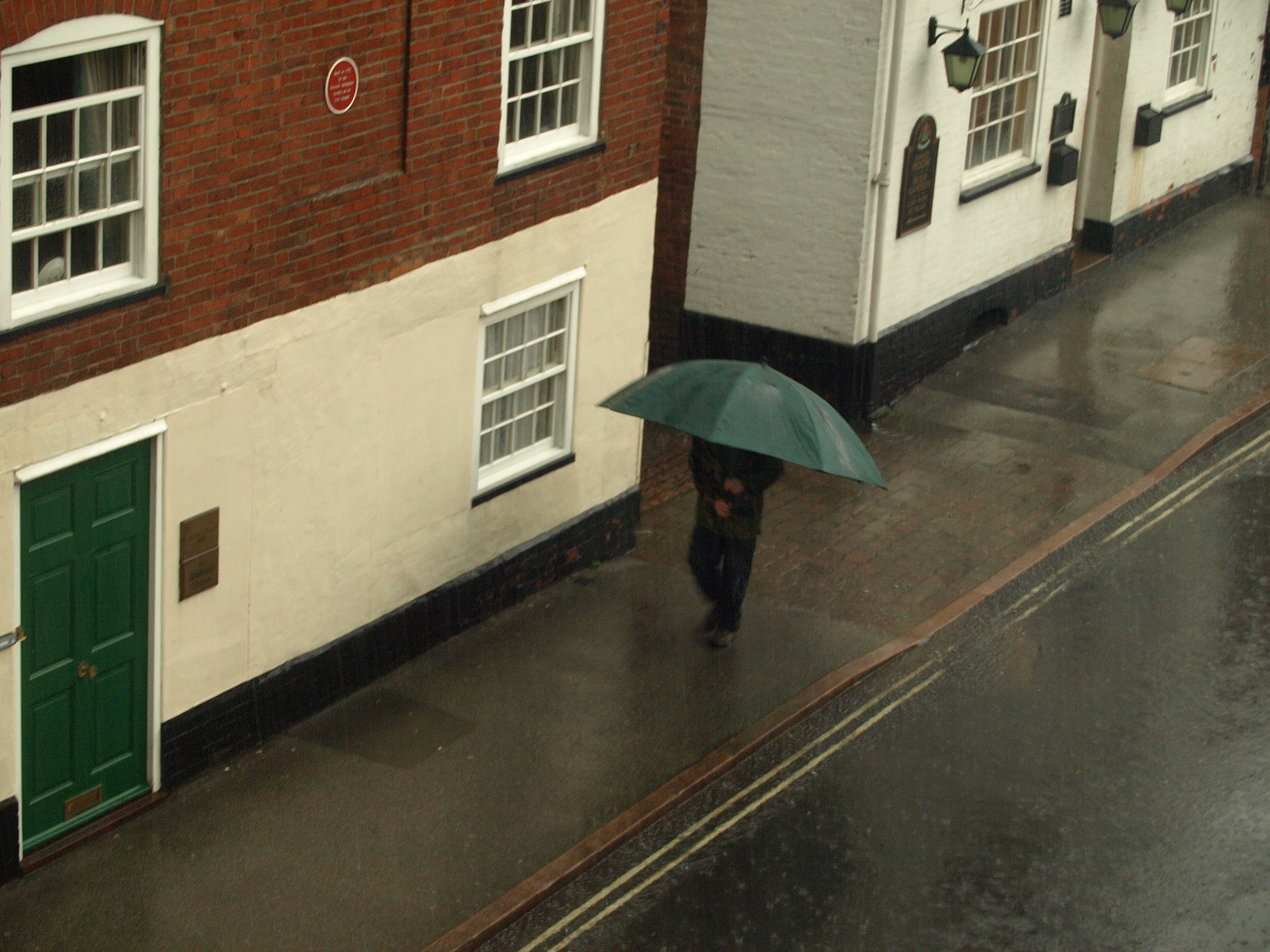
Heavy Rain (c) 2013 Andy Vickers

Like walking into a house when you’ve been away for a while I pull off the dust-sheets and open all the curtains…

It feels like such a long time since I’ve been able to post anything here, in reality it’s been a couple of weeks that I’ve not been able to access The Lunch’s dashboard or create new posts.  At first I thought it was my browser, my computer, my ISP, I searched online for WordPress issues but couldn’t find anything so was stumped.  Then finally via Google I found mention of a similar issue on another blog which told me it was a problem with WordPress servers being blocked by ISPs due to someone’s blog breaking Terms of Service.  A demonstration of how one persons actions can cascade on systems like the internet.

Secondly the other week we had rain that looked like a monsoon, almost as dense as fog, waves of water were flowing off the tops of roofs across the road, the road outside itself became a river, water erupted from drain covers.  One driver of an expensive saloon car *cough*a BMW*cough* clearly felt that a couple of inches of water was too risky and reversed back then drove down the pavement instead while others ploughed through regardless spraying people and buildings with torrents of water.  One especially impressive young man managed to leap completely over the large bow-wave created by one passing car as it rolled along the pavement.  As usual I watched the rain and lightning, listened to the thunder.

All seemed ok that evening as the storm passed and things settled back to normal.  The next evening though I found my landline phone wasn’t working, seems the storm had taken out the phone lines locally, and then the terrible reality struck.  NO INTERNET EITHER – The Cloud taken out by Rain Clouds.   Arghhh.  I couldn’t even use 3G on my mobile because I hadn’t got enough credit.  It didn’t bother me that much, the emails can wait, I’d perhaps miss one of the Deals of the Day emails but there probably wouldn’t be anything decent anyway.  I watched some TV then thought about listening to some music, the new CD I’d ordered for example, I’d got the MP3 version free, downloaded it and then uploaded it to Google Music, I’ll listen to that…  Ah.  Maybe not.

Luckily I’d still got it on my computer too (the CD itself hadn’t arrived yet) so I could still listen but it was a little reminder that when you put everything in the cloud and you lose your connection you’re stuffed.  This is why I only use cloud services as backups or as a quick and convenient way of accessing music or photos on just about any device I have.   Other services like Evernote and Wunderlist will sync with the cloud database once reconnected so at least they’re still usable locally.

Lifehacker has some useful advice in case of internet outages including using a mobile hotspot or tethered 3G phone, borrowing a neighbour’s internet or using public wifi if these are available which shows that thinking ahead can save the day but even then at the wrong time you might still be netless.

Maybe one day the dreams of the likes of Google with their (mostly) everything-online Chrome OS will be realised but we’d need an internet that only goes off when the power to run the computer does too.

Standard
Cars, Science, Tech, Transport, Uncategorized

Running on Sunshine

Solúcar PS10 es una planta solar termoeléctric...

Solúcar PS10 es una planta solar termoeléctrica por tecnología de torre, la primera en el mundo explotada comercialmente. Solucar PS10 is the first solar thermal power plant based on tower in the world that generate electricity in a commercial way. (Photo credit: Wikipedia)

I am interested in cars, nice cars.  I’d particularly like a new Jaguar F-Type, an orange one, if anyone’s feeling generous.  I’m telling you this in case you think this post is in some way biased.

I’ve just read yet another article about another designer with “eco” credentials planning a zero-emission or in this case emission-free car.  This one was a hydrogen powered car but others have been fully electric.  I have a little issue with the idea that these cars have zero-emissions.  It’s a case of semantics.  Petrol, diesel and hybrid cars have a pipe at the back that makes you cough like you have a forty-a-day habit if you wrap your lips around it, electric and hydrogen cars don’t, hydrogen cars even put water back into the environment, combining the hydrogen with oxygen in the power production process.

All good yes?  Well, apart from indirect emissions.  Electric cars are charged from the mains which at the moment requires mostly fossil-fuel powered generation.  Hydrogen, although common in the universe has to be extracted here on Earth and that takes…  electricity, fossil-fuel, etc.

I’m discounting the environmental impacts of building the cars in the first place as even the advocates of these technologies don’t deny that.

The thing is that cars won’t be truly zero-emission until we can generate power widely without emissions.  Some nations are fortunate to have abundant geothermal or hydroelectric power resources but for the rest of us we need to look elsewhere.  Nuclear power is still controversial, though the technology is still being refined to be safer in the long-term and new thorium reactors can even use previously created waste plutonium.  Personally, for cars at least, I think hydrogen is the way forward and another emerging technology is the way to make it.  In hotter countries such as Spain large solar power stations (see above) have been built that focus the sun’s immense power onto arrays of receivers which can be used to heat water to drive generators and generate electricity.  If you use that electricity to power a plant that creates hydrogen then the power created from the Sun’s energy is portable beyond the locality of the power station.

To places like this where we’re enjoying our couple of weeks of sunshine.

Standard