Former Lemon Meringue Doughnut

When I first saw the Maple-Bacon Donut on Man v Food when Adam Richman visited Voodoo Donut in Portland, Oregon I knew I had witnessed something special, something beyond what I knew doughnuts* to be, what they could aspire to beyond being filled with jam or occasionally chocolate and iced.

I still want to visit Voodoo Donut but I have found something equally impressive closer to home (three minutes away on foot, I’ve timed myself, and I wasn’t running).

Once again my local Asda provided me with a Saturday treat – Lemon Meringue Doughnuts.  Filled with lemon curd, topped with lemon icing and sprinkled with meringue pieces they are heavenly, the tangy lemon providing a nice counterpoint to the fried doughnut with the sweet crunchy meringue finishing things off.

I would have provided a picture but, well, you know how these things are.

* I’m English, I spell it both ways.

Uncategorized

Doughnut Heaven

Image
Nature

A Slower Pace

Aerial view of Moyenne Island, Seychelles

Aerial view of Moyenne Island, Seychelles (Photo credit: Wikipedia)

If modern life is all rush, rush, rush for you then you might not want to see this.

The BBC reports on an 86 year old Yorkshireman who has, for many years, lived alone on a tiny island in the Seychelles he bought in 1962.  Over the years he has spent his time reintroducing the indigenous giant tortoises to the island  of Moyenne which has now become one of the world’s smallest national parks.

Follow the link for a short interview.

[BBC, via Gizmodo]

Standard
Tech

Future Computing – Gestures in Thin Air

A comparison between a Eee PC 900 and a 22 inc...

LCD monitor and a standard keyboard. (Photo credit: Wikipedia)

After giving the world intuitive, natural game control with Kinect’s position sensing technology – and all the Star Wars Brrzz, Brrzz Lightsabre action that goes with it.  Then also adding voice control to your Xbox at the same time, Microsoft research continues to bring us closer to a scifi world of computer interfaces by using sound to detect gestures and control your desktop PC.

The new technology, which is still early in development, uses the doppler effect, bouncing ultrasonic waves off you and detecting their return times to detect hand movements for scrolling screens and even detecting your presence as a security measure.  Demonstrations at this stage are impressive and it is another step toward intuitive interfaces.

There’s still a place for the keyboard and mouse for the moment but soon your PC will sense your motions, see you, know who you are and hear what you’re saying to it.  Just don’t let it control your front door or you might have to be careful what you say in front of it.

[Gizmodo UK]

Standard
Design, Meta, Tech

Traditional From Modern

My PocketMod

I forget things, regularly.  I also find that I want to make a note of something I need to buy or do but haven’t got access to either paper or a computer.  I have found the solution to both these issues in a website.

Huh?  I hear you ask.

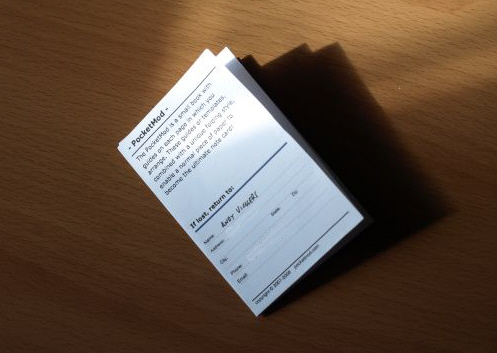
Ok, the solution is in the picture above, it’s called PocketMod and I’ve known about it for some time but kept forgetting to make one.  And that’s not actually a pun either.

PocketMod is a origami-style notebook that is folded, after you’ve printed and trimmed it, to form a small notebook without the need for staples or glue.  It’s been around a while and the website contains templates to print out and  very good flash-based designer tool that lets you put together your own mini notebook with exactly the pages you need – including lines, diary, squares, formulas and emergency information about you.

Put your mobile number on it and someone can contact you if they find your wallet, and you can easily find your own number too.

Just need a small pen now…

Standard
Society

NOTICE ME!

Man's face screaming/shouting. Stubbly wearing...

Man’s face screaming/shouting. Stubbly wearing glasses. (Photo credit: Wikipedia)

I was just outside on the balcony, watching the rain, listening to the gentle drumming of each drop on the timber beside me and the car roof below me; listening to the birds twittering, the gentle rustling of the early spring leaves in the breeze; listening to the… THUMP THUMP THUMP of music from a nearby house, so loud I could hear it outside and down the street.

FFS, as they say.  I muttered to myself how they should go take their music, in their cars with the loud exhausts, and go play in the shopping centre car park.  I’m all for having fun, I play music loud sometimes but if my neighbour wanted to listen to it I’d lend her the CD.

This is part of the obsession with being noticed, of desire to be the centre of attention that leads some to crave fame via TV “talent” shows and others to make their presence known not by making or doing something creatively, significantly, interestingly, or even the age-old way of being stylish or glamorous but by effectively shouting LOOK AT ME!!!

Some ways they do this are amusing, you hear a loud, rasping exhaust note outside and when you look the car isn’t a throbbing V8 muscle car or a grunting V12 Ferrari, but then you didn’t expect it to be, it’s a 1.2 litre Fiesta, Corsa or Saxo being thrashed to within an inch of its life and trundling by at about 15 MPH.  It’s driver thinks it sounds powerful, he thinks everyone’s impressed, he thinks his girlfriend in the passenger seat is impressed.  Nobody’s impressed.

Others stand outside pubs, conversations escalating in volume as though the switch on the TV remote’s got stuck, all needing to be the loudest and probably paying little attention to what everyone else is saying, ironically.

The same extends to work, Facebook, Twitter – people saying anything to be seen, to be recognised.

Is anyone reading this.  Hello.  HELLO!

Standard
Tech

Normal Service Will Resume Shortly

Information overload

Information overload (Photo credit: Martino!)

This blog is just over a month old and it’s not been the best month to start something this time-consuming.  I have also found though that although I have plenty of ideas for articles most of them require a bit of research and source material and this is where I found a problem.

I have thousands of bookmarks in Firefox and lists of information in various places but no cohesive structure to tie it all together so at the moment I’m doing my best headless chicken impression to copy all these various sources of information into one place and this is where modern technology comes into its own again.

I realised a few weeks ago that an elephant could help me.

Before you ask what I’ve been smoking this elephant is the logo of Evernote whose collection of apps for just about any platform and even a webapp that I can access from work or any other computer is making this task of organising my virtual box of scraps of paper manageable.

I have notebooks containing whole articles or collections of notes or links to webpages that will become articles while other notebooks contain information on wider subjects that will be useful for many articles or books.  All these notebooks can be grouped together to organise things further and pages in one notebook can be linked on other pages so you can create webs of information in one place, ready to be pulled together, mixed vigorously and foisted onto the web, baked to perfection like a chocolate gateaux.

Combined with resources such as search engines and online encyclopaedias this ability to connect, sort and utilise the huge amount of information at our fingertips is one of the true 21st Century wonders.

Standard
Tech, Typography

Keeping it Less Real

Windows 3.0, released in 1990

Windows 3.0, released in 1990 (Photo credit: Wikipedia)

If you’re old enough to remember the Windows 3.0 era then you’ll remember the heady excitement we felt of having real on-screen 3D buttons that moved in and out when clicked, giving a real sense of interaction.

This inevitably grew as hardware and software improved and soon we were greeted with music players that looked like real life stacking audio centres, photo tweakers designed for home use that sprouted all kinds of curves and colours, buttons and switches designed to make them look like the kind of futuristic handheld device we’d all be using to edit our digital photos in the 21st century.

Today this kind of effect is a doddle for modern computers but is it really necessary any more?  This is the current argument in interface design, or rather user experience (UX) design as it’s known now.

Back then computer interfaces were grey, cold, businesslike and the “realistic” apps were generally for more leisure based activities like editing photos at home, listening to music, watching movies and so developers made them more familiar and more friendly looking for the home users by emulating the physical interfaces people were generally used to, even if some of the designs could be, erm, bright, colour-scheme wise, looking like the result of a focus-group based on a primary school art class.  Even Windows XP went all technicolour in an attempt to escape the greyness.

However as computers have become more a part of our lives and more people are becoming accustomed to using web pages and modern shiny system like Windows 7 and OSX these imitations of the physical world on the 2D screen have, in places, started to look gimmicky.  Do users interact more easily with an iPad notebook app if it has a fake leather cover and bindings down the side?  Some people think so while others feel that the future is a “digitally pure” interface which presents information in a clear, at a glance manner without the need to emulate something real, after all you can see that you’re holding a little computer in your hand why does screen space need to be used up with decoration?

Fans of skeuomorphic apps (as these imitations of physical objects are called) say that the visual cues like Apple’s leather binding on the edge of its contact book app or the faux paintbrushes at the edges of many photo editors help to differentiate different apps for novice users and make the phone or computer easier to navigate.  Opponents point out that it’s the content that people will look at and recognise, knowing that a list that contains Aunt Mable is likely to be either Contacts or Facebook but they’re unlikely to think “I don’t know anyone called Amy Winehouse.”  Therefore clear, accessible and usable content is the thing.

As mainstream interface design moves away from the skeuomorphic we’re starting to see more emphasis on usability – toolbars containing elements other than buttons and sliders now that they’re not pretending to be the control panel of a 747 – on-screen dialogs in programs that adapt and flow, presenting a page of dynamic information and choices rather than a panel of switches.  3D effects are toned down to simply hint at the boundaries of the bit you’re meant to click on.

Pure digital has it’s advantages that skeuomorphism can’t compete with, after all if you pretend to be a notepad you have to live with a notepad’s physical limitations.  Perhaps there’s an element of the current trend for minimal, clean lines in design rather than bling but as long as it’s not taken too far this can help to improve usability.

Imitating the real still occasionally has a place, like the satisfying animated page turn when using an ebook reader but the tide is turning and designers are realising that modern purely digital interfaces don’t have to be boring and grey, that by utilising typography, colours, shapes and icons they can be vibrant, interesting, and have a life, and identity, of their own.
Standard
Health, Science

Step Away From The Computer

old hairdresser sleeping at work

old hairdresser sleeping at work (Photo credit: epSos.de)

No, not yet, read this first.

The reason I’m telling you this is that it’s good advice if you want a good night’s sleep.

I have read many times on Lifehacker that staring at devices that emit blue light before going to bed can disrupt your sleep patterns but had never tried it.  I have, however, been complaining for years that I often felt tired during the day no matter how much sleep I got.  Of course this can be a symptom of many other physical and psychological problems but having remembered the advice to switch off the computer, tablet, TV and so on and do something else like reading or listening to music I thought I’d give it a go.

The problem is that these bright light emitting devices cause the brain to stay alert and it is worse with computers which are typically close to your face, how close depends on what you’re looking at.

So far for me the results are encouraging and I feel significantly better.  If however you try this but don’t see any benefit and continue to suffer excessive tiredness then consult your doctor.

Night all, sleep well.

(Lifehacker)

Standard
Bag Fiend, Bags & Storage, Tech

Bag Fiend: When is an iPhone Case Not an iPhone (Only) Case?

Neoprene Case

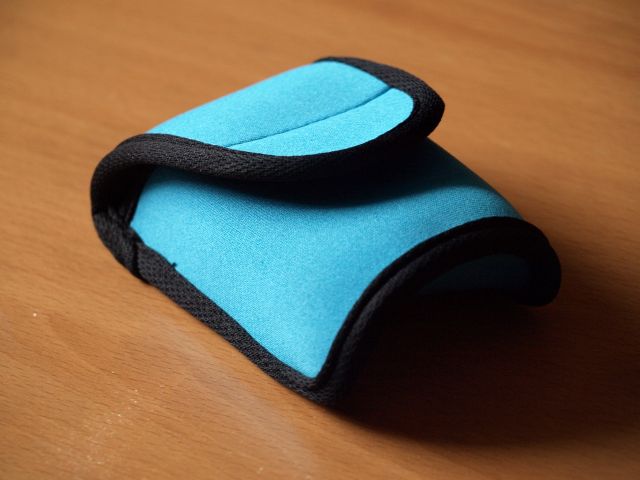
When it’s a generic neoprene pouch being sold specifically as a “Neoprene iPhone Case” but is useful for so much more.

The pouch isn’t in any way iPhone specific (I bought it to stow a  mobile mouse in my messenger bag) but is still marketed as such.  It’s a very good pouch though, by the way, for all you fellow bag collectors out there.  Really nice colour, well padded, velcro closure and available at 99p stores for just 99p, surprisingly.  (Tip – my local store has Fabulous Bakin’ Boys Lemon Cupcakes – box of 8 for 99p so grab some of those too).

The way it’s sold though is part of an interesting trend.  Products that are non-specific being sold as “for iPhone” including cases, car mounts, headphones, cleaning cloths.  Presumably this targeting happens because of iPhone being a very well-known brand name but it becomes self-perpetuating whereby people see all the accessories specifically for iPhone and decide that maybe they should get an iPhone rather than one of those other phones because of all the accessories.

Something to ponder in a later post I think.

Standard
Architecture, Art, Psychology, Society

The Dream Palais

Palais Idéal, Hauterives, Drôme, France.

Palais Idéal, Hauterives, Drôme, France. (Photo credit: Wikipedia)

Built over thirty-five years by one man, The Palais idéal in the French town of Hauterives is an architectural wonder that is at the same time regarded by art critics as merely a folly and an example of so-called naive art.

Joseph-Ferdinand Cheval was born in 1836 and suffered an unsettled early life including the death of both his parents before he was 18, the deaths of two wives and several children, and many poorly paid jobs.  In 1867 he began work as a postman and the story of the Palais began.

As he walked on his rounds in the French countryside he began to construct in his mind what he called “a fairy palace of my dreams” in order to combat the boredom he had begun to feel.  His vision became so vivid as to be almost real in his mind but then he lost confidence in his internal vision and found himself simply wandering through the real world that had none of the wonders of his Palais and had only brought him pain in the past.

His spirit was awakened by tripping over a stone in his path that seemed to him to have been sculpted by nature and he realised that if creativity is inherent in nature then it could be within himself too and at that moment he found what he had been missing.  He realised that he could bring his dream castles into the real world and so he began to collect stones and build his Palais.

Once completed The Palais demonstrated his vision of creative reality, merging styles from across the world and across time.  Cheval said that creativity is life and in finding creativity he began a new life and was enriched by its energy.

The Palais was, from its unveiling, intended to be seen and was open to the public so that they too could be inspired to create and live rather than simply, passively be entertained.  Cheval hoped that his Palais would be part of a wider transformation of the world as people found their own creativity after seeing his work.  The Fortean Times article I read ended by talking about this aspect and its author said it was offered as a pebble for use in building that global palace and as I’d now come into contact with the Palais so I was inspired to discover my own kind of creativity and share it.  Today you don’t need stones and we can build a Palais online if we want, in some ways 21st Century Lunch is part of mine.

Fortean Times #286 p74-76 / Interesting Thing of The Day / Wikipedia

Standard