Outdoors, Photography, Politics, Psychology, Science, Society, Tech, Uncategorized, Work

Lifelogging

The rear LCD display on a Flip Video camrea

The rear LCD display on a Flip Video camera (Photo credit: Wikipedia)

Often today people worry about surveillance by the government with CCTV everywhere and intelligence agencies able to view what we do online (hi, Mr/Mrs NSA/GCHQ person) but there’s another side to the technology which is becoming ever more popular.

Many of us carry some form of video camera, I have a smartphone and a good compact camera that can record HD video, in fact I used this the other day to record a worker at our factory who was adamant he could cut a worktop with a saw that everyone else said was clearly blunt.  The resulting video is a possible candidate for YouTube, complete with Top Gear style “four hours later…” captions, as I joked at the time.

We now have the ability to record everything we experience in some way or another and people feel the need, or the desire, to do exactly that and share it with the world, even in their most intimate moments, as if to prove that they did it, or how good at it they were, so to speak.  It’s a standing joke that Instagram and Facebook are a repository of photos of people’s dinner but in some ways it’s true.  In any pub you go in there are groups of drinkers gurning at smartphone cameras, never again will you be able to get utterly pished without it being recorded.  I once had my glasses “borrowed” by a woman whose friend took a photo of her, wearing my glasses, with me kissing her cheek.  Months later a woman stood by me at a bar turned and said “I’ve got a photo of you on my Facebook.”  Same woman, same glasses.  Technology has made it simpler, quicker and cheaper to create a digital photo album or slide show that, without needing shelf-space or the setting up of a projector, can be virtually infinite in size, accessible anywhere, searchable and sorted by date.

The next stage is again in the area of wearable technology.  Google’s Glass project, along with other similar techie-eyewear, promise the ability to instantly record anything you can see, which has worried many privacy campaigners despite the devices clearly having a red, Borg-like, light on the side when they’re recording.

The other type of device is specially designed for recording just about everything you experience – the Lifelogger.  Two devices have appeared so far, Autographer and Narrative, which are intended to document your life while you’re wearing it of course.  While you’re not you can imagine it sitting there wondering where you’d gone.   The two have different approaches, Autographer uses five sensors to detect location and changes in light and motion to take a photo when you change location of when it thinks you’re doing something interesting like running after someone.  Narrative takes a picture twice a minute.  When downloaded you can then look through what they’ve logged and perhaps see things you’d missed or remember something you’d forgotten – which might be both a blessing and a curse depending on the event.

One day we could all be carrying a multi-sensored device that, in the event of an emergency, could log what’s happened to you and call for help – a kind of personal Black Box Recorder.  This is happening in cars already, as the Russian meteorite impact last year showed – the event captured by an unprecedented number of witnesses thanks to dashcams and smartphones.  In-car video is also useful for insurance companies, TV clip shows and YouTube, recent personal experience of idiot drivers makes me want one more than ever.

Whether the current Lifelogging technology has a use is down to whether it’ll record anything useful or interesting but the idea has been picked up by emergency services who have considered something like Glass to both record an incident and how it’s dealt with (possibly for legal, in case of being sued, reasons, inevitably these days) while also providing vital information to the medic or police officer in real-time.  Already trials have shown that police wearing body cams are seeing positive results in terms of arrested criminals accepting their guilt.

So we hurtle onwards into the recorded future, the problem could be having time to sort the wheat from the chaff of all these Lifelogged images and indeed where to store them all.

Looks like we’ll need a bigger server.

Standard
Business, Marketing, Psychology, Society, Tech, Uncategorized, Work

Bills and Shopping: The Rise of the Machines

Point Four Touch Point of Sale Till

Point Four Touch Point of Sale Till (Photo credit: Cyberslayer)

It’s not that I don’t like banks, or that I’m in some way un-British and avoid queuing it’s just that I don’t like being required to go out on some cold, damp Saturday morning when I’d rather be sat by the heater reading.  This is why most of my bills are sorted out by Direct Debit, even my credit card which is paid automatically every month – as it’s exclusively for online use rather than credit as such.

However there is one, variable bill which I don’t do this way – the electricity bill, because I don’t want them taking the money if they’ve over-estimated it.  So once a quarter I trudge to the bank.  The last couple of times I’ve been intercepted in the queue and guided to the paying-in ATM which can, I am assured, be used to pay bills and sure enough it did, it scanned the bill, took the details from my card and printed me a receipt.  It lacked the friendly hellos and brief chatter of talking to a teller but it did its stuff efficiently without having to wait with the other customers and their queries that computers can’t resolve (yet).  It’s amazing what technology can do isn’t it.

When it works.

This time I queued for the ATM, a member of staff asked if I was OK with doing it myself, “yes,” I replied, proudly, stopping short of continuing with “fear not, I have done this before”.  The woman ahead of me was though clearly having trouble paying a cheque in and was becoming increasingly frustrated by the machine.  Some people would have been mortified at causing a delay for others.  When she went in search of a real person I approached the anonymous grey box, inserted my card and then my payment slip which it chewed a little, thought about and then spat back out at me.

The member of staff who had by now redirected the cheque woman to a teller dashed over, I tried again but still it said it was having trouble reading the slip.  “Oh,” said the smart-suited bank woman “I think it has trouble with the new smaller payment slips.”  Right, so it’s the electricity company’s fault.  I was redirected to the queue for the tellers too, while reflecting that it’s lucky there were still real people present to do the job. The banks say this is to do with improving customers’ experiences, to reduce waiting times and so on.  A while later a man ahead of me was plucked from the queue and escorted to the same ATM, poor unsuspecting soul, like something out of Nineteen-Eighty-Four he walked by, towards the room 101 of automated banking technology, “good luck” I silently whispered.

It’s becoming ever more common though, in the supermarket there have been self-service checkouts for a while, and now the incredible sounding Hybrid Checkouts – you get your own conveyor belt to play with, like your own Generation Game.  A tin of beans.  A lettuce.  A cuddly toy…

I like checkouts with people on them, you can say hello, chat a little, they do all the scanning stuff.  I know someone who can scan goods quickly, accurately and have a riveting conversation with you at the same time, all you get from a Hybrid Checkout is the infamous “unknown item in the bagging area” message.  Which is a further complication – having to precisely place your items in your bag instead of lobbing them in haphazardly.

They say it’s quicker, denying the accusations that it’s to do with saving on the costs of staff, as do the banks.  They encourage you to use them, “it’s for your own good” they virtually scream as they drag you by the basket towards the robot cashiers while you whimper “but I want to talk to the nice lady on till nine.”  I have been known to linger at the end of an aisle, apparently choosing coffee until I see a gap on a conveyor then dump my groceries onto it before they can have my basket away from me.  True story.

I’ve seen people using the Hybrids, repeatedly scanning a loaf of bread while looking around for help.  My friend on the till would have scanned it first time.  If you’ve got alcohol or something else that needs authorisation then you’re left waiting until an assistant can come and release you back into the community from whence you wandered, happy and smiling, ten minutes earlier.  Just nipping in for a bottle of wine and a curry you said.  Now you need something more substantial.  “What kept you?” your partner says as you get into the car.  You mumble something about bloody technology and drive home, which is something that, for now, you can still enjoy doing yourself.

Standard
Psychology, Society, Uncategorized, Work

All Wrapped Up

Shrink wrapped helicopters

Shrink wrapped helicopters (Photo credit: Wikipedia)

Ikea have a lot to answer for.  Well, not just Ikea really but retail outlets in general, combined with the general idea of everything being available to conveniently take away.

A while back a customer arrived to collect a mirror, this is a custom mirror, hand-cut, semi-hand-polished, we don’t have off-the-shelf mirrors, or double-glazed units, or windows, the world just isn’t that standardised, as I’ve discussed before.  Anyway, I brought the mirror out and carefully placed it down, sitting on its corner protectors which stop the polished edge being chipped.  “Is that it?”  he boomed.  “That’s the mirror you ordered.”  “But aren’t you going to wrap it up in something, it’s gotta go in my van, what the f**k am I going to do with that?”  I use a question mark there but it may have been a rhetorical question.  I said that we didn’t have any cardboard or bubble wrap.  “Right, I’ll go and sort my van out and wrap it up my f*ing self then.”

Someone else ordering a double-glazing unit recently asked “will it come packaged up?”

This is the thing, if you buy a timber door from a DIY store it’ll probably have a bit of shrink-wrap around it it protects it from rubs but not knocks as such, we don’t have the facilities to package everything and it’s impractical to keep packing materials in all the time, if we do have some card and people ask then we will wrap things up, the problem is the expectation of it being packaged and the reactions if we can’t.

Most of our products are supplied to trade people who turn up prepared, with vehicles suited to the task but more often people turn up in vehicles that are too small for the glass or come without anything to support it at all.  At the opposite end of the scale one customer used to turn up with a specially made tray on the roof of his car for carrying mirrors and another had built a timber support inside his car to move one glass unit – which was an impressive level of preparedness.  Most customers at the moment do come prepared in one way or another, even if it means five minutes of me standing by the car holding the glass while they remove jacks, toolboxes, shopping and so on from the car boot before spreading out an emergency tartan blanket as support.

For the rest though the explanation is the takeaway society – people expecting to not have to do anything themselves, just turn up, have it wheeled out and put in their unprepared car.  Their food comes in packages in the supermarket, their furniture comes in boxes, or delivered in vans, so it comes as a shock to find something that doesn’t conform to their expectations it’s just unfortunate that so many people’s reaction today is not to either ask politely if we might have something to put round the glass, or say that they’d go and get something themselves or a more suitable vehicle but instead to refuse to acknowledge that they may have overlooked the transport issue, to blame the supplier, to lash out with indignation and exclaim angrily that it should be wrapped up, that it’s our duty, that it’s the law – nothing comes unwrapped these days, don’t we know that, it’s a basic human right for goodness sake.

Ahem, sorry.  Anyway, it’s late here so I will just wrap this up for you now.

Standard
Business, Society, Work

Silent Running

English: Polish transistor radio Eltra Izabell...

English: Polish transistor radio Eltra Izabella Polski: Radio Izabella produkcji Eltry (Photo credit: Wikipedia)

Once upon a time there was a happy, cheery workshop where everyone worked happily accompanied by the sound of their local radio station.  They hummed along to the songs, occasionally danced, laughed at jokes, discussed the news, listened to the cricket.  Then the man from PRS for Music came along and told the boss that he’d have to pay a fee because so many people listening to one radio counted as a public performance, especially as people outside might conceivably be able to hear it too and therefore the artists should be recompensed for this concert that they weren’t being paid to perform.  So the boss told the workers to take the radio home because he wasn’t prepared to pay for them to listen to music.  And from then on the workshop was quiet and sullen, less chatting, less laughing and the workers felt less happy and less motivated to work.  The artists still received their royalties from the radio station but the workers lost something important.  Still they worked accompanied by only the sound of machines, telephones, keyboard clatter or dripping taps, quiet drudgery occasionally punctuated by a bit of chatter.

This is the sorry tale repeated across the country.  I’m a content creator, not just on this blog but my photos and other works, and as such I appreciate the importance of copyright protection, but the issue of Music Licences is ridiculous.  Having a radio at work isn’t depriving artists of anything, it’s not like in the absence of a radio the workers would all go out and buy MP3 players and load them with every song ever recorded and likely to be played on local radio.

The actual rules class workplaces as “public places” as far as their interpretation of the Copyright, Designs and Patents Acts 1988 goes – in their words (this extract being “fair use”, by the way)   “In UK copyright law, a person wishing to play copyright music in public will generally require the consent (or licence) of the copyright owner before doing so. ‘In public’ means, broadly speaking, to an audience outside of his/her domestic or home circle. If the person does not obtain the required licence they may risk infringing copyright.”  The words “broadly speaking” are important, I feel their reach is too broad.

The rules exempt the communal areas of blocks of flats for example which could easily encompass a recreation area which could seat thirty or forty people listening to the same radio broadcast, or an album, wouldn’t that constitute more of a public performance than ten mechanics in a garage?  Similarly listening to music in a car is exempted but if you open the window wouldn’t anyone outside constitute an audience – “[An Artist’s] audience includes anyone listening to their music outside the domestic circle or home life.”  Will PRS for Music soon have roadside patrols?

At the end of the day the radio station will still pay to broadcast the music, they pay the same whether those ten mechanics are listening at work, whether the customers can hear it or whether all of them were listening individually at home.  PRS for Music may say that people are listening to music for free and not buying it, the same argument as piracy, but it’s not free, the broadcast has been paid for already and there is even the possibility that having heard a song at work that they might not hear otherwise because they don’t listen to the radio at home someone might go out and buy the album themselves.  Admittedly if someone buys an album and plays it at work then that’s more in line with PRS for Music’s description of a public performance but a radio isn’t in my opinion.

Background music and chat has been shown to improve mood, improve staff interactions, it can inspire creativity and boost productivity, it makes people feel good.  But like so much these days the cost of feeling good in this case is financial.

This post will require an additional payment to be made if it is being viewed outside of a domestic situation.  Thank you.

Standard
Psychology, Society, Work

Unrealistic Expectations

Clock watcher

Clock watcher (Photo credit: Craig A Rodway)

It was once accepted that the average working day was nine-to-five, now it’s about eight-to-five, five-thirty at most.  Most people accept that everyone works generally those same hours but there seems to be an increasing expectation, perhaps perpetuated by supermarkets that are open either twenty-four hours or until late, that companies should work round the customers’ work hours.

You might expect a company to provide an emergency service, plumbing or electrics for example, but I’ve heard of people who were waiting for a visit for something non-urgent actually saying “well it’s ok, he can still come out at six or seven o’clock” – oh, can he?  Like the person carrying out the visit doesn’t have a home life to go to when his actual working day finishes.  The same goes for people who work during the day who often won’t actually ask “do you do evenings?” but just say “you’ll have to come out after six o’clock because I work.”  This just takes the old idea of “the customer is always right” to new levels as people behave increasingly selfishly, with little consideration to other people’s lives.

If I need to have some work done then I arrange to have a day off, so the work can be done in normal hours, unless it’s really an emergency.  If it’s non-urgent and I have no holidays left then it can wait.

Standard
Business, Marketing, Psychology, Society, Uncategorized, Work

Sign of The Times

19203945

We have two sites, a glassworks with trade counter and a plastic window factory.  Outside the plastic window factory is a sign with our logo on it which contains the word “glass”.  Nowhere does it say “glass sales” or “get your quality cut glass here, guvner.”

It does have a phone number on it.

A few weeks ago our chap at the factory rang me to warn me about an irate individual who was upset that he couldn’t get glass from our plastic window factory.  “It says glass on the sign and you’re telling me I’ve got to go to the other side of town, it’s disgusting, your managing director needs to take that sign down immediately, it’s misleading!”  He’d said, unnecessarily angrily.

When the man arrived at my counter I was in the middle of taking an order.  I said “I’ll be with you in a moment” but it seems he didn’t hear me because when I turned my attention to him he began to shout “Don’t bother, I’m not being treat with such ignorance by you, all the staff of this company are rude and arrogant, obviously you don’t have any customer care training.”  I told him I had and he demanded to see my certificate, which is at home, I don’t tend to carry it around in my wallet.  This exchange continued for a while, he’d clearly arrived looking for a confrontation as he felt he’d been wronged by our sign.  He wrote a letter to complain about the sign.  He didn’t get his glass.

About half an hour later a woman rang asking for an appointment for a quote, she lived quite a way out-of-town but had been to the main post office and seen the sign for our company on the building next door, and as she hadn’t been aware of our existence up until that point she thought she’d get a price from us for her windows as well as the other firms she’d asked.

Can you guess where she’d seen the sign?

Standard
Music, Psychology, Random, Tech, Work

Hold On, And On, And On

Típica cabina roja de Londres - Red telephone ...

Típica cabina roja de Londres – Red telephone box – London (Photo credit: Arabarra)

In my work I’m regularly put on hold as suppliers find out whether they’ve got something, when I can have something or why I haven’t received something.  Most of the time the hold music is cheesy, generic and bland but mostly irritating which I suspect is to encourage you to hang up and go get a coffee instead.  Some companies have even started replacing the music with constant ads for their products, one of my suppliers never really changes the product range and I’ve found myself saying, without thinking, “I know about that, we buy it already”.

Which reminds me; always bear in mind that when you’re on hold the person on the other end can often hear you even if you can’t hear them so don’t be impolite unless you want them to know you’re pissed off.

New research by TalkTo and ResearchNow has found that people spend on average 10-20 minutes per week on hold, which equates to 43 hours in a lifetime.

Only twice in twelve years have I been impressed by being on hold.  Once was with a company which used “I Need a Little Time” by The Beautiful South.  The other was a firm who always had a good variety of good, modern, well-known songs to listen to while you waited, you felt slightly disappointed when it ended.  There was one song they played I hadn’t heard since I was clubbing years before and, I’m not embarrassed to say, I did dance to it behind my counter.  Which is one way to spend those 43 hours of your life you’ll never get back.

Standard
Psychology, Society, Tech, Work

Everybody’s Talking (Or Not)

texting from the bar :P

texting from the bar 😛 (Photo credit: tray)

I’m not a huge fan of texting apart from the sort of messages it was intended for – quick hellos, arrangements to meet someone, thank-yous and so on.  The short, non-verbal nature of it combined with the feeling that you need to reply quickly means that some nuances of what you’re trying to say can be lost, leading to misinterpretation and who knows what consequences.  Well that’s how I see it sometimes, as opposed to the old days of writing long, carefully composed letters or actual speech where you at least have tone of voice to convey meaning.

It seems though that I’m in a minority, if recent research by Vodafone is correct.  They’ve found that average phone call lengths have halved in five years, to one minute forty seconds, with people seemingly preferring other methods of communication.

Surely people aren’t that worried about their inclusive minutes, or battery life, are they?

[Gizmodo UK]

Standard
Science, Society, Work

Retail Tales: Unpleasant and Unhygenic

"Cover Coughs, Cover Sneezes" - NARA...

“Cover Coughs, Cover Sneezes” – NARA – 514081 (Photo credit: Wikipedia)

I have been feeling under the weather again this week, which may or may not be left over infection from last week when to be honest I was glad I’d booked the days after New Years as holidays.

This started me thinking about why I seem to get colds, sore throats and so on so regularly, I thought maybe I wasn’t healthy enough, maybe it was bad diet.  The answer isn’t pleasant, it’s shop customers.  Or rather the customers who come in coughing, sneezing and spluttering and leaving germs on my door handles.

When I cash-up I have to go and wash my hands afterwards because of the grubby feeling they’re left with, I know many people who do the same.  I know many people who work in shops and supermarkets who also fall ill regularly.

Working with the public is a minefield of potential contagious illnesses coughed across the counter or handed to you on cash handled by unwashed hands from the last time they went to the loo.  If you worried about it too much it would make you run from behind the counter in search of hand sanitizer – which is handy stuff to have around but doesn’t stop the sneezes, though you could throw it at someone who does fire contamination in your direction, and don’t get me started on the number of people who cough all over you without covering their mouths, as a lady in the shop today told me happened on a recent train journey, the cougher being the conductor.

At the other end of the scale are people who obsess about having every surface 100% bacteria free, being told by adverts that there are more on a chopping board than toilet seats, that if they don’t use all these products they’re putting their kids at risk.  It’s true that you need to be careful with raw food and so on, just follow some basic rules and you’ll be fine, it is now even believed that excessive cleaning and removing all contact with bacteria could be detrimental to health.

The most ridiculous thing I’ve seen though are automatic handwash dispensers, again advertised as being essential for your family’s health.  The adverts say that handwash pumps are riddled with bacteria and every time you touch one you get infected.  True, but it’s handwash, you’re using what you’ve just pumped into your hand to wash off the bacteria you’ve just wiped onto your hand.  If you’re in a public toilet using either kind of handwash dispenser though you’re probably about to then pull open the door using the handle that the person who didn’t wash their hands has just used.  Which brings me back to my counter, my cash and my cold.

Standard
Gadgets, Society, Tech, Work

Adventures With a Chinese Android

It all started eighteen months ago…

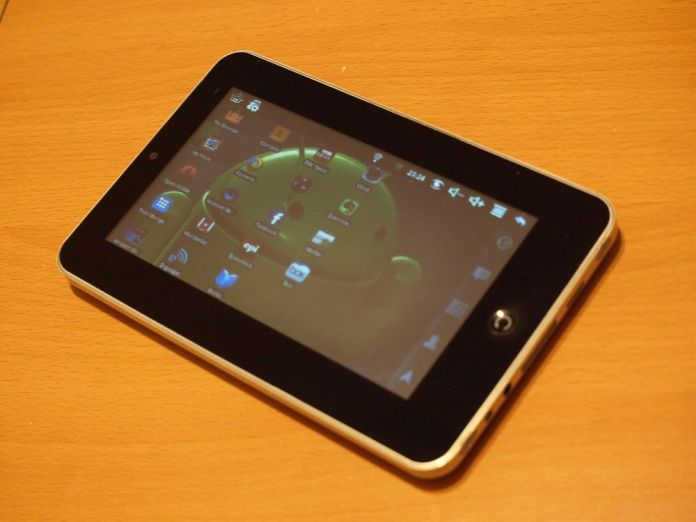
Cheap, small, curvaceous but not as slender as more expensive models my droid arrived late and wasn’t quite what I’d ordered…

Chinese Android

Chinese Android (image credit: Andy Vickers)

The picture showed a proper USB port, this didn’t have one but never mind.

I’d been contemplating a tablet computer for a while but wasn’t sure I’d get much use from one so I didn’t want to splash out on a Samsung or Asus I might regret getting.  I could see the advantage of a handheld, touchscreen computer for web browsing, picture and video viewing, quick email or Facebook viewing and so on especially since Apple and Google had managed to make operating systems that suited the way people would use them, i.e. with fingers, and because unlike previous tablets they ran smartphone software not desktop software they could be smaller and lighter.

My MID Epad looked like a shrunken iPad and even came in a very nice, Apple-esque box with a magnetic closure and it was packed with technology that iPad owners would snigger at; old-fashioned resistive touchscreen, an old processor, little memory, low-res screen, plastic back – PLASTIC!  Short battery life.  Not being a perfectionist and being careful financially with such experiments I accepted that what I had wasn’t cutting edge, so far from cutting edge in fact that you could butter bread with it.  Anyway, it was quick enough to play videos, the screen responded well enough to flick through ebooks.  I could even play Angry Birds.

The first problem was that these tablets come with Android but are not approved by Google so can’t access many of the apps in the Play Store, the default Google apps such as the contacts app won’t synchronise properly and often you don’t get updates.  For some these are not problems, if all you want is to browse and get email and read ebooks.  Gizmodo UK recently proclaimed that chinese tablets were all “crappy” and that Google was having to keep Android open to support this flow of effluent but it depends on how you define crappy, what you find acceptable and whether you’re looking at your £65 tablet from the point of view of a well paid tech journalist, someone who just wants to look at the odd web page or a blogger on the minimum wage.

It niggled me admittedly but again I lived with it and was able to get round the issues in a way that isn’t possible with out of the box Apple devices – I put apps on manually, sideloaded them, having downloaded them from app sites.  Most were old versions and again they wouldn’t get updates.  Playing videos from the computer required some research on how to make the software access a shared network drive, though as usual the net provided excellent step-by-step guides, though if anyone mentions the word Samba near me I may cry.  Ok, so it didn’t “just work” as certain fruity products are supposed to do but as a bit of a geek it was interesting.  The hair I pulled out has grown back.

It was a challenging device all in all – it had to be charged after a couple of hours use so I had to make an adaptor lead so I didn’t have to sit two feet away from where the power supply plugged in and so I could have a right-angle plug into the device.  Sometimes the internet browsing was painfully slow.  I loved reading books on it, even using it in a tent in the middle of the Lake District until the battery died again, though using it outside in sunlight was out of the question – one-nil to Kindle and paper.  Being non-approved some of the apps I wanted I just couldn’t have, and the dream of sharing data across computer, phone and tablet would have to wait a while.

The more I used it though the more I saw that the arguments of those people on gadget blogs who complained that tablets were too simplistic, that you “can’t code on them”, and so on were wrong.  The tablet is the perfect consumption device, I can lounge on the sofa and read the news, read a book, browse a website, check mail, listen to music or watch video streamed from my computer, I even have apps filled with tasty recipes which I haven’t yet got round to cooking.  I can share things I’m interested in there and then, add to my read it later.

Now, of course, this is well known and Kindle Fires, Nexus 7s and iPad Minis have been this years big Christmas gift – my mum got a Kindle Fire for her birthday last week because it was the perfect computer for her; so simple to use, just point and tap to read, browse the net or get more books or games.  I now have an Sony Xperia Android smartphone and a Nexus 7 tablet myself, both have newer versions of the software, I can listen to music via bluetooth from either and do even more than with my Chinese Droid, my emails, contacts, to do lists, notebooks, reading lists and bookmarks are automatically synced and available wherever I want them, all from small, thin light devices.

I remember seeing 2001: A Space Odyssey, Star Trek and similar, seeing those little pads of information and thinking how great it would be to have all that in your hand.  And it is.  Amazing.

Standard