Architecture, Outdoors, Psychology, Society

The World Wrapped in Cotton Wool

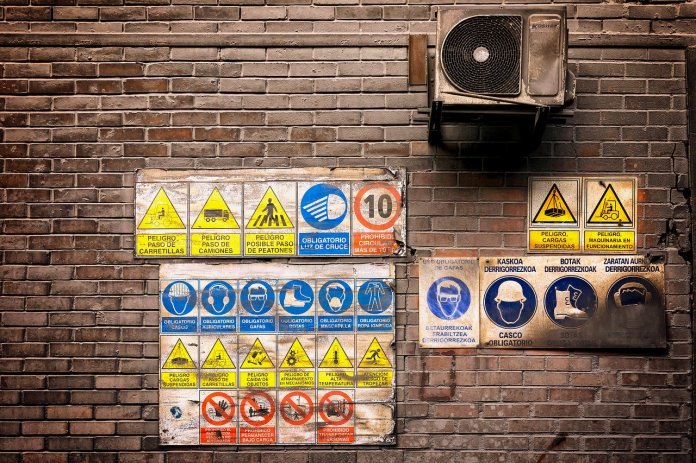
Warning Signs

Image by Peter H from Pixabay

In recent years, it seems to me, our urban architecture has turned into a sea of yellow and red warning signs and yellow and black striped tape.

Today there seems to be a constant corporate fear of being sued that has caused so much of this kind of protectiveness. For example the Royal Mail depot near me has big warning signs at the site entrance warning of a “Trip Hazard” which may be the ends of the lowered pavement where public pedestrians are corralled between railings towards where they collect parcels. Where this public path intrudes onto the roadway a big yellow line and accompanying signage tells the humans to not stray outside the lines lest they be flattened by Postman Pat’s little red van. There are further trip hazard signs and yellow and black tape at the actual entrance to the collection office as despite there being a ramp to one side the straight ahead approach involves negotiating, unbelievably, a normal height step. OMG, get me some climbing gear. Despite all this there are still the big signs saying “Beware of Vehicles”.  When I was young we were taught the Green Cross Code to follow when near roads.

Another example of the idea of “you didn’t do enough to stop me injuring myself” are scaffolding poles – “now padded for your safety and comfort” and also wrapped in yellow and black tape. I wonder whether it was a ploy to support the manufacturers of tubular yellow foam products, maybe they weren’t selling enough as pipe lagging but at some point in the last fifteen years it was decided that every bit of publicly accessible scaffolding needed legwarmers. On pavements the world over there are lampposts, street signs, litter bins, bollards, walls and even doorsteps or whole sections of buildings jutting out into the path of pedestrians yet none of those things are padded for your protection, or edged with wasp-coloured tape. You can’t say that it’s because as a temporary structure people might not be aware that they’re there as even a lamppost is an unknown obstruction to anyone who doesn’t know the area well – and even to someone who is local but not paying attention. I’m amazed that the lampposts and railings aren’t similarly adorned. Yet.

I can see the point of helpful signage, warning of a hidden step, or low beam, or something round a corner that’s not obvious, just as I can see the point of the interlock on my washing machine that stops you opening the door until the water’s gone – it saves you having to mop up the floor, and aircraft doors can’t be opened in flight for obvious reasons – but some things can only exist because companies think they need to protect people from themselves because they can’t be trusted to negotiate the world without explicit instructions. Trains for example used to have windows that could be opened while moving, as could the doors but not any more because someone might try to depart the vehicle at speed, or perhaps just part of them.

So we end up with shops selling luke-warm coffee or cups plastered with warning that the contents may be hot. Microwave meals similarly warning that on removing the item from the microwave the contents “may be hot” – well I would hope so otherwise it’s time to buy a new microwave.

Perhaps the companies have a point, that more people today don’t have or just don’t use common sense, or maybe that people are more willing to sue if they’ve not been explicitly told not to do something.  Either way at this rate there is a risk of missing the hazards because you’re too busy looking at the signs.

Standard
Fashion, Language, Psychology

I Can Keyboard, Apparently

book-3294946_1280

Image by astize from Pixabay

There has been a fashion in language recently that annoys me, unsurprisingly. I don’t know whether it has emerged from the short-form, limited text length of Tweets or laziness or people just having too much to say and too little time. The issue is people leaving out large and often important parts of sentences while at the same time using a noun as a verb.

For example in TV and radio adverts: “I can best friend” “I can family” “I can daughter” “We can football” (Virgin Media) which don’t even describe what you’d be doing, how do you “family”? A while back an advert encouraged people to “Adult like a boss” or something similar, the emphasis being that “Adult” is something you do rather than something you are, maybe the ads aren’t written by adults.

Uswitch used to turn it up to eleven with “U niche hobby, U model aeroplane, U guitar solo, U feet up” – though shortly before I finished this they changed theirs to real English with lines like “You start a new hobby” and “you learn the guitar”. Maybe it’s not just me.

Then there is a fashion for car stickers that say “Because Fiesta” or Ibiza or Trabant. Because what, exactly? At least they say “because” rather than “cos”.

Some names do become verbs, like to Hoover and to Google but “Are you ready to Butlins?“, you might as well say “are you ready to Cromer?” or “Scarborough” for that matter and as for “I don’t gym, I Hustle” – when did it become too much effort to say “go to the (gym)”. Similarly “Time to Travel Republic”.  These all smack of both laziness and the idea that it’s cool to eschew proper language, of marketers trying to conform to the zeitgeist. The Butlins one is accompanied by the slogan “winning at holidays”, a kind of statement which seems to be part of the fashion for aggressive or at least competitive language in which you’ve got to beat everyone else at whatever you’re doing which also could explain the short, snappy lines.

Anyway I’m off for a sit down now. I can Sofa. Because Tea.

Standard
Psychology, Society, Transport

All Sound and Fury, Signifying Nothing

I’ve noticed recently that the noisiest motorbikes and cars sound, as their riders or drivers accelerate them, like a baby crying for attention – -wahhhh, wahhhhh, wahhhhh, with each noise increasing as they go along, not a coincidence I think…

As I write this it’s a sunny weekend in May so inevitably all day while trying to enjoy the sunshine we’ve heard pratts revving their cars or bikes outside their houses, tuning them – so they seem to think – and idiots tearing out of town into the countryside at well over the speed limit and excessively noisily. At this time it’s all the more annoying as they’re supposed to be staying at home and pushing your right foot onto a pedal doesn’t count as daily exercise.

I don’t hate all motorbikes or sports cars, or all of those who ride and drive them, there is someone on this street who has a modern bike and you barely hear his arriving or leaving on it, he occasionally rides either a true classic bike or a modern replica and it’s the same with them, his friends are the same, the engines emit a not-unpleasant burble and they don’t set off at full revs. Yet the two younger riders round here have Japanese “sports bikes” with all the plastic cowlings and deliberately loud exhausts and they have to sit there making a racket before even going anywhere and arrive similarly loudly so everyone notices them and so everyone thinks they’re the next Valentino Rossi.

They would no doubt say that rather than sounding like they’ve got a dodgy exhaust their car sounds “mint”, “like a Frarri”, “badass” or “sick” – which it does, as in “broken”.  They think everyone will be impressed by the driver’s “mad skillz”, but most people who have to listen to it won’t be impressed, they’ll describe the driver with a word that beings with ass…

One reason they all rev their engines at home is so everyone can see that they have a powerful car or bike and how amazing they are that they can handle it. Whereas some of them even just seem to have the loud cars and bikes for the soul purpose of annoying people, wearing the fact that they’re so bad that they’re despised as a badge of honour, because the bad are glorified, for example the “bad lads” are supposedly the real men in society, so say Hollywood and the much of the media. One car near where I live had a decal glued to the tailgate that said “Hated Locally” on it. Whether the driver implied that he was hated because he’s so much faster and better than other drivers or because he was loud and annoying is irrelevant as the latter will have been true anyway.

Standard
Health, Psychology, Society, Work

A Crisis Brings Out The Best in People

Flowers

Flowers

I originally wrote a piece about how it felt like our nation had lost our legendary stoicism and blitz spirit and become selfish and cynical in the face of a global pandemic, hence the title being ironically wrong, but thankfully the good has now far outweighed the bad so, the revised version.

We started March with a looming, glowering storm approaching called COVID-19 and numerous selfish individuals made grocery shopping look like an episode of Supermarket Sweep thinking that of course, and I quote, “there wouldn’t be any food in two weeks time”. Though food didn’t seem to be on most of their minds as across the world people hoarded toilet rolls – why they’d need them without food is anyone’s guess. in the U.S. of course people hoarded guns and ammo, presumably in case someone came to take away their bog rolls.

As we know, despite supermarkets telling us that they’d got warehouses full of everything we’d need while being locked away for six months, the hoarding soon extended to milk, pasta, bread and nappies. When the pubs closed down so the hoarders stockpiled beer too, then gin, rum and lastly cider. I drink cider so I’m ok with enough for my occasional can in the fridge. I’m alright Jack (Daniels).

After six weeks we got the queuing back but this time at reopened DIY stores and household waste centres as people were desperate to clear out the stuff they’d been, er, clearing out for six weeks.

I spoke to a woman on the till at the height of the panic buying, she looked exhausted and had had a bad day, it was worse than the pre-Christmas rush and she said she’d had enough of working in retail, it was the final straw. Then the hoarders left an NHS nurse in tears because after working all day to help people she couldn’t get food for her tea. Further it descended into the same people shouting at shop staff because they couldn’t get what they wanted and after limits were imposed on how much you could buy people tried going back with multiple trolleys – one man locally went back to the same till with a second trolley full and was refused, as was a man with a trolley full of toilet roll. It is a sad reflection on these parts of our society that the CEO of Asda had to go on TV adverts asking people not to abuse his staff.

But of course it wasn’t just shop staff, at first a number of Asians in Britain were verbally or physically attacked with comments such as “take your coronavirus home” being spat at them by the idiots, then the shop staff trying to make sure everyone has food, some staff of non-essential businesses had been abused for cancelling work and closing, and then after shops prioritised NHS staff in stores other shoppers had been heard to abuse them too just for being prioritised, commenting “so what” and so on. These people would be the first crying for NHS help should they fall ill, and would be demanding priority treatment.

We had people stealing milk bottles from doorsteps. A pub in Scotland delivering free meals to NHS staff received a torrent of online abuse for doing it. And the people who think this is just a free holiday and restrictions don’t apply to them, because they’re special or too “badass” to catch, carry and transmit the virus so they continue to gather together. And as for the people caught licking a phonebox in our town, well in addition to being made to clean it it would be ironic if they caught the virus from the phonebox wouldn’t it.

The latest thing is people believing conspiracy theories that 5G mobile is to blame for coronavirus and destroying the phone masts that ultimately our emergency services also rely on. It doesn’t help that these theories are being peddled by ill-informed celebrities on social media, because of course they’d be an expert on the subject so they must be right, right? As for the other conspiracy theories, well, it’d take the rest of the lockdown period to read them all.

But then the good in our country started to show. I’ve noticed most people being polite and considerate, saying thankyou, saying “morning” when you pass them while getting your government authorised exercise and smiling. Hundreds of thousands of people have volunteered to help the NHS, delivering prescriptions, taking patients to appointments, calling vulnerable people on the phone just to chat. Local groups have launched to help people, do shopping for them, walk dogs. Individuals and supermarkets have helped foodbanks. Pubs have become corner shops, restaurants became takeaways. Private healthcare companies are helping support the NHS, St John’s Ambulance volunteers are operating their ambulances alongside the NHS’ own service, and even Formula 1 teams have offered to build ventilators for hospitals. Airbus have deployed test aircraft to transport supplies. Passenger aircraft have been turned into cargo planes for medical supplies. A McDonald’s has become a drive-through testing station. The response has been amazing.

Like in wartime when car manufacturers made tanks and aircraft fashion clothes factories have started making medical gowns for the hospitals. Individual companies and even schools have donated PPE to hospitals.

The Queen has given speeches to rally the country in unison, invoking the wartime spirit, saying “And those who come after us will say that the Britons of this generation were as strong as any. That the attributes of self-discipline, of quiet good-humoured resolve and of fellow-feeling still characterise this country.” As a nation we are showing that we do indeed still have that spirit in abundance.

Every Thursday night we clap for carers, round here it has expanded to honk for hospitals, fireworks for frontliners too. We see rainbows painted by kids in house windows and attached to fences, even out in the countryside where I ride my bike. My parents saw, the other night, two dinosaurs walking along their street to give people a smile. Whole streets are singing outside their front doors.

People have raised huge sums for the NHS and charities via social media, including a Notts man who raised over £150,000 by camping in the garden, and Captain Tom, the 99 year old Army veteren who voluntarily raised over £30million by completing 100 laps of his garden, then gets a song to number one, the oldest person ever to achieve that. We’ve had improvised comedy nights, adverts encouraging working together.
Organisations supporting the vulnerable and desperately in need of help in this situation have continued to support everyone they can.  Communities have been helping each other to get through the crisis.

Internet services providers have beefed up their services and prioritised users to provide for remote working. Facebook has just announced that they’ll be flagging whether you’ve looked at any misleading information about coronavirus on their platform. The technology companies are enabling communications that enable the world to carry on better than we could otherwise have done, and allowed many who would otherwise be isolated to not be.

Shortly before we were Furloughed I spoke to a delivery driver who was moved because of people thanking him for carrying on and doing a wonderful job in enabling the country to carry on, which extends to posties and lorry drivers, shop staff, bin men and other key workers who we all should be grateful to and thank sincerely.
So yes we have seen we still have a strong community spirit, and judging by the Coronavirus jokes on Facebook, our sense of humour.

I think this characterises us, when times are tough we suddenly stand up and make things brighter, whether it’s a war, or a economic downturn or a pandemic we do what we can to make our country bright – in the landscape of flowerbeds or painted rainbows and our spirits through smiling and joking about it, dancing and singing in the street – whatever we need to do to try to keep each other going.

As Winston Churchill once said “makes you proud to be British.”
Standard
Health, Psychology, Uncategorized

Living With Less

I have again neglected this blog because I have been, for the first few months of the year, getting rid of clutter – working through the pile of old magazines and removing the few useful pages from each and so on. Once this was done I have then moved home, to somewhere smaller, much smaller it seems.

I am not complaining though, this is a good thing.  I wanted less clutter, I wanted separate storage for tools and so on, I wanted a kitchen that wasn’t in the living room and had more cupboards and I have all that so in real terms I have more actual storage space but only for the things I really need and, or want to keep.  In effect it’s more efficient storage in that everything’s accessible rather than packed into one cupboard or stacked up behind my sofa – as my toolboxes were before.

The old apartment, being two large open rooms with a bathroom between the two felt like living in an open-plan office with everything on display, not very tidy and not very homely but now the living room is a living room, the bedroom a bedroom and the kitchen is the office too and is where I am now, typing this and listening to the TV in the other room.

It’s amazing how many things that you previously couldn’t possibly let go of suddenly become very disposable when you don’t have anywhere to put them.  Having less space for clutter is a filter that brings into clear focus what is important, and whether stuff from your past really has any significance today.  I’ve looked at things like diaries containing logs of changes I made to software when I was an amateur coder in the nineties and I think “why do I need to keep this, does it hold some kind of special memory?  Bin it”.  So much stuff is kept because perhaps we feel the need to hold onto the past, like we’ll forget it but I’ve found that the things I’ve got rid of don’t define me now and are things I don’t really need to remember the details of, much of what I’ve done years ago means very little now.  I don’t need proof of much of the stuff I’ve done in the past and this process has helped me to realise just which things I do want the souvenirs of and which ones I don’t.

My parents have kindly taken half a tonne of stuff to the charity shops of my old home town including a box of Christmas decorations for a large tree that I didn’t even have space to put up in my old apartment any more, never mind the new one.

It’s so easy to hold on to things, assuming they may have some future significance, or that they’ll be a source of reminiscence, but the truth is often that they won’t and having that big clear out leaves you with what is significant and holds memories that are worth keeping.  It feels cathartic to do this and having less clutter, a tidier home to look at, feels good too.

Of course, had I done this earlier there wouldn’t have been a little bit less to move.

Standard
Health, Psychology, Society, Uncategorized

There Can Be No Comparison

26667519

Someone once said that they felt unhappy because everybody else was out doing exciting things but they weren’t, it was all work and home life. The thing is that this feeling was mostly based on Facebook – seeing “all” their friends doing these things. The problem with Facebook is that it expresses a natural Human tendency to only present an edited highlights to others, or alternatively only the worst aspects. For every person showing off on Facebook about all the amazing things they do there’ll be others like me who hardly ever post anything, even if I do do something interesting or go somewhere because it’s not in my nature to believe that anyone else would really want to know every single thing I’m doing on holiday.

“Just saw a dog in the surf on the beach #wetdog”

It’s all too easy to compare your life to others, in real life you might see someone you like the look of and they’re with someone more extroverted or wealthy than you and you might think “typical, they never want someone like me” and so continues a cycle of feeling “not good enough”. Some people similarly feel the need to have better material stuff than others, bigger TV, more expensive Smartphone (“sent from my IPHONE, did you see that, I have an IPHONE”) the old “keeping up with the Jones'” is still alive and well but with more Jones’ to keep up with.

Facebook turns this up to eleven as you see a concentration of all aspects of others lives that you consider are better than yours without the mundane, judged through the lens of what you perceive from the media as the perfect lifestyle, what your life must be like to not be boring.

“Friday night dinner; chips, beans and chicken dippers #livinlavidabirdseye”

They were good chicken dippers too. Happiness is complex in so many ways, but comparing your life to others can erode it. Deleting your Facebook account may not be the answer, you need to evaluate what you personally find true joy and fulfilment in, isolated from those around you. If you really need to be partying every night then nothing’s going to change unless that desire is based on making sure that other people know what you’re doing, that they know you’re such a cool person. As someone said on TV recently “what’s the point of doing something if you can’t brag about it on Facebook.” For many people though knowing what really matters can restore your satisfaction with what you have. Often the joy in the little things is far more important than impressing people who probably aren’t even bothered…

Lazlo’s Chinese Relativity Axiom: “No matter how great your triumphs or how tragic your defeats, approximately one billion Chinese couldn’t care less.”

Standard
Health, Psychology, Society, Uncategorized

Procrastination and The Fear of The Future

Anxiety

Anxiety

How did I write this post?

This blog is looking more abandoned than last year, to the point where the neighbours might start complaining, and despite what I’ve written before about just getting started and so on I’m still not writing anything.

The main problem is that I look at the list of potential posts, think “I couldn’t do that justice in the time I have tonight, I’d miss something out or get something wrong, or upset someone” and give up.  This is a typical example of a feeling that whatever I do will be wrong, an image of a future in which I fail – this is a big problem for me and one I’m trying to get over.

It happens all day, every day, I’m forever thinking that I’m bound to make a mistake, or someone will say I haven’t done something I have done, or done something I haven’t; I’d upset someone, or someone will think I’m boring or aloof because I won’t be able to think of anything to say;  something I’m waiting for through the post will go missing; something will go wrong etc.  Constant negativity.  It’s exhausting, being constantly anxious about the future.  Anxiety puts you in a dark, cold and lonely place with no obvious way out, I’ve spent far too much time there.

I recently read a Lifehacker article about this very issue which explains how reframing your image of the future to be a positive, successful one is crucial.  Once you envisage things turning out ok you can feel less anxious and as such become less stressed and just let life flow.  This is easier said than done, admittedly and as the article says it’s no cure for an actual anxiety disorder.  This is one of the great resources of the internet, support, even when it is serendipitous like the Lifehacker article, just seeing that how your feeling can be changed, that others have been there, helps.  In a way my state of anxiety had become normalised, I expected to feel that way and reading the piece made me think “no, it’s not the way to live.”  I had been wondering why I felt uneasy, uptight, stressed, afraid to talk to people I didn’t know, and why I couldn’t write posts anymore, I had my answer, well, an answer.

At the end of the day nobody knows what’s going to happen in a minute’s time, or what someone’s going to think, or assume, and anxiously trying to mentally prepare for every bad thing that could happen is just going to make things worse.  The worst things that happen are usually things you don’t see coming, as in the Baz Lurhmann song Everybody’s Free (to Wear Sunscreen) “The real troubles in your life are apt to be things that never crossed your worried mind.  The kind that blindside you at 4pm on some idle Tuesday.”

So trying to keep that in mind perhaps I can then just write a blog post and post it, like this one.

Standard
Business, Psychology, Society, Work

Foafexperts – The Customer’s Mate Down The Pub is Always Right

Learning

Learning

There is a term in the world of mysterious Fortean events to describe the sort of story that starts with “Apparently…” and is about some paranormal event witnessed by a “Friend of a Friend” hence they are called “foaftales”.  It seems though that the foafs have moved beyond the esoteric and become experts on absolutely everything.  Maybe it’s the internet’s illusion of knowledge – you can of course search and find many true answers on the net can’t you – but more often you encounter members of the public with no prior involvement in the industry they’re dealing with telling the person with many years of experience either what they know or how to do their job.  As they say a little knowledge is a bad thing.

For example a customer who when told they need safety glass in a door replies angrily “it doesn’t need toughened, it’s only an internal timber door” or others who say “the double glazed units were obviously made wrong because they’re not supposed to break down (get condensation inside) at all, I know how they work” to the one who wanted a sealed unit straight away “I shouldn’t have to wait, I know how long they take to make” – really, would you like a job?  I also encountered a customer with no prior experience of double-glazed glass units who insisted that I was measuring the thickness of the unit he’d brought in wrongly, as was an equally experienced colleague, and told me I needed to get a measuring caliper – I did and came up with the same measurement, surprisingly.

Part of this is someone who knows a little about a subject who wants to show off to their friend that they’re some kind of expert, other times it may be someone trying to promote themselves by appearing knowledgable.   Sometimes the person may be trying to help but more often than not, they’re not.

So many people seem to have a father-in-law who’s “in the trade” and knows that what you’re saying is wrong – this is almost always just a feeble attempt to prove that they haven’t made a mistake.  As for said expert often, who am I kidding, mostly, it turns out that they’ve either done a bit of DIY or they’re a joiner when the problem would be, for example, brickwork related, or worse still related to making the windows which is like a taxi driver saying that he’s an expert in assembling radios.  I’m a glass cutter by profession, I know next to nothing about making Murano glass vases so I wouldn’t try to tell a glass blower how to suck eggs, if you see what I mean.

Standard
Psychology, Society, Tech

Anglicise This

Map Showing UK

Map

The internet is a global community and a place where, through ordinary communication, we can learn about other cultures.

However, I have noticed a subtle trend in where articles republished to a localised blog (say from MyTechBlog US to MyTechBlog UK) with all references to dollars, potato chips, inches and Walmart being altered to pounds, crisps, centimetres and Asda are guaranteed to receive comments along the lines of “for goodness sake chaps, can’t you anglicise this a tad”, or words to that effect.  If however this is done to an article written by an American living in New York, talking about a new product and suddenly uses English terms it can jar a little and in some ways seems false, like watching a film where the lead characters words have been dubbed badly, but only on every tenth word.  “I’m off to the pub on 25th Avenue to watch the game and have a steak and a pint” – I know there are pubs in the US and they serve pints but we know the generally accepted terms are bar and beer – how do I know this, I watch American TV shows where Americans use American English.

I’ll admit that sometimes you have to edit for regional sensibilities and to avoid offence (the word fanny comes to mind) but even a brief explanation “I put it under the grill (or broiler)” works.  Of course if a really obscure word crops up, we do have this wonderful thing called the internet on which you can find an explanation – I even recently found a guidebook for London that contained a handy US-UK translation section in the back containing such items as “First Floor = Second Floor” “Jumper = Sweater” “Gob = Mouth” and “Pissed = Drunk” oh and “Bit of Alright = Attractive (of girls)”.

I’d be a hypocrite if I didn’t admit that it does niggle (slightly annoy) me when people in this country replace perfectly adequate words we have used happily for years with specifically American alternatives such as saying “going on vacation” rather than “going on holiday” but we have also adopted many useful Americanisms and anyway it is a two-way street as our US friends now have to contend with their word for crisps now appearing over there in Fish ‘n Chips which should surely be Fish ‘n Fries?

Standard
creativity, Productivity, Psychology, Society, Uncategorized

Enjoy The Silence

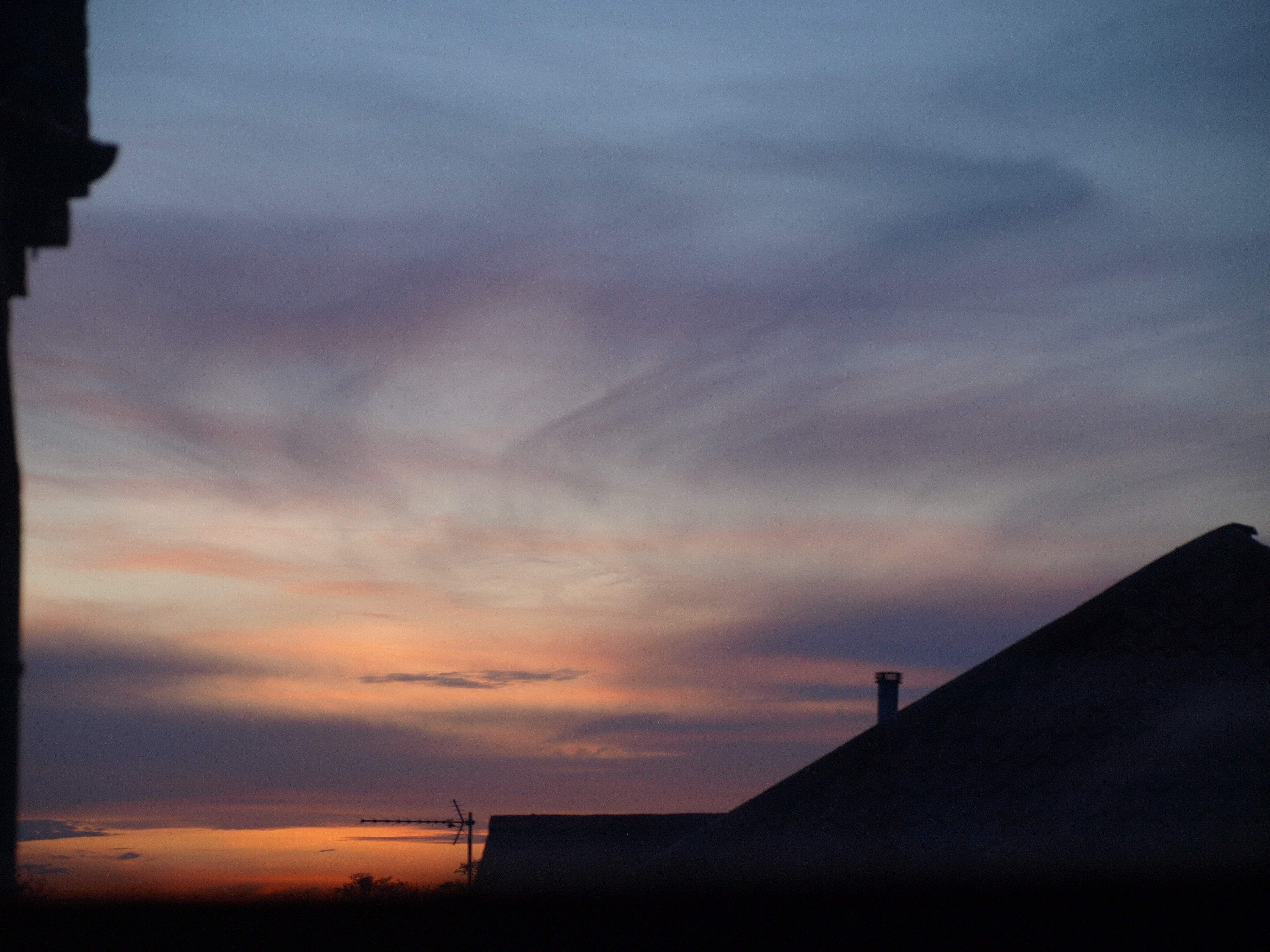
Sunset over the Trent (© Andy Vickers)

Sunset over the Trent (© Andy Vickers)

I’ve just spent an hour doing something magical that everyone should try – nothing. I’ve just sat in silence with a cup of tea and watched the sunset without the modern nagging, guilty feeling that I should be doing something else, and without defaulting to the usual time-filler of watching something on TV or idly clicking around on the internet. In that time I let my mind wander, I thought through something that I needed to sort out in my mind, I just didn’t try to guide my thoughts too much.

Decades ago it was said that automation would give people more leisure time and they’d be able to relax more and be happier. Now though even at home we feel we must be doing something; if it’s not cleaning or cooking it’s watching the latest must-watch TV series, or catching up with Facebook or Twitter, or blogging (ahem), even holidays or days out have to be awesome experiences.  When you’re not working you should be socializing or partying or at least telling everyone who you’re not with what you’re doing via social media – if TV ads are to be believed.

Creativity and relaxation are enhanced by not having distractions so taking some time out has many benefits. Time is precious and sometimes doing nothing isn’t wasting time, doing something, anything, for the sake of it however, is.

Standard