Architecture, Art, Design, Food, Gadgets, Science, Tech

Print Anything

3D Printed Cells Bowl - Math Art by @Dizingof

3D Printed Cells Bowl – Math Art by @Dizingof (Photo credit: Dizingof)

And I mean anything.  Trust me.

Whatever new technology comes along someone will use it, or combine it with something else, to create something unique.  And this is true of 3D Printing.  The technology has been around for a while, used by designers and engineers to create prototypes and demonstrations for shows, and has now matured to the point where desktop and portable devices are soon to be available although some, like the Kickstarter-funded Formlab Form1 have come up against patent issues that are ongoing.

The idea, of slowly producing three-dimensional solid objects layer by layer by laying down material one layer on the next or selectively laser-fusing or curing liquids to form the layers, at the moment produces solid parts that can be assembled like an Airfix model kit but there has also been an intriguing chocolate 3D printer which could prove popular too. Already there are online archives of things to download and print from models of the Eiffel Tower to AK-47s – as I said, someone will always find a use for such tech.

The hope is that in future the technology could combine multiple materials in a single object, extending the technique beyond plastics and further improving the detail achievable although at the moment the printers can create tiny details, and even using the materials to replace structures like steel beams.  One amazing use is a device called a 3D Bio-Printer that can print out a hybrid natural-synthetic cartilage which once implanted acts as a support for natural tissue to regrow.

Which medical miracles brings us to two Japanese uses for the technology:  firstly a 3D photobooth that can scan your body and create a plastic mini-me, perfect for those who are so into model railways they want to be in their model railways, and secondly Fortean Times this month (FT297 pp10) reports on a clinic in Tokyo that uses a “Bio Texture” process and MRI scans to give parents-to-be a chance to see and hold their baby months before birth.  The “Shape of an Angel” service is £800 plus the cost of the MRI scan.  Imagine the scene, a family get-together, the baby photos are brought up on the wall projection to embarrass the teenager as parents sometimes do…   “This is you when you were five… ah, when you were two… look, you were only a few hours old there…  go get the box…  this was you when you were minus three months”.

Standard
Science, Tech

Eye Control You!

Tobii-EyeTracker der Universität Hohenheim

Tobii-EyeTracker der Universität Hohenheim (Photo credit: Wikipedia)

Tobii have released a device that allows control of computers using your eyes.  The device, about the size of a pen, attaches to the bottom of your screen and monitors eye motion.  Users of prototype devices have said how it “works like a dream” with Windows 8 enabling full control of navigation, scrolling, selecting and zooming.

Combined with increasingly sophisticated voice recognition and gesture recognition these new technologies are more examples of how interacting with computers will become more intuitive and natural in the future.

The Sci-Fi films weren’t so far fetched after all.

[Gizmodo UK]

Standard
Business, Society, Tech

Christmas Shopping

Christmas lights on Aleksanterinkatu.

Christmas lights on Aleksanterinkatu. (Photo credit: Wikipedia)

You can buy your Christmas decorations in August, mince pies in October (with Best Before dates of November) and now what used to be January sales begin before Christmas day.

Research and data from online and bricks-and-mortar stores has revealed that the rush for online sales bargains began in the evening of Christmas day and peaked on Boxing Day – well, there’s not much on TV these days.  Luxury items seemed popular apparently.

Analysts say that there is beginning to be more confidence in spending, as this 71% increase in Christmas day spending shows, which is a good sign.

[BBC]

Standard
Society, Tech

Thinking In Computer

BBC Key Pins

BBC Key Pins (Photo credit: barnoid)

In recent years computer makers have strived to make interfaces more “user friendly” but they have in fact been trying to hide the workings behind the facade.  With this change has also come a change in learning as the emphasis has been on teaching the use of the software, the assumption being that skills in spreadsheets and wordprocessing, email etc being the valuable skills.

As a report by the BBC shows software is now part of the architecture of modern life and as with spoken languages understanding the underlying concepts is important, as they put it, being able to write in computer (creating) as well as reading it (by using it).  In order to be able to innovate you need to be able to fit concepts into the the way computers work and to do this you need to understand more than the vocabulary of the language.

The misunderstanding of how computers work is often the reason for many people’s frustration with things that don’t work as they expect them to no matter how hard developers try to simplify things.  As the article says our world is ‘computer assisted’ and the more we live with computers and their innate complexity the more people should understand how they work in the same way that some knowledge of how a car works can make someone a better driver and less likely to exceed the limits of what it can do.

[BBC]

Standard
Society, Tech

An Automated Happy New Year

Happy new year

Happy new year (Photo credit: Amodiovalerio Verde)

Two years ago I wanted to send a “Happy New Year” message to someone I’d started seeing at Christmas but couldn’t be with at midnight on New Year’s Eve.  This was important to me, I felt she was someone special.  I sat on a sofa in a local pub away from the other revellers counting down to zero.  I hit send on my phone with a few seconds to spare.

Nothing.  The message just sat there in my outbox.  It hadn’t gone by the time I got home.  By one o’clock in the morning it was still there.  “She’s going to think I don’t care” my mind kept saying over and over, pacing up and down the length of my apartment.  I wrote on Facebook that the network were crap, a friend agreed and that she was having the same problem texting her parents.  Since then me and my friend vowed to never be “lulled into a false sense of security” by said network *cough* Orange *cough* ever again.

Sorry, that should be EE.  Ahem.  Everything Everywhere – that night it was Nothing Anywhere.

Thing is that it wasn’t just Orange.  It was the first time I’d encountered the fact that everyone tries to text the same message at the same time and most networks just collapse.

I’ve been prepared since, if I send greetings the recipients get them at half-past ten and they can like it.  Just don’t open it til midnight.

Now though Facebook have the answer – though it wouldn’t have helped me, the object of my undying love wasn’t on Facebook – in their Facebook Stories app and it’s ability to automatically send a message to all your friends on the first dong of Big Ben, or when the ball drops depending on your continent.  This has since been found to be less than private so be careful what you say.

So there, problem solved and it shows you care, it’s not like you’re sending some kind of automated new year spam is it?

Standard
Business, Society, Tech

Book Exchange

English: A woman cuddling a pile of digital de...

English: A woman cuddling a pile of digital devices: laptops, smartphones, tablets, ebook readers etc. (Photo credit: Wikipedia)

With new rules saying that book publishers should basically price ebooks fairly in relation to the fact that there is no physical object to manufacture I’ve had an idea.

Maybe someone has already had it but anyway let’s say, like me, you have a large bookshelf, some of the books you want to keep because of their aesthetic appeal, or sentimental value, maybe they’re signed. Others you keep for reference and would be happy to have as searchable ebooks.

You’ve already paid for the paper version so you’re reluctant to pay the same price again for the ebook version.  What if you could send your good condition paper version to either a charity or a company like Amazon and they’d exchange it for the digital version and then sell the paper book second-hand to cover the cost of your ebook.  You could save space and the charity/company could still make money.  Even if they charged you a pound to do it it would still be worth it surely?

[Gizmodo UK]

Standard
Gadgets, Society, Tech, Work

Adventures With a Chinese Android

It all started eighteen months ago…

Cheap, small, curvaceous but not as slender as more expensive models my droid arrived late and wasn’t quite what I’d ordered…
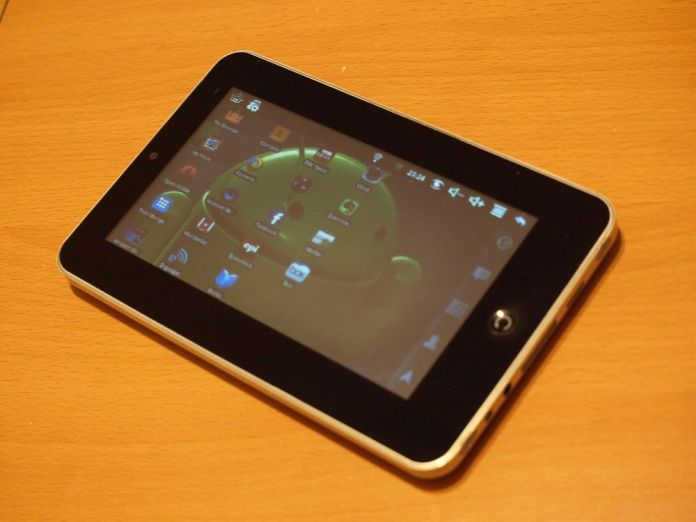
Chinese Android

Chinese Android (image credit: Andy Vickers)

The picture showed a proper USB port, this didn’t have one but never mind.

I’d been contemplating a tablet computer for a while but wasn’t sure I’d get much use from one so I didn’t want to splash out on a Samsung or Asus I might regret getting.  I could see the advantage of a handheld, touchscreen computer for web browsing, picture and video viewing, quick email or Facebook viewing and so on especially since Apple and Google had managed to make operating systems that suited the way people would use them, i.e. with fingers, and because unlike previous tablets they ran smartphone software not desktop software they could be smaller and lighter.

My MID Epad looked like a shrunken iPad and even came in a very nice, Apple-esque box with a magnetic closure and it was packed with technology that iPad owners would snigger at; old-fashioned resistive touchscreen, an old processor, little memory, low-res screen, plastic back – PLASTIC!  Short battery life.  Not being a perfectionist and being careful financially with such experiments I accepted that what I had wasn’t cutting edge, so far from cutting edge in fact that you could butter bread with it.  Anyway, it was quick enough to play videos, the screen responded well enough to flick through ebooks.  I could even play Angry Birds.

The first problem was that these tablets come with Android but are not approved by Google so can’t access many of the apps in the Play Store, the default Google apps such as the contacts app won’t synchronise properly and often you don’t get updates.  For some these are not problems, if all you want is to browse and get email and read ebooks.  Gizmodo UK recently proclaimed that chinese tablets were all “crappy” and that Google was having to keep Android open to support this flow of effluent but it depends on how you define crappy, what you find acceptable and whether you’re looking at your £65 tablet from the point of view of a well paid tech journalist, someone who just wants to look at the odd web page or a blogger on the minimum wage.

It niggled me admittedly but again I lived with it and was able to get round the issues in a way that isn’t possible with out of the box Apple devices – I put apps on manually, sideloaded them, having downloaded them from app sites.  Most were old versions and again they wouldn’t get updates.  Playing videos from the computer required some research on how to make the software access a shared network drive, though as usual the net provided excellent step-by-step guides, though if anyone mentions the word Samba near me I may cry.  Ok, so it didn’t “just work” as certain fruity products are supposed to do but as a bit of a geek it was interesting.  The hair I pulled out has grown back.

It was a challenging device all in all – it had to be charged after a couple of hours use so I had to make an adaptor lead so I didn’t have to sit two feet away from where the power supply plugged in and so I could have a right-angle plug into the device.  Sometimes the internet browsing was painfully slow.  I loved reading books on it, even using it in a tent in the middle of the Lake District until the battery died again, though using it outside in sunlight was out of the question – one-nil to Kindle and paper.  Being non-approved some of the apps I wanted I just couldn’t have, and the dream of sharing data across computer, phone and tablet would have to wait a while.

The more I used it though the more I saw that the arguments of those people on gadget blogs who complained that tablets were too simplistic, that you “can’t code on them”, and so on were wrong.  The tablet is the perfect consumption device, I can lounge on the sofa and read the news, read a book, browse a website, check mail, listen to music or watch video streamed from my computer, I even have apps filled with tasty recipes which I haven’t yet got round to cooking.  I can share things I’m interested in there and then, add to my read it later.

Now, of course, this is well known and Kindle Fires, Nexus 7s and iPad Minis have been this years big Christmas gift – my mum got a Kindle Fire for her birthday last week because it was the perfect computer for her; so simple to use, just point and tap to read, browse the net or get more books or games.  I now have an Sony Xperia Android smartphone and a Nexus 7 tablet myself, both have newer versions of the software, I can listen to music via bluetooth from either and do even more than with my Chinese Droid, my emails, contacts, to do lists, notebooks, reading lists and bookmarks are automatically synced and available wherever I want them, all from small, thin light devices.

I remember seeing 2001: A Space Odyssey, Star Trek and similar, seeing those little pads of information and thinking how great it would be to have all that in your hand.  And it is.  Amazing.

Standard
Society, Tech

Tweeting 999 – No Laughing Matter

Texting on a qwerty keypad phone

Texting on a qwerty keypad phone (Photo credit: Wikipedia)

Recently in both the USA and UK emergency services have announced plans to allow people to inform them of an emergency via other modern communication methods like texting, Facebook and Twitter.

Cue howls of laughter and derision from writers about how it’s typical of our lazy society that people can’t be bothered to look up from their phones for thirty seconds to phone 999 or 911.  For once I partly disagree.

Normally I too would think it’s another example of people’s disconnection from others, that they wouldn’t want to actually speak to someone, they’d be happier texting etc.  And for some that may be true.  It could also be open to abuse by those who already troll the existing services using fake accounts, names and addresses.

But consider someone who can’t use a voice service – someone in peril and hiding; someone unable to speak or hear whose only form of communication at that moment is a mobile or a computer; someone who has no phone available but does have, for example, a 3G tablet; even someone who for perhaps psychological reasons can’t talk to someone on the phone.  Any communication would be better than none.

The emergency services have said that this is an attempt to enable communication with them through modern technology – this forward thinking should be admired not laughed at.  Or maybe we should abandon the new-fangled phone too and go back to bells and whistles.

Standard
Psychology, Society, Tech

Let’s Talk About Stats, Baby

The Runner.

The Runner. (Photo credit: Wikipedia)

Some people are willingly having their lives tallied and quantified via their mobiles.  The stats are everywhere, how many Facebook friends have you got?  How many Twitter followers, how many likes on that post, how many retweets?  Fitness trackers like Endomondo, Nike+ and Strava let you post your times for the walk to work or that bike ride and compete with your friends, the site Fitocracy even lets you directly battle against others for who gets fittest first by completing challenges against each other.  Where have you checked in on Foursquare?  When and where you have you used a condom? (the latter could be open to exaggeration).

Almost every part of your life can be tracked, logged, rated and compared with friends and strangers, your whole life becoming a competition without a prize other than feeling that you’ve achieved more than someone else, the bragging rights rather than the rewards of the enjoyment of the exercise, the outdoors or just feeling better in yourself (exercise has been shown many times to improve peoples’ mood).  On the other hand studies have shown that such competitive apps can also encourage people to exercise, and of course it can be useful to keep track of your fitness.

The other side of the coin are the stats that tell you whether you’re reaching people with what you want to say.

Once you start blogging, or sharing your pictures on Flickr or videos on YouTube something strange often happens.  You start out thinking “I’m not bothered if nobody reads it, well, I’m happy if just one person sees it.”  Soon though you see the stats page and out of curiosity you look at it.  The first time you see a blip on the line your heart jumps a little as the thought that you’ve made a connection with someone, then comes the wonder of the fact that the person who looked at what you’d posted isn’t your mum or dad, your friend down the road or anyone else on Facebook but someone on the other side of the world.

Then there’s the first “Like” or first follower which gives you the knowledge that you’re doing something right.  You naturally value what you’ve created but now someone else does too.  Once you have followers you start to feel the need to give them something in return, to create something they’ll appreciate.  You could experience the rollercoaster of emotions; maybe anxiety that you haven’t posted in a while, doubts about what you’ve created when you don’t get any views but then your next post receives a flurry of likes and comments and that warm feeling of contributing to the world in your own way returns.

There’s no escaping the stats, they’re everywhere.

Standard
Food, Science, Tech

Eco Cow – Ruminent of The Future!

Cattle on the alp

Cattle on the alp (Photo credit: Darkroom Daze)

Methane emissions from cows (burping rather than farting, apparently) are a serious problem, contributing to climate change due to the huge numbers being bred for our insatiable appetite for a good steak and milk.  Now though researchers in Brisbane, Australia are investigating breeding low-methane livestock and modifying feeding regimes to keep the emissions low.

They will be monitoring gas build up using a small submarine like sensor with wings that keep it in the cows rumen – the chamber in the stomach where gas production is greatest.  Using infra-red sensors they can assess the conditions that create the most gas and adjust feeding accordingly.

Good news for those of us who enjoy a good sirloin.

[Gizmodo UK]

Standard